 TheAltWorld
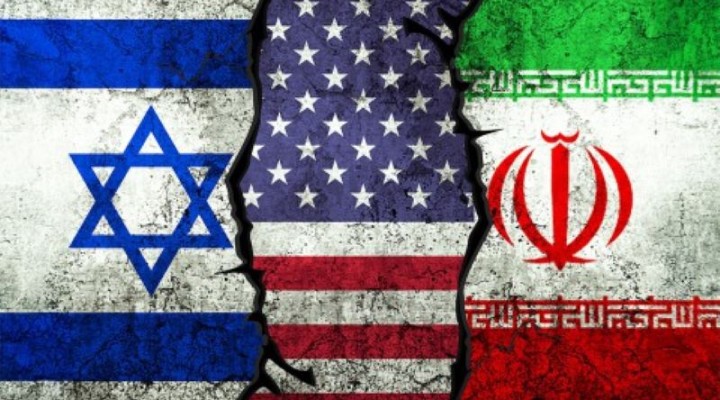
 Will US-Israeli aggression against Iran resume?
What does the return of the first Yemeni drone to bomb Eilat mean?
President Donald Trump called Iran’s reaction to his administration’s ideas for a lasting cease-fire agreement foolish, unacceptable, and wholly disappointing. This description, at first glance, means that the American-Iranian negotiations mediated by Pakistan have collapsed, and the return of the military option has become almost certain, with the issue being merely a matter of time and timing, nothing more and nothing less.
The American president was shocked by the delayed Iranian response, which took more than four days and offered no concessions in the most crucial area: the Iranian nuclear programme. This shock, and the disappointment that followed, was represented in his uncertainty and the shift from threatening to unintelligible rambling. Trump had bet on a diplomatic approach to avoid the costly option of war, mistaking his “childish” threats to obliterate Iran or destroy all of its power and electrical sources for effectiveness.
He will open the gates of hell on it, terrorising it and forcing its leadership to submit to his demands, particularly those relating to halting all enrichment activities, dismantling all Iranian facilities that he claimed to have destroyed in the June war last year, and delivering 460 kilograms of highly enriched uranium (60 per cent) to the United States. But all of these threats have failed.
The winds of war are now hovering over the region unless a miracle occurs, and we are not living in a miraculous moment. Several indicators support this option, which we summarise in the paragraphs below:
First, Mr. Ibrahim Rezaei, the spokesman for national security and foreign affairs in the Iranian Shura Council (parliament), stated today that if Iran is subjected to a new attack, it may issue a parliamentary decision to enrich uranium to more than 90% of the level required for nuclear bomb production and that this matter will be debated in parliament with popular support.
Second, the Israeli army’s acknowledgement of a drone reaching the port of Eilat overlooking the Gulf of Aqaba, for the first time since the cessation of hostilities on April 8 of last year, means that the Houthi “Ansar Allah” movement, which governs Sana’a and most of northern Yemen, has decided to take to the pitch, affirming the unity of arenas and the multiplicity of fronts against “Israel” first and American ships and aircraft carriers in the Red Sea second.
Third, Trump stated to an American television station, “The truce with Iran is currently in the intensive care unit after the arrival of the ‘stupid’ and unacceptable Iranian response, as well as the arrival of a nuclear submarine in the Mediterranean Sea via the Strait of Gibraltar, possibly on its way to the Arabian Sea.”
Fourth, Sheikh Naim Qassem, Secretary-General of Hezbollah, stated in an unprecedentedly strong tone, “We will not leave the pitch and will turn it into hell for Israel, and we will respond to the aggression and violations to stop the ceasefire, and we will not return to before March 2.” These statements were recorded in audio and video today.
Fifth, promises from Mike Huckabee, the US ambassador to the occupying state, that the war on Iran has not ended and may restart shortly. Once the United States halts the flow of money and weapons from Tehran, the oxygen will be cut off from Hezbollah in Lebanon, the Ansar Allah Houthi movement in Yemen, and Hamas and Islamic Jihad in Gaza.
The Iranian response, which President Trump described as “very smart” and not “stupid”, to the American ceasefire project and the end of the war with Iran, sent a strong message to Tel Aviv and Washington. Its content states, “We are fully prepared to face any resumption of the war, and uranium enrichment and its continuation are matters of Iranian sovereignty.” Our doctrine can be summarised in seven words: ‘The price of resistance is much cheaper than the price of surrender.’”
The most important response, in our opinion, will be a nightmare for the American military buildup in the Strait of Hormuz and the Arabian Sea, which will be an easy target for warships, spider battalions, and Iranian missiles—the same missiles that destroyed most, if not all, of the American bases in the region, particularly on the western side of the Gulf. This prompted President Trump to plead with Britain to allow the American military to use British military bases in Cyprus as a substitute for the destroyed bases in the Gulf.
Let’s provide an example to conclude this article, as it contains facts in case the Israeli-American aggression against Iran renews itself. In summary, on March 18 of last year, Israeli planes attacked the Iranian ‘Pars’ gas field in the waters of the Qatari Gulf. Iran immediately retaliated by bombing the North Field in Qatar, causing significant damage and halting production. Repairing this damage will take many years. “And the worst is yet to come.

0 thoughts on “Will US-Israeli aggression against Iran resume?”