 TheAltWorld
 Did Israel Win Syria—But Lose the Middle East?
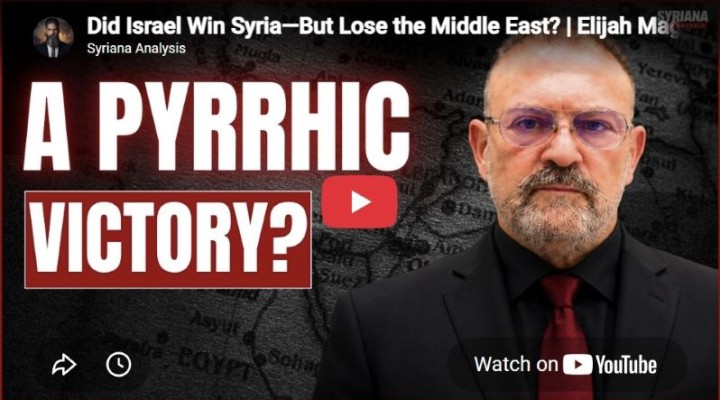
Did Israel achieve a historic strategic victory in Syria—only to help create a Middle East increasingly difficult for Israel and the United States to control?
Veteran war correspondent and Middle East analyst Elijah J. Magnier joins Kevork Almassian for a wide-ranging discussion about Iran, Syria, Israel and the rapidly changing regional balance of power.
We begin with the Strait of Hormuz, where Iran is demanding sanctions relief, the return of frozen assets and an end to the wider war before fully reopening the strategic waterway. Elijah argues that Tehran believes Washington and Israel failed to achieve their principal objectives against Iran—and that Iran is now negotiating from a stronger position.
But could Tehran be overestimating its leverage?
The conversation turns to Marjorie Taylor Greene’s unverified allegation that nuclear weapons against Iran have been discussed in U.S. strategy meetings. Elijah explains why a limited nuclear strike against deeply buried Iranian facilities is technically conceivable but, in his assessment, highly unlikely—because crossing that threshold could push Iran, Saudi Arabia and Turkey toward nuclear weapons, creating precisely the regional proliferation nightmare Israel wants to avoid.
Then comes the Mecca Pact.
Has Saudi Arabia concluded that the American security umbrella can no longer be taken for granted? Elijah describes the emerging Saudi-Turkish-Pakistani alignment as a message not only to Washington but particularly to Israel, and discusses whether eventual security normalization with Iran could become part of a more autonomous regional order.
The conversation then moves to Syria.
With Bashar al-Assad gone, Iran’s Syrian state ally lost, Hezbollah’s logistical depth weakened and Syria’s military capabilities devastated, why shouldn’t Israel declare victory?
Elijah argues that Israel did not itself bring down Assad, but acknowledges major Israeli gains after his fall: the destruction of much of Syria’s military infrastructure, reduced Hezbollah strategic depth, expanded Israeli freedom of action and territorial advantages. He warns, however, that these tactical victories will only become lasting strategic victories depending on the emerging confrontation between Israel and Turkey over Syria.
Finally, Elijah takes us back to June 1982 and the Battle of Sultan Yacoub, explaining the Syrian-Israeli confrontation in Lebanon and the decades-long mystery surrounding missing Israeli soldiers following Netanyahu’s announcement that the remains of Yehuda Yekutiel Katz had been recovered.

0 thoughts on “Did Israel Win Syria—But Lose the Middle East?”