 TheAltWorld
 The Iranian victory and American loss will transform the “Middle East” in three areas?
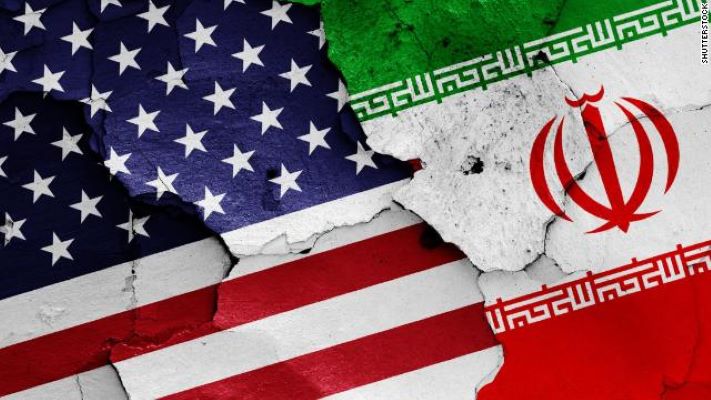
Why does “Israel” fear an incursion from the east and south, as well as another “Al-Aqsa Flood”? Additionally, what about the Syrian front?
The Middle East region is on the brink of a new phase of strategic, political, geographical, and military change, with the most prominent feature being the decline of Israeli superiority and the resurgence of the Palestinian cause, thanks to the new Iranian leadership. This development is after four months of Iranian resilience in the face of the American-Israeli aggression against Iran and the resistance factions in Lebanon, Yemen, and Gaza and the issuance of a decision by the U.S. House of Representatives limiting President Donald Trump’s military authority, considering him reckless and unfit, and posing a threat to the security and stability of the United States after prioritising Israeli national security over American national security.
In the coming days, weeks, and months, the region’s events will unfold in three primary arenas, as follows:
The first arena will be Lebanon, where Iran and its allies currently have the advantage. This situation is due to the Iranian victory in the conflict and the recognition of 92% of Israelis in a survey conducted by the Hebrew University. The same is true in the United States. President Trump intervened to prevent Israeli aggression and compel Netanyahu to commit to an immediate ceasefire and begin withdrawing his forces rapidly to avoid undermining the recently reached US-Iran agreement, as the strong political and military return of Hezbollah has completely altered this arena.
The Syrian front is the second front, and the new and temporary Syrian leadership has failed to control the country, protect its borders, establish security within Syria, and improve the economic and living conditions of the Syrian citizens. Israel occupies the majority of southern Syria, as well as the Golan Heights and Mount Hermon. The intensity of indicators pointing to a rapid escalation of national, Islamic, and nationalist resistance movements has led to an increase in attacks on Israeli occupation forces, resulting in losses among their ranks that have been kept under wraps. Northern Syria is currently in a state of disarray as a result of the resurgent sectarian conflict and the state’s failure to address all of its popular components equally, portraying itself as a state that caters to a single sect rather than a sanctuary for all.
Perhaps the American pressure on the new Syrian leadership to intervene in the Lebanese quagmire under the pretext of confronting Hezbollah to disarm its forces and dismantle it to expedite the implementation of the joint tripartite plan – the Israeli-American and the official Lebanese state – the inquiry is as follows: Will American punitive pressure on the new Syria succeed in compelling its leadership to enter this predicament, and what will the repercussions be if this pressure is not met promptly?
The Jordanian-Israeli border front is the third front, where Israeli concerns about a potential incursion by Iranian-backed resistance factions are intensifying. This concern is particularly prevalent in the southern region, specifically from “Um Rashrash” (Eilat), the eastern border with Jordan, and the northern border with Syria. The “Ansar Allah” movement, the Nujaba Movement, and Hezbollah Iraq, which are Iranian-backed factions on these three fronts, refused to surrender their weapons to the Iraqi state in the east. Additionally, the Islamic and Syrian national resistance movements are active in the Daraa and Sweida regions.
Eli Lankri, the mayor of Eilat, issued a warning about a new attack on the city on October 7th, to be launched from the eastern Jordanian frontier. Additionally, he stated that they were preparing an extensive ground invasion with considerable enthusiasm.
The Iranian-American memorandum of understanding is still a “foetus”, characterised by a high degree of fragility due to the challenging issues that have been postponed, including the two most complex Iranian files: the nuclear programme and the military missile programme. The two-month truce negotiations are unlikely to yield an agreement on them. Will the two-month negotiations succeed if the nuclear file negotiations, which lasted for two years, did not yield any progress? Iran regards the two issues as red lines it will not cross, as they form the foundation of Iranian sovereignty.
The Iranian triumph is no longer limited to Iranian geography; it now extends to nearly the entire regional sphere. The Strait of Hormuz’s control and sovereignty have been reaffirmed through the establishment of an institution to supervise its affairs and impose fees on ships passing through the strait in coordination with Oman, the other country bordering the strait, under the guise of services. Most significantly, the unfreezing of Iranian assets in American and Qatari banks has begun, starting with an initial phase of $2 billion. Additionally, it is essential to note that the United States lifted the maritime blockade on all Iranian cities following Iran’s opening of the Strait of Hormuz.
West Asia, rather than the Middle East, is currently experiencing a period of significant strategic transformation. The post-Iranian victory and the significant American defeat phase are fundamentally distinct from the previous phase in every respect. The new Islamic and Arab national forces that are emerging from the three aforementioned arenas will redraw the maps of power and topography, not Benjamin Netanyahu or Donald Trump.

0 thoughts on “The Iranian victory and American loss will transform the “Middle East” in three areas?”