 TheAltWorld
 Colombian Presidential Election: Another Right Turn More
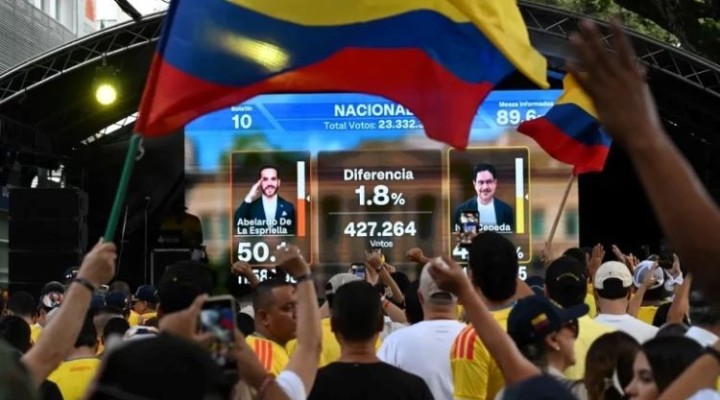
Last Sunday, June 21, 2026, Colombia held the second round of presidential elections. The chances between the candidates for the post of head of state were approximately equal, while the candidates’ election programs were radically different. Ivan Cepeda Castro continued the line of succession of the center-left policy of the current president Gustavo Petro, who supported him. Abelardo de la Espriella represented the right-wing spectrum and openly advocated rapprochement with the United States, welcoming the foreign policy of Donald Trump.
According to the results of the voting, official data showed 49.66% for Espriella and 48.7% for Cepeda. Due to the slight difference, Gustavo Petro claimed fraud and refused to recognize the election results. However, Cepeda himself said on June 24 that he recognized his opponent’s victory. Espriella received congratulations from other right-wing presidents the very next day after the vote.
It should be noted that he actively used social media during his campaign and was openly supported by pro-Washington presidents from the region, such as Javier Miley from Argentina and Daniel Noboa from Ecuador. In addition, they also provided financial assistance, of course, behind closed doors. Espriella himself copied in his speeches the discourse of the President of El Salvador, Naib Bukele, on the need to fight crime. Although in fact it will be very difficult to do this, since there are quite a large number of paramilitary political and criminal organizations operating in the country. In previous years, with the support of the United States, including the notorious “Plan Colombia,” the problems of organized violence could not be solved. Rather the opposite. Given the long history of state repression, dubbed “Violencia” followed by drug cartel activity and Washington’s intervention, the new spike in right-wingers and Uncle Sam means only another round of confrontation and outbreaks of guerrilla warfare around the country.
But this is unlikely to stop the White House, which is guided by a rethinking of the Monroe doctrine in new conditions and is trying to create a reliable alliance of loyal regimes throughout Latin America. If we leave aside Peru, where the official results of the presidential election have not yet been announced (although Pedro Sanchez has already stated that he does not recognize the machinations and victories of Keiko Fujimori), the left part of Latin America is turning into a zone of Washington’s geopolitical control.
Venezuela is in manual control mode by the United States. And Brazil remains with the relatively leftist governments (for how long? Polls show that the right-wing coalition, from which Senator Flavio Bolsonaro, the son of former President Jair Bolsonaro have a chance of winning) and Uruguay. Taking into account China’s interests and Beijing’s assets in Latin America, against the background of the growing competition with this country announced by the US State Department, attempts to block any activity of the Celestial Empire under various circumstances should be expected. First of all, under the pretext of threats to the national security of the United States.
On the other hand, a tough confrontation could also damage Washington’s interests, so the most likely scenario would be a more active US monetary policy in the region: investments in various sectors followed by control over resources and industrial facilities. The United States already has experience of such work in the twentieth century throughout Latin America, so they will try to repeat it in new conditions. Also, within the framework of Washington’s foreign policy strategy, a likely scenario would be the direct or indirect participation of the United States in various integration projects. There are several similar initiatives in Latin America, some of which were originally initiated by the White House, such as ALCA (the All-American Free Trade Area Project). Consequently, with the rise of loyal governments, the United States now will be able to manipulate dreams of Latin American unity.
Even the Greater Colombia project (the last time Nicolas Maduro and Gustavo Petro spoke about the need to unite Venezuela and Colombia) can be launched with appropriate input and adjustments from Washington. If the region buys products from the United States, uses the services of their companies, uses the dollar in foreign trade and meets the necessary security requirements, it will even be more profitable and easier for the White House to have such a new association in its underbelly.
As in the case of the European Union, it will be easier to manage and manipulate than in the case of disparate states, where the ruling parties will change in accordance with electoral cycles and the current mood of the population. In other words, if earlier the Anglo-Saxons emphasized the policy of “divide and rule”, then in the logic of thinking “if the revolution cannot be stopped, then it must be led” the unifying regional impulses will now be reformatted into the quality that Washington needs.
Although there are still political forces in Latin America that see the integration of their region from a completely different perspective, remembering the instructions of Simon Bolivar, Jose Marti and Fidel Castro. But their potential for confrontation is much weaker than the tools available to the United States and its satellites in the region, which are growing in numbers from year to year.

0 thoughts on “Colombian Presidential Election: Another Right Turn More”