 TheAltWorld
 Zarif’s Peace Proposal Isn’t Half-Bad
It’s surprisingly pragmatic and could serve as a face-saving off-ramp for Trump 2.0.
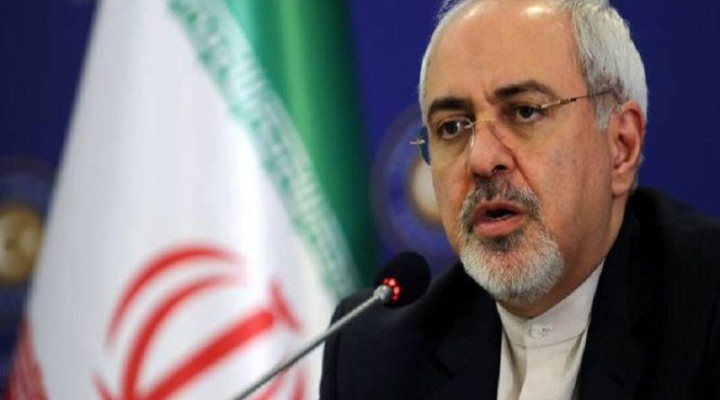
Former Iranian Foreign Minister Mohammad Javad Zarif, who represents the interests of his country’s reformist (moderate) faction against its principalist (conservative) rivals, published a proposal about “How Iran Should End the War” at Foreign Affairs. He began by extolling Iran’s resistance as proof of its victory over the US and Israel before addressing those who want to continue the conflict by reminding them of the growing economic and humanitarian consequences. Only then did he share his proposal.
In his words, “[Iran] should offer to place limits on its nuclear program and to reopen the Strait of Hormuz in exchange for an end to all sanctions—a deal Washington wouldn’t take before but might accept now. Iran should also be prepared to accept a mutual nonaggression pact with the United States in which both countries pledge to not strike each other in the future. It could offer economic interactions with the United States, which would be a win for both the American and the Iranian people.”
As the first step, a ceasefire could be agreed to in exchange for Iran fully reopening the strait and the US fully lifting its sanctions, which would establish the basis for resuming negotiations on Iran’s nuclear program and a permanent peace deal. As regards the first, Zarif proposes placing his country’s facilities under full international monitoring, while the second could come about through a regional collective security agreement supported by the UNSC that would complement his proposed non-aggression pact.
He also wrote that “Iran and the United States should initiate mutually beneficial trade, economic, and technological cooperation”, including in the energy sector, and that Iran should request US financial support for its reconstruction as a form of reparations for allaying public opposition to any peace deal. This mirrors what was proposed here in early March about a post-war resource-centric strategic partnership between Iran and the US modelled off of the one that Russia and the US are negotiating.
Although not mentioned in Zarif’s proposal, Iran could sweeten the deal by agreeing not to sell any more oil to China as was proposed here before the war, which would advance Trump 2.0’s “strategy of (resource) denial” vis-à-vis China and thus fulfill his unstated goal in the war that was described here. Returning back to his proposal, he concluded that “Emotions may be high, and each side is boasting about its war-front victories. But history best remembers those who make peace.”
Reflecting on it, he has a point about how it’s better to reach a deal than for Iran to continue to suffer increasingly more devastating economic and humanitarian losses, especially since civilian targets are now being struck more frequently and Trump threatened to destroy Iran’s energy industry. Even if Iran retaliates against the Gulf, “the destruction of the region’s infrastructure will not compensate Iran’s losses”, which is true. Because he represents the reformists, however, the principalists might ignore him.
Therein lies the importance of publishing his proposal in Foreign Affairs, which is read by US diplomats, thus possibly inspiring them to bring it to Secretary of State Marco Rubio’s attention as a face-saving off-ramp in the event that Trump is looking for one like some claim. Trump might instead have his mind set on radically transforming the world order by taking the region’s energy exports offline for the indefinite future now that the US no longer needs them, but if he’s not, then this is arguably his best bet for peace.
https://korybko.substack.com/p/zarifs-peace-proposal-isnt-half-bad

EW
The proposal may or may not be “half bad”. But it is foolish and entirely naïve! It is, yet another instance of the Iranian people believing in, and trusting in basic human kindness – – of assuming that humans care about preserving other humans. As an American citizen, I promise you, that is NOT TRUE of Donald J. Trump. He is devoid of empathy, on any level, and he cannot be trusted – – his word means nothing, and his psychopathy is deepening at an such an alarming rate, that it is unlikely that he would be able to remember the content of any document twenty seconds after he finished signing it!
Tom
As long as Israel and Zionism persists, there will always be violence and problems in the middle east. Israel needs to be dismantled….! The problem is a politically captured USA (United States of Israel?). If the welfare subsidies were cut off from Israel, Israel would once again be Palestine. Zionist’s are not pragmatists, they are mentally ill self proclaimed supremacists. Cut the money off from Israel.
Guy
Hard to argue your point .I agree .The US has been captured , compromised by a foreign entity, leadership and with a subservient Christian zionist population .Christian zionism is a contradiction in terms IMHO .
Guy
Wishful thinking IMHO.Iran will not settle outside of the conditions that they have already stated and my view they shouldn’t either .They did not start this war .The longer this war lasts with more of the Iranian infrastructure destroyed ,the more it is going to cost to the so called empire in reparations .