 TheAltWorld
 Will the “temporary” Syrian president send soldiers to Lebanon to “eradicate” Hezbollah at Trump’s request?
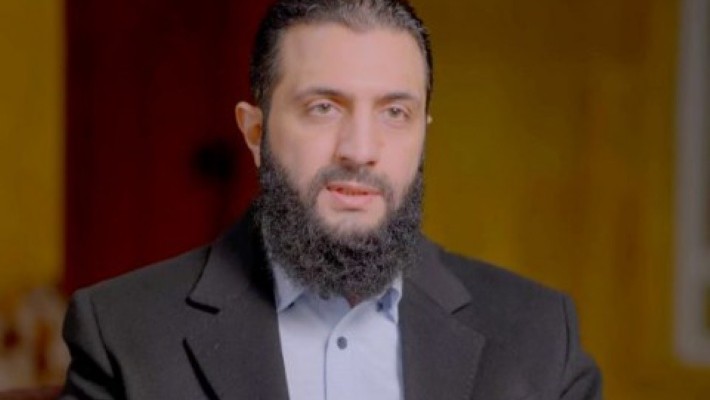
What message does the Aleppo attack and the deaths of two soldiers today convey? Why might Lebanon and its imminent events shape the region’s future?
The Israeli occupation state appears to be moving forward with its plan to undermine the Iranian-American agreement by escalating its aggression and bombing “Hezbollah” sites and strongholds in eastern and southern Lebanon, in a swift violation of the new ceasefire agreement in Lebanon announced by U.S. Secretary of State Marco Rubio, which went into effect on Friday afternoon and to which “Israel” pledged commitment.
Less than 12 hours after this pronouncement, Israeli bombers bombarded the town of Bint Jbeil in the Tyre region, killing eight people, including two children, and leaving seven others missing under the rubble early Saturday morning, along with a substantial number of injured. This breach is hardly surprising given the entity’s long history of violating ceasefire accords, whether in Lebanon or the Gaza Strip. However, what is striking this time is the American silence regarding this pact, which is identical to previous ones. As of the writing of these lines, no American response has yet been issued. On the contrary, U.S. President Donald Trump renewed his talk about Syria potentially playing a major role in the American-Israeli plan to eliminate “Hezbollah” by intervening in Lebanon in coordination with the Lebanese government and army, as well as the Israeli army.
Trump believes that the Israeli army has failed badly in carrying out its vows to eradicate “Hezbollah” in the past two years. He stated in documented comments that he had authorised this army to complete this assignment quickly, but it had not succeeded. As a result, he asked temporary Syrian President Ahmad al-Shara to do this work as soon as possible, according to the “Reuters” news agency. Trump claimed that the Syrian army could defeat the Lebanese Islamic resistance led by the party more effectively than Israel’s.
President al-Shara rejected any desire to intervene militarily in Lebanon, describing reports of his plans as “rumours”. On the other hand, Israel Katz, the Israeli minister of war, whose forces occupy the majority of southern Syria, Mount Hermon, and the Golan Heights, was more explicit in his statement to Israeli Channel 4, saying, “Israel does not need the Golani president (he did not use his real name), the terrorist who wears a nice suit,” affirming that “Israel will carry out this mission alone.” Lebanese President Joseph Aoun concurred with Israel’s minister of war, stating, “President al-Shar’ has a high sense of responsibility and political awareness and will not be dragged into the Lebanese quagmire.”
President Aoun’s statement praising the interim Syrian president is not motivated by concern for Syria, but rather by opposition to any new Syrian intervention in Lebanese affairs, as well as a repetition of previous interventions that many in Lebanon’s political and sectarian factions opposed. It’s worth noting that the Lebanese army, led by him, intervened in a military campaign against the Islamic State organisation in 2017, when its men invaded Syrian territory into the fringes of Baalbek, Bekaa, and other areas along the Syrian-Lebanese border.
The American president has several powerful pressure points at his disposal that can be used to force President al-Shar’ to comply with his requests and send his forces to Lebanon to eradicate “Hezbollah”; the most notable of these is the Israeli card. We should not forget that Israeli soldiers control the majority of southern Syria, and Israeli planes have struck the Syrian Ministry of Defence headquarters and the presidential palace. Another card is the ability to starve the Syrian people by maintaining the majority of US sanctions, damaging the Syrian economy, and destabilising internal security. We should not be surprised that the United States supported the attack that killed seven people, including two Syrian soldiers, in an attack carried out by “unknowns” on the village of Manbij in Aleppo province today, Saturday, as well as in other similar incidents in various Syrian regions.
The “temporary” Syrian president now has two options: give in to American pressure and send his forces to Lebanon, a mission doomed to fail and possibly resulting in the deaths of most Syrian troops, or even their non-return and defection of most of their members in a war that does not concern them and serves Israeli aggression. The more dangerous option is to form a front with Iranian-backed Islamic opposition organisations in Iraq.
The second alternative is to reject American dictates and rebel against President Trump, who boasted two days earlier about bringing Al-Shar’ to Syria’s presidency with direct support from Turkish President Recep Tayyip Erdoğan. The cost of this uprising may also be a loss of support from America’s allies in the Arabian Gulf region, whether financial, military, or political, as America does not provide services for free and without compensation.
Either he obeys the orders of his American master and sends his forces to Lebanon, or he listens to the advice of his Turkish master, who opposes this intervention because it serves Israel’s interests and strengthens its military and political presence by eliminating its most important and dangerous enemy, “Hezbollah.”
“We do not fear death, and our decision to confront is Karbala-like and has no ceiling.” “As long as we can endure, why should we surrender?”

0 thoughts on “Will the “temporary” Syrian president send soldiers to Lebanon to “eradicate” Hezbollah at Trump’s request?”