 TheAltWorld
 How did Iranian rockets erase “Israel”‘s most damaging political and military cards?
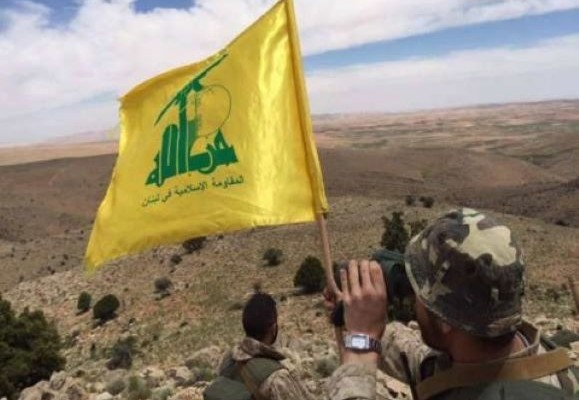
What does the rapid return of the Yemeni “Ansar Allah” to the field mean? Will the new Syria join the official Lebanese coalition to eliminate Hezbollah, and what will be the price?
The most significant milestones that can be seen in the flood of information about the developments of the past few days’ war are Iran’s shift from a deterrence strategy to a rapid strike strategy using precision missiles on military targets deep within the occupied Palestinian territories and the methodical execution of its threats to turn the war with America and Israel into a regional war of attrition by opening new fronts.
Brigadier General Esmail Qaani, commander of the Quds Force in the Iranian Revolutionary Guard, expressed this strategy in a statement today, which came after a long absence, when he said, “The Axis of Resistance has established a security belt extending from the Strait of Hormuz to Bab el-Mandeb and from the Gulf to the Red Sea under the banner of the axis.”
The swift Iranian response to the Israeli aggression in the southern suburbs, despite its “limited” nature and its focus on bombing an apartment in a building, was not comprehensive destruction as threatened and promised by Israel Katz, the Israeli minister of war, and sent a strong message directed not only at Israel but also at the Lebanese authorities. His words convey that Hezbollah will not stand alone and that it will not be “the Hamas of Lebanon” without support or backing, and that its weapon is “sacred” and will not be removed but rather reinforced.
It has become difficult for us, who follow the joint Israeli-American aggressions, to count the number of Israeli casualties resulting from the resistance attacks in Lebanon, and so far, all of them have been officers and soldiers due to their large numbers. The same can be said about the expensive American drones over the Bab el-Mandeb Strait. We expect our counting task to become more challenging in the coming days with the entry of the Yemeni “Ansar Allah” brigades into the field and their return to targeting American aircraft carriers and warships in the Arabian and Red Seas.
The very swift Iranian response, whether in Haifa, Tel Aviv, or Dimona, has burnt the most important strategic card that Israel had, which was dragging America into the war and relying on its power to eradicate the existential Iranian threat to it and to dismantle its most prominent current or future weapons. The current ones are the highly advanced missile programme and the very promising nuclear programme, along with the high enrichment of uranium that has made Iran a nuclear threshold state, just weeks, if not days, away from producing 10 nuclear bombs.
Israel has lost, so far, its most important card, which is “inciting” the Iranian people against the Islamic revolutionary regime, daring to provoke them, and even partially and technologically arming them to carry out this task with unprecedented audacity, whether from Benjamin Netanyahu or the American Donald Trump.
Just as the strategy of separating the arenas and focusing on each one individually failed, and what actually happened was the opposite, namely their strengthening, the American strategy of “shock and awe” against the Resistance Axis led by Iran also failed.
The most dangerous development revealed by the current “hundred-day war” is its legitimisation of the bombing of American bases in the Gulf region by Iran and its missiles, allowing for missile and drone strikes on targets deep within Iran. This has thwarted the role these bases were built to achieve, which was to destroy Iran. Instead, what has happened is the opposite: these bases have turned into a burden and a strategic weak point, as they are unable to protect themselves or the weak countries, both humanly and militarily, despite the very high costs of their construction and maintenance.
The Israeli normalisation breach of the Lebanese authority, with its most prominent title being the joint Israeli-Lebanese disarmament of Hezbollah, will not last long. It has remained confined to the realm of wishes and some well-planned media campaigns. The credit for this goes to Hezbollah’s rapid recovery and its miraculous development of military capabilities, the use of highly advanced drones, smart battle management, and inflicting massive human and military equipment losses on the Israeli enemy. This has led to the complete evacuation of the occupied northern Palestinian territories by settlers.
The last card that America and Israel have in hand to counter the remarkable rise of Hezbollah and its political and military project is the Syrian card. The strategy involves increasing pressure on the new Syrian government and its president, Ahmad al-Shara, to take to the field against Hezbollah and engage in military confrontations with it after failing to prevent the smuggling of weapons to it and the expansion and increase in the number of breaches along the shared borders.
The American administration succeeded in misleading the new Syrian authority, which fell for the bait of intimidation, flattery, red carpet policies, luxurious perfume bottles, and the partial lifting of Caesar’s sanctions to confirm false goodwill. Now, it is threatening to apply pressure with the remaining sanctions after the deterioration of living and security conditions in the country.
The entry of Syrian forces loyal to the ruling regime in Damascus into Lebanese territory to disarm Hezbollah, alongside some Lebanese army units after its potential division, and with Israeli ground and air cover, if these pressures succeed in embroiling Al-Shara and his associates, it could be the beginning of the swift end for this regime. If Israel, which was defeated twice in Lebanon by Hezbollah and its forces since its establishment in 1985, failed, will the Golan forces succeed where Lahd’s forces and the Israeli army did not?
The new Iranian leadership chose military confrontation from a position of strength, adopting the doctrine of rapid direct response, following the path of the great Mujahid Omar Mukhtar—victory or martyrdom; punishing the instigators Trump and Netanyahu; supporting allies and not abandoning them; and thwarting one of the most important American and Israeli weapons, which is the showy intelligence weapon, whether inside Iran or by transferring the battle to enemy territory.
These new field victories, whether in the Strait of Hormuz or deep within Iran; the unexpected joining of Yemen in the military response in the heart of Jaffa and Eilat, the auspicious return of Brigadier General Yahya Saree alongside Hezbollah; and the imminent joining of Iraqi resistance factions that refused to surrender their weapons, such as Al-Nujaba and the “Hezbollah Iraq” brigades – these victories and developments will lead to a change in the face of the region and the redrawing of its military, political, and cultural maps, heralding the rise of the new Middle East, or rather “the new West Asia”, as the first term is colonial.

0 thoughts on “How did Iranian rockets erase “Israel”‘s most damaging political and military cards?”