 TheAltWorld
 What explains America’s unusual military and political reticence in the Iranian war?
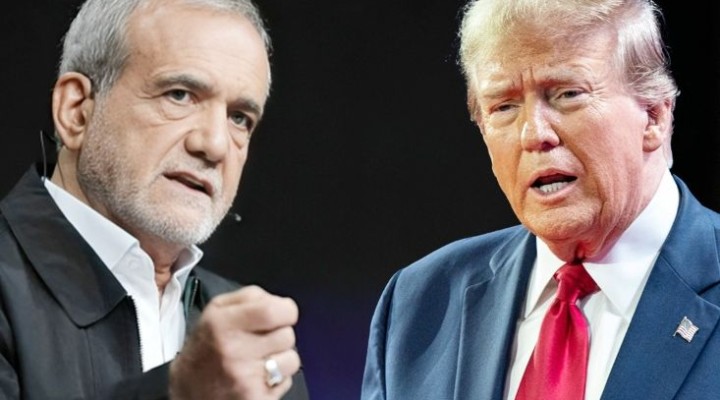
Is Trump considering a huge military attack in response to the humiliating rejection of the Iranian president to meet with him in New York? And what are Iran’s hidden military preparations?
The refusal of US President Donald Trump to accept his Iranian counterpart Masoud Pezeshkian’s proposal on the sidelines of the United Nations General Assembly has raised many questions about the reasons for the rejection and the postponement of negotiations until after the November midterm elections in the United States.
The Iranian initiative, which calls for a one-week cease-fire on all fronts, including Lebanon, followed by the opening of the Strait of Hormuz to international navigation, includes the implementation of the same points mentioned in the US-Iranian memorandum of understanding following the Islamabad talks. The most important developments were the easing of the blockade on all Iranian ports, the release of $2 billion in frozen Iranian assets, and the removal of all sanctions on Iranian oil.
To reaffirm the credibility of this proposal and the Iranian authorities’ commitment to its implementation, President Pezeshkian indicated that it was approved by Mr Mojtaba Khamenei, the revolution’s leader and supreme guide, and was issued in complete consultation with him.
The simplest, and certainly most rational, explanation for President Trump’s rejection of the idea is his outrage over the Iranian president’s “strong punch” delivered to him when he rejected Trump’s offer to hold a summit conference that would result in a peace agreement. This would have portrayed Trump as a “man of peace”, restoring a bigger portion of his dwindling popularity, preserving his Republican Party from defeat and ensuring its majority in Congress, both in the Senate and the House of Representatives.
Trump was betting all on the Iranian president and a summit meeting with him, so he overturned his decision to deny him and his accompanying Iranian group entry permits to the United States, unlike Palestinian President Mahmoud Abbas.
The idea was for this conference to function as a ladder down from the very tall tree of war in Iran, which his government had undoubtedly lost by failing to achieve any of its goals, including regime change and the destruction of Iran’s nuclear and missile programmes.
What President Trump, whom the bulk of the American political class regard as dumb, irresponsible, and subservient to Zionist hegemony and its designs, is unaware of is that Iran’s president does not have ultimate power in his country. A “Supreme Institution” led by the Supreme Leader administers the country, controls its policies and choices, and consists of military, political, and economic leaders.
For a variety of reasons, the Iranian Supreme Institution denied President Pezeshkian’s request to meet with President Trump on the sidelines of the United Nations General Assembly. First, he launched a war against Iran based on a Zionist decision, establishing a military and economic blockade that starved over 95 million Iranians. Most crucially, Mr Ali Khamenei, the Supreme Leader of the Iranian Revolution, was assassinated. He was the architect of contemporary Iran, the stabiliser and enhancer of its system, and of its military and nuclear achievements.
The key question is: What will Trump do in the next five weeks until the midterm elections, particularly on the Iranian war issue? Silence and inability to find an agreement to terminate the war, or military decisiveness and triumph, imply that his popularity will continue to decrease, he will lose elections, and he may be removed from power and tried on many political and moral accusations.
A peace agreement entails making concessions to Iran and agreeing to most, if not all, of its conditions, the most notable of which are strengthening the regime after failing to overthrow it militarily and recognising its control and sovereignty over the Strait of Hormuz, for which maps were published on his media platform, “Tharwat Social,” bearing his name, “Trump’s Gulf.” However, it is conceivable to establish an arrangement that gives him a pretext for declaring victory and fulfilling American goals.
The chances of reaching an agreement to halt the Iranian war are dwindling in favour of military action. President Trump is likely to use it in the coming weeks because it is his only remaining choice. However, it is a risky and uncertain option given Iran’s resilience, regime strengthening, nuclear programme retention, and advances in missile and drone manufacturing over the last seven months.
The dominant Iranian intellectual organisation has certainly reached a firm conclusion that Iran will most likely resort to military action again. As a result, it has increased its level of preparedness and threatened to broaden the war’s geographical scope, which would include striking American aircraft carriers and warships not only in the Arabian and Red Seas but also in the Indian Ocean. It has also violated all the red lines it committed to at the start of the war, with help from friends in China and Russia, whether through new weaponry, satellite assistance, or both.
Iranian President Masoud Pezeshkian’s refusal to meet with President Trump and insult and humiliate him in front of the entire world could be a turning point in the war against Iran, due to its provocative nature, carefully orchestrated by the ruling Iranian establishment, foresight, and “cunning” long-term management of the war in three areas: military, political, and economic.

0 thoughts on “What explains America’s unusual military and political reticence in the Iranian war?”