 TheAltWorld
What can America’s “Arab” allies learn from the Trump-Putin “diesel” deal?
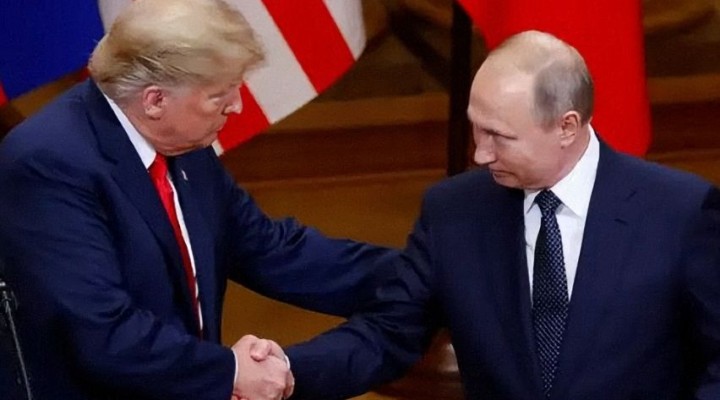
Is it an admission of loss in Hormuz and the start of a withdrawal from the “Middle East”… And how can we see the phase?
For US President Donald Trump to crawl and beg Russian President Vladimir Putin to reach an agreement for the immediate acquisition of 300,000 tonnes of diesel fuel, followed by another 500,000 tonnes in November, in a desperate attempt to lower prices in American markets as the midterm elections (November 3) approach, is a clear admission of defeat in the Iranian war, both militarily and diplomatically. It is a new and practical confirmation of his grand lie, which he constantly repeats, about his control over the Strait of Hormuz and the restoration of oil flow through it to pre-Iranian levels.
This “humiliating” capitulation by Trump to his “friend”, the clever Vladimir Putin, came as a surprise to American lawmakers and a poisoned knife in the back of European friends, since it was unforeseen by both parties. This was especially surprising given that Trump signed a bill last month, overwhelmingly adopted by Congress, which imposed strict sanctions on countries buying Russian oil and gas, in an attempt to increase pressure on the Russian leadership and reduce the financial revenues flowing into its treasury from the sale of its oil and gas.
The Europeans, particularly the Germans, French, and British, who top the list of countries that support, pay, and arm Zelenskyy, Ukraine’s president, and his army, did not hide their outrage at Trump’s poisoned and unexpected jab. The European fury was expressed in official comments and media stories accusing Trump of selling Ukraine to Russia at low rates in a desperate bid to save himself and his Republican Party from a near-certain defeat in the midterm elections on November 3rd.
The truth is that while this Russian diesel deal may lower diesel prices in American markets for a few days, it will not quell popular outrage among American legislators in the House of Representatives and the Senate, because it is a temporary anaesthetic that does not cure the real disease represented by the immense anger within the deep state’s ruling institutions and American public opinion.
This unexpected agreement, whether for NATO and its member states or European capitals, reaffirms Iran’s resilience and victory, as well as the correctness of the official and popular European stance of not intervening in the Iranian war and sending aircraft carriers and warships to support American aggression, rather than what happened in the Iraq and Afghan conflicts. The conflict is primarily an Israeli war, and Iran is a major regional power, unlike Iraq, which had recently emerged from an eight-year war and a more than 12-year blockade, or the Taliban movement in Afghanistan, which lacks tanks, drones, and missiles but possesses supreme fighting will and the willingness to sacrifice lives and blood to defeat the occupying coloniser.
Finally, we conclude that “oil” is the primary factor and driving force behind Trump’s conflicts, to reap trillions of dollars to help America recover from its debt crisis, which has already reached over 41 trillion dollars and is increasing as a result of his costly and failed wars. His enormous mistake, for which America will pay a high price in terms of global status and leadership, as well as the loss of friends and allies, was believing that Iran’s and the Middle East’s oil was easier to acquire than Venezuela’s and at a cheaper cost.
Our message to most Arab leaders is that Trump, who abandoned his European allies and NATO, sold Ukraine and abandoned its people, crawled to President Putin for a lifeline for the upcoming elections, to stay in power with his party, and to continue serving his Zionist operator in Tel Aviv, will undoubtedly abandon them by selling them at the lowest possible price. The deep state in America has admitted and declared its defeat in the Middle East, and the American empire is swiftly following in the footsteps of the British and French European empires, which means departing the area. This situation explains the demolition of its outposts in Iraq, Kurdistan, and the Gulf region following their destruction during the previous war, as well as the failure to safeguard them and the countries on their turf from “bogeyman” Iranian missile and drone strikes, and possibly nuclear strikes in the future.
https://www.raialyoum.com/what-can-americas-arab-allies-learn-from-the-trump-putin-diesel-deal/

0 thoughts on “What can America’s “Arab” allies learn from the Trump-Putin “diesel” deal?”