 TheAltWorld
 Did the Gulf leaders influence Trump to stop attacking Iran?
How likely is it that certain Gulf airports will witness a reprise of the humiliating American retreat from Kabul?
The big question currently on the lips of all those following the war in the Arabian Gulf region is what will happen, whether in war or peace, after President Donald Trump’s humiliating retreat from his plans to launch major strikes against Iran, which would have been “the largest attack since World War II.”
The sole response came from Trump, who claimed that negotiations between a US delegation and its Iranian counterpart would begin today, Monday, on an accord that is quickly taking shape for the imminent opening of the Strait of Hormuz to international navigation. However, Ismail Baqaei, the spokesperson for the Iranian Foreign Ministry, denied any plans for negotiations with the United States and confirmed that all members of the Iranian negotiating delegation are currently in Iran, with no plans to receive or send delegations to any party at this time.
President Trump, who has not stopped chattering and making contradictory statements since the beginning of this war five months ago, is trying to find excuses to justify his retreats, and thus his field defeats, and his failure to achieve any of his goals from this aggressive war, the most prominent of which are Iran’s surrender, the overthrow of its regime, the stripping of its nuclear programs, and more than 460 kilograms of highly enriched uranium, and the aba
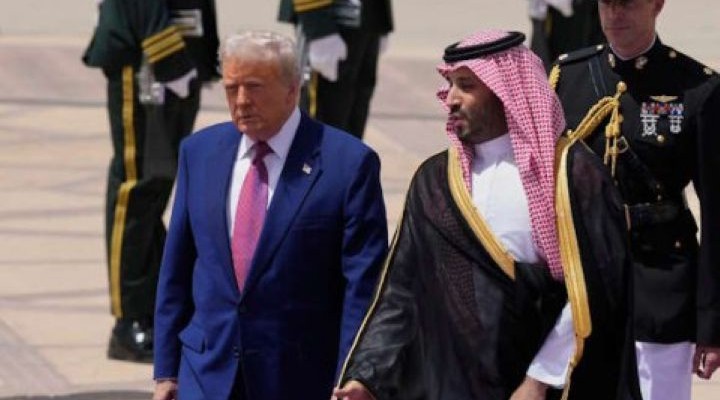
The key justification for the American president’s recent retreat came during his conversation with the media that accompanied him on his jet as he returned from his palace in Florida, where he spent the weekend. He said, “He decided to refrain from issuing orders to American forces to carry out new strikes against Iran after persistent requests from allied leaders in the Arabian Gulf, led by Crown Prince Mohammed bin Salman of Saudi Arabia.”
An Arabic proverb states, “He who wants to strike…” “Don’t throw stones if you live in a glass house,” and this is precisely what Trump has been doing for the previous five months, full of threats, the most prominent of which were to remove Iran from the map, erase it from existence, and open the gates of hell upon it. The latest attack was the largest since World War II. Trump imagined that by threatening aircraft carriers, destroyer fleets, and nuclear bombs, Iran would be terrified and forced to yield immediately. So far, the situation has been completely reversed.
It is natural for Gulf leaders to rush to demand that the American president retract his “verbal” threats and halt any attacks against Iran, small or large, because the confirmed Iranian response to these strikes will not be limited to American bases as it has been recently, but will extend to strategic civilian infrastructure, such as power plants, especially since President Trump threatened to bomb their Iranian counterparts.
We must picture how the Gulf countries would fare without water or electricity during the summer months, when temperatures exceed 50 degrees Celsius.
The most dangerous aspect of the situation is that the Trump administration is reportedly considering lowering the number of troops stationed in two nations, Kuwait and Bahrain, thereby retreating or halting the rising financial and human costs that are being kept hidden.
If reports are correct that Saudi Arabia and Kuwait have threatened to close their airspace to American planes and missiles in the event of an unprecedented American attack, then this threat is legitimate, because these American bases have become a strategic burden and a source of existential danger, as they have failed to protect these countries from Iranian missiles and drones.
In view of the growing losses and retreats, American forces are expected to withdraw from their bases, abandoning the “allied” Gulf countries, and there is abundant evidence to support this scenario. Didn’t America leave its allies in Saigon, Vietnam? Didn’t American forces shamefully flee from their allies in Afghanistan, who clung to the wheels of their planes at Kabul airport, leaving tens of thousands to face their awful fate in their country, which they abandoned and fought against, the Taliban?
We do not rule out any possibilities in light of these rising “Trumpian” retreats, the disastrous repercussions, and the quick proliferation of mutinies among American military leaders against their political leadership.
The commander of the US military in Europe informed his superiors that “his forces are ready to defend American soil, not Israeli.” Do America’s Arab friends recognise this truth, continue on the same path, and so defend, under the American banner, the occupation and carnage in Gaza, Lebanon, Iran, Yemen, and Iraq? Isn’t this war against Iran Israeli in its goal, preparation, and execution?
https://www.raialyoum.com/did-the-gulf-leaders-influence-trump-to-stop-attacking-iran/

0 thoughts on “Did the Gulf leaders influence Trump to stop attacking Iran?”