 TheAltWorld
 Why would the United States and Israel want to undermine the Oman gathering?
Will the ongoing conflict in Yemen be at the top of its agenda? Why did we want Egypt and Jordan to be invited to participate?
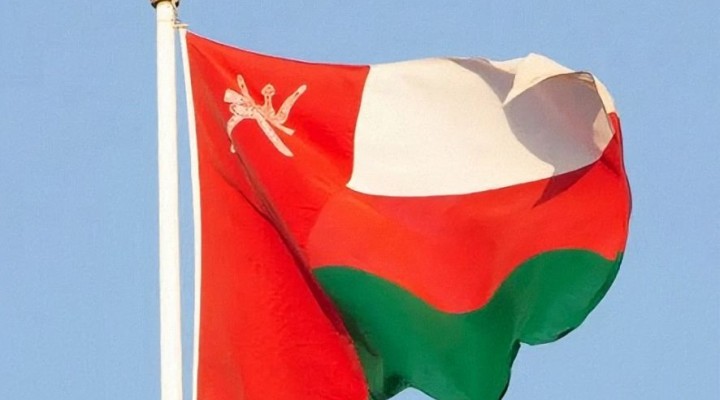
The meeting in Salalah, Oman, next Monday, involving Iran and the six Gulf states, is a promising step for the negotiating process for several reasons.
First, these conversations, the first of their type and long overdue, are taking place face-to-face between the Gulf countries’ foreign ministers and Iran, free of American involvement and threats. The United States is an aggressor state, attempting to promote sectarian and political instability and blackmail Gulf countries under the guise of security.
Second, it has been decisively shown that America, which has paused its assault, and “Israel” have failed to achieve any of their goals, particularly the regime’s fall and the destruction of Iran’s nuclear programme. The reason for this failure is Iran’s combat resilience and reluctance to yield its positions or make any compromises in the face of American military and economic threats.
Third, the Gulf countries have suffered the most as a result of this conflict, which is now in its sixth month. Most of these countries received nothing because they could not export their oil and gas; Iran closed the Strait of Hormuz and insisted on its demands, especially the lifting of maritime and economic blockades and the release of frozen assets. It is worth mentioning that the Gulf countries used to export 20 million barrels of oil per day through the Strait of Hormuz, and all American aircraft carriers and warships failed to open it, either through force or diplomacy. Some Gulf governments have borrowed hundreds of billions of dollars to fund their budget deficits and suspended many economic initiatives.
Fourth, certain mediators, whether Arab or Muslim (such as Pakistan), were American tools who were terrified of the American administration, particularly President Trump. They served as couriers, conveying American conditions and pressures to Iran; therefore, they were not neutral.
Fifth, the Sultanate of Oman is a Gulf country, and it chose the best and shortest way to negotiate, as the dialogue is among family members. Everyone, including Americans, respects its leadership. We should not forget how Omani mediation succeeded in obtaining an agreement acceptable to all during the Geneva negotiations and the previous, cancelled negotiations between the United States and Iran in Muscat. President Trump lambasted Oman because its mediator, Foreign Minister Badr al-Busaidi, was trustworthy and impartial. It eventually became evident that “Israel” was behind this abortion because it does not want an Iranian-American deal that would end the war; instead, it wants it to continue.
Sixth, the Gulf countries have awoken from their slumber and realised that America, and even Israel, cannot protect them, and that the bases within them, most of which have been destroyed, particularly in Bahrain (which announced its non-participation in the meeting on Monday in Salalah) and Kuwait, are intended for financial extortion. The evidence is Trump’s return with more than 5 trillion dollars during his first visit to three Gulf countries in May 2025, as well as hundreds of millions in presents for him and his wife, the most prominent of which was a $400 million special presidential plane.
The Sultan of Oman, Haitham bin Tariq, achieved this feat not only via his strong ties with everyone but also through his wisdom, silence, and shuttle journeys to most Gulf capitals.
Once again, we believe that the Gulf countries, which were most affected by the Iran-American-Israeli war, could be the biggest winners, particularly if the meeting results in an agreement to temporarily open the Strait of Hormuz and return oil tankers to their original role of transporting oil to global markets.
We had hoped Egypt and Jordan would be invited to this summit, but the initial focus was only on the Gulf countries, given their lack of a connection to the Strait of Hormuz. We had hoped to see another historic reconciliation meeting soon involving them, the Gulf countries, and Iran.
We hope Yemen’s ongoing conflict will be a priority at the Salalah ministerial conference, and we reaffirm that Oman has the trust of all parties involved. Let there be an Arab-Iranian reconciliation gathering, and keep the doors firmly closed against American and Israeli sedition… And it is not too much for God.

0 thoughts on “Why would the United States and Israel want to undermine the Oman gathering?”