 TheAltWorld
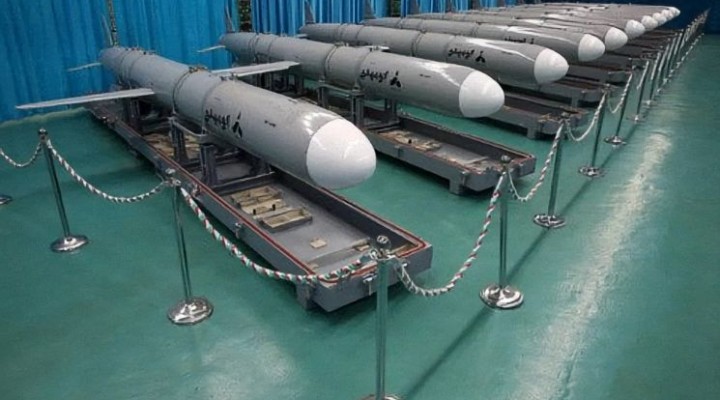
 What is the new Iranian missile that was employed for the first time to attack aircraft carriers?
What serious dangers did Rezaei and Ghalibaf pose that prompted Trump to back down? And why, for the first time, is Netanyahu hinting at using nuclear weapons? How did Iran win the tanker war?
The events of the last few days revolved around two major issues: first, the tanker war between America and Iran, and the Iranian missile response announced by the Revolutionary Guard, which included the bombing of an aircraft carrier and two American destroyers; and second, American silence and Trump’s swallowing of his threats, without responding to these rapid and strong Iranian military responses, and the destruction of a country called Iran.
The Iranian authorities have adopted a new policy to replace the previous one, which emphasised moderation and a carefully calibrated response to avoid escalation. The most noticeable characteristic of this new strategy is the swift retaliatory response, the widening of the war’s breadth, and the introduction of new precision missiles into the battlefield, all of which cause shock and, as a result, retreat on both the American and Israeli sides.
Several indicators support this reality, shedding insight on the American quiet and withdrawal, as well as the motivations that led to it, at least in the near term:
- First, General Mohsen Rezaei, Secretary of the Iranian National Security Council, announced yesterday that an Iranian anti-destroyer missile was tested over an American warship 48 hours ago, emphasising that the missile, when used for the first time, caused hell for the Americans who chose to flee.
- Second, General Rezai explained for the first time why Trump did not follow through on his warning to fully destroy Iran if it replied to the American strike on Lark Island in the Strait of Hormuz. He ascribed this to Iranian missiles striking significant American facilities in the region, including the Titiin facility in Jordan and comparable ones in Erbil, the capital of the Kurdish region in northern Iraq, which houses large numbers of soldiers and advanced American military equipment.
- Third, the Speaker of Parliament and head of the negotiating delegation, Mohammad Baqer Qalibaf, has threatened to bomb American oil and gas companies throughout the region if Iranian oil tankers are attacked by the US, in a strong response to US Secretary of War Pete Hegseth’s warning yesterday that his country would sink and destroy Iranian oil tankers.
- Fourth, General Rezaei announced the establishment of a restricted area outside the Strait of Hormuz, encompassing portions of the Persian Gulf, and the bombardment of any ships that enter these areas.
- Fifth, Israeli Prime Minister Benjamin Netanyahu emerged from his underground hiding, promising to “deliver a blow to Iran that you cannot imagine if it makes the mistake of attacking Israel…” As a result, the strikes were halted.
By outlining these five points, reading them thoroughly, and comparing them to previous strategic outlines, it is possible to confidently state that the new Iranian leadership has shifted from cautious attacks to expanded assaults, employing all new weapons not used in previous confrontations. This demonstrates a commitment to a deterrence policy centred on seizing the initiative and launching immediate, rapid attacks on enemy targets, rather than waiting for the enemy to strike.
Ghalibaf, the Iranian parliament speaker, summarised Iran’s new deterrence policy, declaring that “not a single drop of oil will pass through the Strait of Hormuz or elsewhere in the event of any disruption to Iranian oil exports.” This includes continuing to close the Strait of Hormuz and Bab el-Mandeb, as well as attacking oil wells and American oil corporations throughout the area, rather than just American bases.
In preparation for the war’s lengthy duration, most of these countries have reduced domestic spending and implemented austerity programmes.
Netanyahu has recently threatened to destroy Iran with nuclear weapons.

0 thoughts on “What is the new Iranian missile that was employed for the first time to attack aircraft carriers?”