 TheAltWorld
 Opposing military occupation in Gaza is not opposition to the structure of military occupation
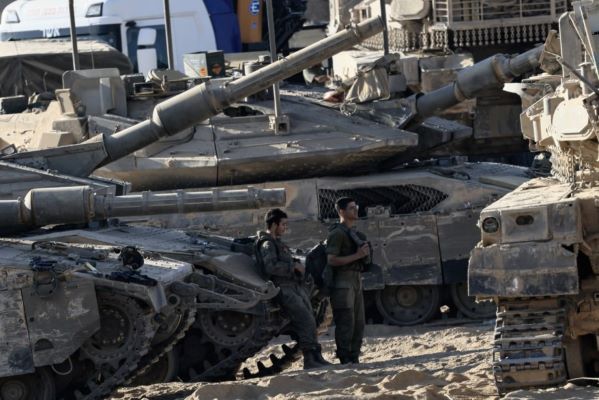
There is no particular enthusiasm for Israeli Prime Minister Benjamin Netanyahu’s plans to force a military occupation upon Gaza as part of the colonial genocidal plan. From across the Israeli political spectrum, Netanyahu has faced backlash over the “take over” – Israel’s euphemism for military occupation. The plan is based on “five principles to end the war” – besides the regurgitated rhetoric of disarming Hamas and returning the hostages, the military occupation is also set to demilitarise Gaza, implement Israeli security control and “establishing an alternative civilian administration that is neither Hamas not the Palestinian Authority.”
Israel so far controls 75 per cent of Gaza, and Palestinians are ensconced in shrinking territory which makes them easier targets for the Israeli military.
Despite the opposition within Israel to Netanyahu’s plan, the reasons are far from noble and far from anti-colonial. The same can be said for the West – a joint statement by the UK, Germany, Italy, New Zealand and Australia partly stated, “Any attempts at annexation or settlement extension violate international law. It will aggravate the catastrophic humanitarian situation, endanger the lives of the hostages, and further risk the mass displacement of civilians.”
Within Israel, Opposition Minister Yair Lapid denounced the plan for the toll it will take on the Israeli military and security apparatus. Lapid added that the military occupation of Gaza would “lead to the death of the hostages, the killing of many soldiers, cost tens of billions to the Israeli taxpayers, and lead to a political collapse.”
Head of Yisrael Beiteinu party Avigdor Lieberman opposed the plan for similar reasons, noting that “life-and-death decisions are being made in opposition to security considerations and the war’s objectives.”
Democrats Party leader Yair Golan accused Netanyahu of implementing the strategy to ensure his political survival, while enforcing “a death sentence for the hostages and more bereaved families.”
And while Israelis will of course look after their own, both Israel and the West are missing the entire point. Israel is committing genocide in Gaza, and Israel is founded upon colonialism, supported by military occupation of the Palestinian territories. Israel and the West are only averse to imposing military occupation on Gaza due to the current implications, not out of opposition to the concept of military occupation.
Since 1967, Israel imposed a military occupation over the Palestinian territories, increasing settlement expansion, land grab, forced displacement, humanitarian deprivation, surveillance and entrenching an apartheid system in the occupied West Bank which was only recently recognised mainly by human rights organisations. The international community is not averse to calling for “ending the occupation” and the phrase itself has become a slogan almost devoid of meaning. What is envisaged by ending the occupation? Is the international community truly in favour of dismantling a system that has been profitable both for Israel and the West, to the detriment of the Palestinians as always?
For the international community, “ending the occupation” gives the freedom to ignore the entire colonial structure, the gradual erasure of Palestine since the first Zionist settler-colonies were established before Israel declared its so-called independence upon the remnants of the 1948 Nakba. It gives complete impunity for devising the right of return resolution that completely endorses Israel’s colonial existence and forces Palestinians to make peace with the enterprise that caused its ethnic cleansing and territorial loss. In the international community’s hyperbole, “the occupation” is an excuse for inaction and a veneer behind which it hides to protect colonialism.
The recent calls for Israel to refrain from occupying Gaza illustrates how the international community has normalised earlier military occupation and differentiates between the 1967 occupation of the West Bank and the forthcoming occupation of Gaza. The former, after all, hosted the illusory Palestinian state-building. Gaza is a completely different scenario. With genocide continuously unfolding, the obligation to say something and refrain from acting is more pressing.
Israel’s approach towards occupation follows a similar pattern. The occupied West Bank, fragmented as it is with settlement expansion, will not be subjected to the same calls as Gaza. The politics of the occupied West Bank, embellished by the Palestinian Authority’s subservience, the dependence upon foreign donors to maintain an illusion of economic prosperity, settler presence and de facto annexation have provided a level of comfort for Israel in terms of maintaining what it has already established. No Israeli official will call for dismantling the military occupation of the occupied West Bank – territorial loss and demographic changes are not issues a settler-colonial enterprise wants to deal with.
Gaza, however, represents the essence of Palestine and what Israel is up against in terms of Palestinian resilience. The divide between Gaza and the occupied West Bank, which was promoted by both Israel and the international community, also enables Israelis to differentiate between the normalised occupation that is already entrenched, and a forthcoming one which is perceived as risky given the genocide context. In the occupied West Bank, occupation is legitimised by Israel, and profitable. Is Israel really against military occupation if it is only concerned with the forthcoming occupation of Gaza, and not the military occupation of the West Bank?
Israel and the international community have already normalised the unthinkable – genocide. But to continue normalising genocide, there is the realisation that the earlier structures of international law violations need to be reinforced. By focusing on Netanyahu’s plans to occupy Gaza, the earlier occupation since 1967 which supports Israel’s colonisation of Palestine is perceived and reasserted as an integral part of the colonial enterprise. Less questions will be asked about the occupied West Bank because Israel’s genocide in Gaza is what currently reflects colonial atrocities back to the governments supporting it.
Occupying Gaza cannot be viewed as an exception in Israeli settler-colonial politics. If Netanyahu’s plan succeeds, how long will it take his opponents and the international community to legitimise yet another international law violation, as they did with the genocide in Gaza? There is a precedent here that cannot be ignored.

0 thoughts on “Opposing military occupation in Gaza is not opposition to the structure of military occupation”