 TheAltWorld
 Israel’s alternative to colonisation is still colonisation
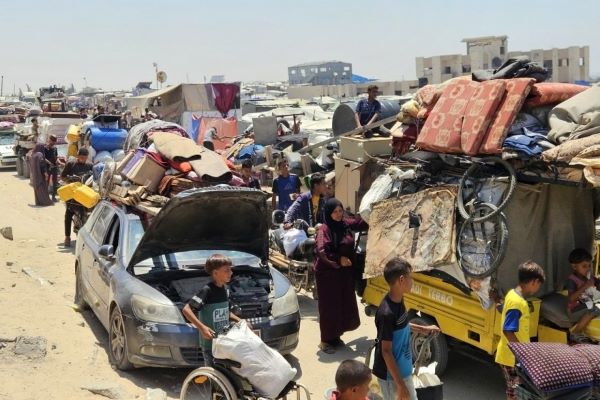
Whether Israel decides to go ahead with its so-called humanitarian cities or occupy further territory in Gaza, the end result is still colonisation. The international community is too busy trying to navigate the dynamics of the new humanitarian and rescue its diplomatic relevance to bother with the slightest remaining vestiges of human rights.
Human rights are no longer rights. Israel decides the violations, and the international community decides how best to save face as Palestinians are tortured, displaced, starved and killed. Palestinians serve the humanitarian paradigm, as opposed to the humanitarian paradigm serving Palestinians. So what does one expect when the Israeli military suggests further seizure of territory in Gaza as an alternative to Israel’s concentration camps for Palestinians?
If Israel seizes more territory, where do the Palestinians go?
According to Israeli Defence Minister Israel Katz, the Israeli military is occupying 70 per cent of Gaza’s territory. If Israel occupies further territory in Gaza, and Palestinians are not allowed to return to their homes, the concept of a concentration camp that is even narrower than the previous image of Gaza as a concentration camp will materialise.
Whether the ‘humanitarian city’ plans are moved forward, whether Israel decides to occupy and eventually colonise more of Gaza’s territory, or both, the international community is looking at the forced displacement of the Palestinian people in Gaza. It is witnessing the repercussions of having not only allowed, but also legitimised, the Zionist ethnic cleansing of Palestinians from Palestine in 1948.
Recently, the EU Commissioner for Equality, Preparendess and Crisis Management, and the foreign ministers of 30 countries made a joint statement that, on paper, opposes Israel’s actions in Gaza and settlement expansion in the occupied West Bank. “Permanent forced displacement is a violation of international humanitarian law,” the statement partly reads with regard to Gaza. About the occupied West Bank, “We strongly oppose any steps towards territorial or demographic change in the Occupied Palestinian Territories.”
Having got the rhetoric out of the way, what are these countries really doing to oppose Israel’s actions? Nothing. Permanent forced displacement was a violation long before the genocide in Gaza, but diplomats at the time had a humanitarian paradigm to fall back on. It was easier for the international community to normalise Israel’s forced displacement of Palestinians when it could rely on UNRWA to provide the bare minimum, as the international community intended all along.
The international community is not truly opposed to forced displacement or demographic changes. If it was, Palestinians would not have remained refugees since 1948. What the international community is worried about is its diminishing relevance, which erodes further the longer it refrains from opposing Israel and holding it accountable. Observing from the sidelines and keeping trade deals, while issuing a statement that holds even less meaning than non-binding UN resolutions, does not protect Palestinians. Whichever way Israel chooses, Palestinians will still be forcibly displaced in full visibility, and the international community will still be wringing its hands about the demise of the flawed humanitarian paradigm and berating the loss of its own relevance.

0 thoughts on “Israel’s alternative to colonisation is still colonisation”