 TheAltWorld
 What’s The Likelihood Of A NATO-Russian Clash Around 2030?
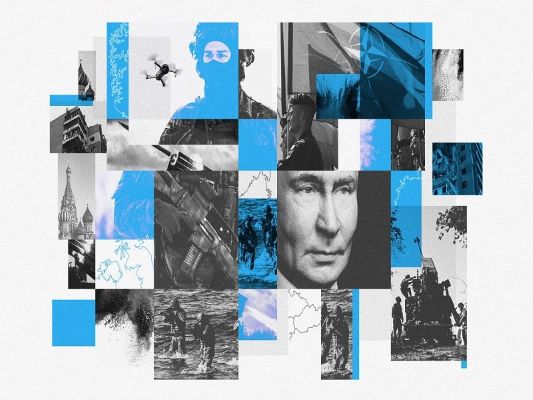
If Russia continues fighting this “war of attrition” for years to come instead of decisively ending it soon, then it’ll be more vulnerable than ever to the “cordon sanitaire’s” invasion threats around 2030, thus compelling it to either capitulate or resort to nuclear weapons in self-defense.
RT drew attention to Deputy Foreign Minister Alexander Grushko’s recent assessment that “we proceed from the premise that [NATO is] really preparing for a military clash with Russia somewhere around 2030.” This followed the National Defense Strategy declaring that “European NATO dwarfs Russia in economic scale, population, and, thus, latent military power”, but these resources must be properly managed in order to unleash their full potential. The US seeks to fulfill this management role for the EU.
Accordingly, it was concluded that “The EU Poses A Much More Credible Threat To Russia Than The Inverse”, which preceded former President and incumbent Deputy Chair of the Security Council Dmitry Medvedev warning about the 1941-like threat posed by Germany’s remilitarization. Earlier this month, former top Russian spy Andrey Bezrukov raised awareness of the “new war” that he believes that Russia is in and which might last decades, one primary goal thereof being to neutralize its nuclear capabilities.
Grushko’s assessment coincided with the start of Trump 2.0’s “war of attrition” against Russia, so taken in sequence, it’s arguably the case that the US hopes to atrophy Russia through Ukraine prior to the EU becoming powerful enough to threaten a then-weakened Russia with invasion. The “cordon sanitaire” that formed around Russia over the past year largely due to Trump 2.0’s Neo-Reagan Doctrine could also lead to Turkiye and/or Japan threatening the same in order to obtain maximum concessions from Russia
This US-organized geostrategic construct was built in the Arctic-Baltic through UK-led efforts, Central Europe through Polish-led efforts, along Russia’s entire southern periphery through Turkish-led efforts, and in Northeast Asia through Japanese-led efforts. If Russia’s nuclear capabilities are neutralized or severely degraded by that time, then it might be coerced into selling controlling stakes in its state natural resource companies to the West for pennies on the dollar, which is Trump 2.0’s grand strategic goal.
Given this goal and the modus operandi of first trying to achieve it through the incipient “war of attrition” against Russia before threatening the use of force by around 2030 if that fails, Russia’s urgent interests are as follows. It must swiftly end the Ukrainian Conflict on as many of its terms as possible in order to then focus on preparing for potentially impending clashes with the US-led “cordon sanitaire”. Remaining embroiled in the “war of attrition” will sap its strength and make it relatively weaker by then.
Between now and then, Russia must also employ creative means for breaking this “cordon sanitaire” or at the very least preventing it from extending to Kazakhstan, which could potentially involve prioritized intelligence operations against shadow NATO member Azerbaijan or even another special operation. In parallel, it might also leverage its influence with North Korea to embolden Kim Jong Un to carry out more missile and possibly nuclear tests, hoping to abruptly shift the US’ focus from Europe to the Asia-Pacific.
If Russia continues fighting this “war of attrition” for years to come instead of decisively ending it soon, then it’ll be more vulnerable to the “cordon sanitaire’s” invasion threats around 2030, thus compelling it to either capitulate or resort to nuclear weapons in self-defense. Neither scenario is favorable, but both would be due to Russia failing to restore deterrence by then. It’s therefore imperative to immediately restore deterrence, swiftly win the Ukrainian Conflict, and then break this new “cordon sanitaire”.
https://korybko.substack.com/p/whats-the-likelihood-of-a-nato-russian-1fc

64 thoughts on “What’s The Likelihood Of A NATO-Russian Clash Around 2030?”