 TheAltWorld
 Will Trump delay or launch his second Iran attack in hours?
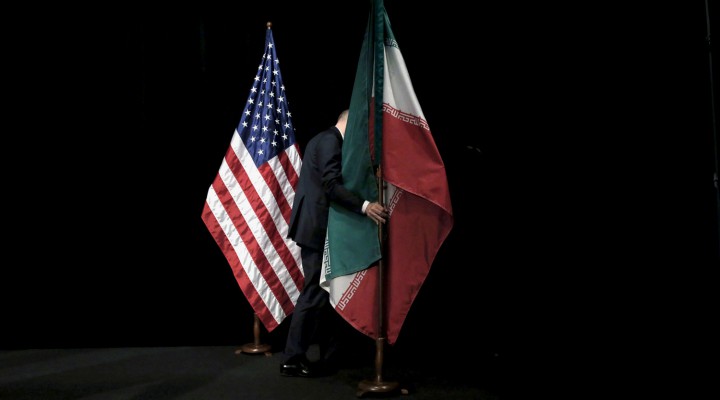
Which of the four scenarios favours a delay? What military shocks will Iran throw at him?
The deployment of the Abraham Lincoln aircraft carrier and three destroyers carrying 75 cutting-edge F-15 bombers and 6,000 soldiers, along with threats from U.S. President Donald Trump to deliver a “devastating” military strike against Iran that would eradicate it from the planet, does not imply that the strike is inevitable. This is because Trump is “too cowardly” to use a single aircraft carrier to fight a war in the Middle East or anywhere else. This assertion is confirmed even by his threats of using force, which he has already retracted, including the most recent one against Iran and earlier ones against China and Russia.
Similar to his predecessor George W. Bush’s 2003 invasion of Iraq, Trump is blindly leading his troops and aircraft carrier to attack Iran. He is initiating this war independently, without the backing of a Western coalition. Therefore, Iran is likely to rebuff his threats and decline to engage in negotiations on his terms, particularly given its recent use of force and strategic intelligence management to quell the protests, thwart the American-Israeli plot to topple the ruling Islamic regime in Tehran, and avert the assassination of Imam Sayyid Ali Khamenei, the Supreme Leader.
Four key factors that need to be taken into account in this grave situation support this hypothesis:
Initially, today, the Pentagon (Department of Defence) unveiled the new American defence strategy, which calls for America’s Middle Eastern allies to better prevent Iran, assist Israel in defending itself, and integrate with it. The countries of the Middle East must now take issues into their own hands and not rely on America to fight their wars; the evidence indicates that the United States prefers that others wage wars in the region. One notable example may be the ongoing conflict between Trump and his European allies, which has escalated since he publicly accused them of remaining in the background and allowing American forces to carry out this mission, particularly in Iraq and Afghanistan, while suffering significant material and human losses.
Second: The Israeli Channel Two reported that “If Iran confirms the inevitability of the American strike, it may launch a missile strike on ‘Israel’ that could cause massive human and economic losses,” reflecting the fear and anticipation that is currently prevalent in “Israel” due to the potential Iranian military response. Numerous airlines have suspended flights to Tel Aviv due to this.
Thirdly, multiple Iranian leaders have confirmed that their nation will treat any American attack—whether targeted, comprehensive, or limited—as a declaration of full-scale war and will respond with all available weapons, including weapons of mass destruction, indicating that Iran is prepared for the worst.
Fourth: The military and spiritual leadership of Iran recognises that a protracted conflict that devolves into an attrition-based conflict is what makes their adversaries in Israel and America weak. Iran will therefore focus on this potential by implementing a carefully planned and long-term military strategy that capitalises on the significant errors made during the “12-day war” in June of last year, which occurred during the American-Israeli dual onslaught. Here, we are discussing the “regret” of some Iranian authorities for accepting the ceasefire so quickly rather than continuing the conflict.
The next conflict will be “comprehensive”, according to Iranian military, political, and parliamentary sources. This information indicates that the response will be all-encompassing and won’t be restricted to the American military installations on the Gulf’s western bank or the Arab side. However, it will unavoidably reach “Israel,” failing to differentiate between military and civilian targets, as it previously did. The participation of resistance groups in this conflict is an unavoidable aspect of its comprehensiveness. We are discussing “Hezbollah” in Lebanon, which has refused to surrender its weapons despite all official, Israeli, and American pressures, and the “Ansar Allah” movement in Yemen, which has a well-thought-out plan to use force, weapons, and “new” missiles to combat American aircraft carriers and destroyers that are infiltrating the area. In this sense, it is the only one with real-world experience. We can also add the Iraqi Popular Mobilisation Forces and perhaps the “Hamas” and Islamic Jihad movements in the West Bank and Gaza Strip as well.
The rapid official Iranian control over the protests and their swift resolution in less than three weeks confirms the hypothesis about good and precise preparations and the closure of the most significant gaps in the Iranian military and security fronts. It is certain that this sudden intelligence success in capturing hundreds of spies and their satellite phones, with the help of China and North Korea, might also indicate unexpected aerial, missile, and naval defensive preparations.
The unexpected arrival of the duo Jared Kushner and Steve Witkoff in Tel Aviv today (just hours after the arrival of CENTCOM Commander Brad Cooper) is not for the purpose of discussing a ceasefire in Gaza as stated in the official statements, but rather about the expected American military response against Iran and its timing, or even the possibility of retracting it in anticipation of the dire consequences that could result from it.
The next ten days could be the “most dangerous” for the Middle East and the Arab and Islamic worlds, and we might witness a “second Vietnam” that could be fatal for America and its Israeli ally. As for Iran, which is a “great regional power” in terms of size and armament, it may emerge from any upcoming war heavily wounded, similar to those who have fought in wars throughout history. But it will stay on the map and may become the region’s strongest, while Arabs and Jews may vanish.

0 thoughts on “Will Trump delay or launch his second Iran attack in hours?”