 TheAltWorld
 Will the Strait of Hormuz serve as the final resting place for Trump and Netanyahu?
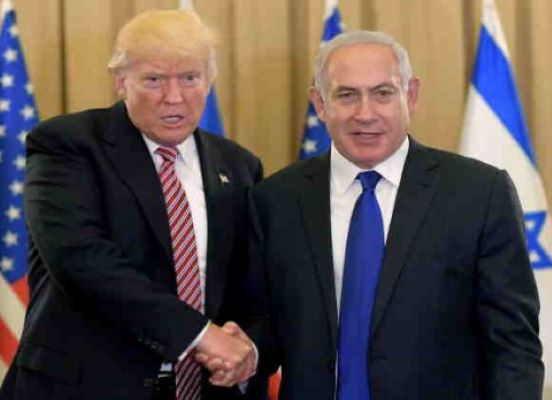
What surprises is the “Revolutionary Guard” preparing for the Gulf ports? What are the new confidential details that hastened the process?
When J.D. Vance, the U.S. Vice President, admits that the central issue for President Donald Trump in the Islamabad negotiations was the removal of enriched uranium from Iran and ensuring no future uranium enrichment, in his conversation with Benjamin Netanyahu after the negotiations collapsed, it means, at first glance, that the Islamabad negotiations reached a dead end from the very first minutes of their commencement and that the one setting their agenda and determining their course from afar.
The Iranian negotiators were exceptionally adept at understanding the true objectives of the indirect negotiations in Muscat, Geneva, and Vienna, which lasted nearly two years. Consequently, they maintained their steadfast stance on the absolute freedom of uranium enrichment and its levels, as well as the retention of sufficient quantities to facilitate the rapid production of nuclear warheads to counter any American-Israeli aggression using tactical or major nuclear weapons. They did not compromise in the slightest. The Iranian leadership widely recognises that the scenario of aggression followed by occupation, which was implemented in Libya and Iraq under the guise of reforms, democracy, and human rights, will be replicated in Iran. The plan is prepared for this occasion.
The Islamabad negotiations were ultimately unsuccessful due to the Iranian delegation’s awareness of the American-Israeli plan. The Iranian delegation, led by Speaker of Parliament Mohammad Baqer Qalibaf, who is regarded as one of the most prominent leaders of the hawkish axis and combines politics and military, rejected negotiations on the two points of stopping enrichment and transferring enriched uranium outside of Iran.
The American military deployment of a force of “Marines” south of Isfahan was not to search for the American pilots whose “F-15” aircraft was shot down, but rather to search for and seize the stockpile of enriched uranium that American and Israeli intelligence believed was located in an Iranian nuclear facility in the targeted area. Ali Nikzad, Deputy Speaker of the Iranian Shura Council and a member of the negotiation delegation, confirmed this assertion.
This significant American defeat, which was both military and diplomatic, severely impacted President Trump in Washington and Benjamin Netanyahu in occupied Jerusalem. Consequently, the former (Trump), incited by his mentor, the latter (Netanyahu), decided to issue a new threat to impose a blockade on all Iranian ports to prevent its oil exports and intercept any ship or oil truck that pays fees to the Iranian treasury for passing through the Strait of Hormuz. This decision was made after Iran rejected an American proposal to establish a new legal system for the strait and share the fees that would be imposed within its framework.
The American blockade on Iranian ports, which Tehran regarded as “piracy” and threatened to confront with force, was only supported and endorsed by Netanyahu. Consequently, if the safety of Iranian ports is compromised, the security of all Gulf ports in the vicinity will be jeopardised. In the 40-day war that culminated in its defeat, America’s plans were unsuccessful due to its misjudgment of the size and efficacy of Iranian power. The Iranian regime maintains its strength, its army continues to regulate the Strait of Hormuz, it maintains its uranium stockpile, and it has successfully destroyed 20 aircraft, two of which were stealth aircraft. This defeat will be replicated and reinforced in the forthcoming conflict of port blockades.
Thirteen million martyrs are awaiting any American ground invasion of Iran, and hundreds of martyr vessels are preparing to launch, scuttle, and destroy any American warship that approaches the Strait of Hormuz. This strait will inevitably serve as a grave for President Trump and his ruler, Netanyahu, in the same manner as the Suez Canal did for British Prime Minister Robert Anthony Eden, who led the tripartite aggression in 1956. For this reason, Keir Starmer, the British Prime Minister, and his French partner Emmanuel Macron are at the forefront of those opposing any American siege of the Strait of Hormuz to avoid a certain defeat. And the days are between us.
Will the Strait of Hormuz serve as the final resting place for Trump and Netanyahu?

0 thoughts on “Will the Strait of Hormuz serve as the final resting place for Trump and Netanyahu?”