 TheAltWorld
 Why did Trump postpone his aggression on Iran?
What are the three Israeli demands that will not be met during negotiations?
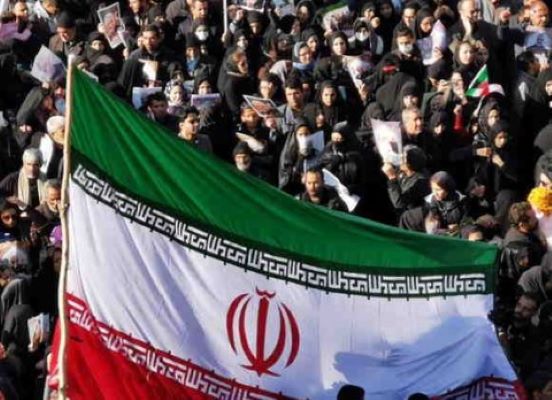
Imam Sayyid Ali Khamenei, the Supreme Leader of the Islamic Revolution, has appeared in three open and public meetings recently, engaging in dialogue with Iranian citizens and sending a strong and shocking message to US President Donald Trump and Israeli Prime Minister Benjamin Netanyahu. The message conveys that Mr Khamenei still has the final say in Iran, does not hide in an underground bunker due to assassination threats, and has never given up his leadership and spiritual powers, contrary to what some Arab and Western media outlets have promoted through deliberate leaks as part of the psychological war against Iran, coinciding with the US military buildup in the region.
In contrast, Israeli officials at the highest political and military levels are rushing to Washington in fear and terror of President Trump’s retreat from his threats to launch an attack on Iran, replacing the military option with a peaceful negotiation option, and reaching an agreement with Iran that excludes Israeli demands and conditions. General Eyal Zamir, Chief of Staff of the Israeli Army, paid a surprise visit to the American capital and spoke with senior military authorities, accompanied by notable members of his army, including the commander of the air force.
President Trump may have lost this war, but he also lost his dignity and credibility by failing to carry out his threats and convert them into strong acts on Iranian soil. Instead, he resorted to sending mediators—the latest being his friend, Turkish President Recep Tayyip Erdoğan—to reopen negotiations with Iran after realising that his naval and aircraft carrier mobilisations bore no fruit and did not intimidate or force the Iranian leadership to raise the white flag. He may be defeated in either scenario, whether he goes to war or seeks a political and diplomatic solution.
The word “secret” behind this uncertainty, and possibly the American retreat and postponement of military strikes, comes from a menacing warning issued by Mr Ali Khamenei to President Trump during his meeting with many Iranian civilians on the anniversary of Mr Khomeini’s death. The primary aspect of this message included his statement that “Iran does not start wars, but if it is subjected to aggression, it will confront it with all its might and deliver devastating blows to the enemy. ” Plus, according to him, “This war will be a wide regional conflict, and it will not be quick, swift, short-lived, or clean… free of casualties.” “Free of casualties.” “Regional war” means that all countries, movements, and armed organisations affiliated with the Resistance Axis will take part in this conflict, beginning with Hezbollah in Lebanon, Popular Mobilisation Forces in Iraq, and Ansar Allah in Yemen. The American bases in the region, particularly on the western Arab side of the Gulf, will be valid targets, as will all of the American personnel stationed there, totalling around 70,000 officers and men.
The Israeli occupation state is most frightened not only by Trump’s failure to carry out his aggression against Iran but also by his achievement of an agreement that contradicts all of its articles with the three Israeli demands:
The first step is to prevent Iran from acquiring nuclear weapons, suspend all Iranian uranium enrichment operations at high levels, and transfer all of its stockpile (480 kilos) to a neutral country.
Second, stop the construction and launch of Iranian missiles, as well as dismantle any long-range missiles, whether hypersonic or with multiple warheads, capable of reaching deep into Israel, particularly Haifa and Tel Aviv, as happened during the 12-day battle last June.
Third, completely stop funding and arming resistance forces, particularly “Hezbollah” in Lebanon, its Iraqi equivalent, and Popular Mobilisation Forces factions such as the Al-Nujaba Movement, as well as “Ansar Allah” in Yemen.
Finally, we remind you that the return of 5,000 American soldiers in coffins to Washington after being killed by Iraqi resistance during the 2003 occupation compelled then-President Barack Obama to admit defeat and withdraw 160,000 American soldiers from Iraq in November 2011 to reduce losses. Any aggression against Iran will result in the deaths of at least four times the previous number in the early stages, due to Iranian resolve, missiles, advanced drones, and other secret weapons that could be significant surprises if war begins.
Perhaps the decline in oil prices, the collapse of gold and silver prices, and the dollar at shocking rates in global financial markets are among the most prominent indicators confirming what we mentioned earlier, namely the reduced likelihood of war, Trump’s inclination toward diplomatic solutions and negotiations out of necessity, and his initial admission of his failure to achieve a military resolution, avoiding losses and the long regional war threatened by the days passing us by.

0 thoughts on “Why did Trump postpone his aggression on Iran?”