 TheAltWorld
What does Mr. Mojtaba Khamenei’s order to respond to American-Israeli aggression without “geographical” limits mean?
The events of the past eight months of the Iranian-American war have taught us that US President Donald Trump has never followed through on his threats to unleash military strikes against Iran. He has frequently backed down from these threats several hours, if not minutes, before carrying them out. Based on this, we approach Israeli leaks claiming today, Saturday, that Trump intends to resume strikes on Iran next Wednesday, one day after the US midterm elections, with the involvement of the Israeli occupation state, with extreme scepticism. This scenario explains the Israeli army’s high alert status, as well as the recent installation of an American military air bridge to supply the IDF with intercept missiles and other military equipment.
Three options could lend legitimacy to these leaks, as outlined and summarised in the following points:
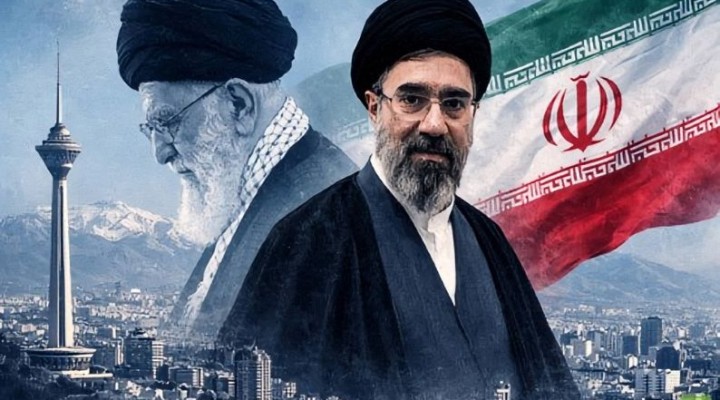
The first is a statement issued by Iranian Supreme Leader Mojtaba Khamenei and published on his website in which he instructs the Iranian army to respond to American and Israeli threats without “geographical restrictions” and “that if the enemies launch their attack, the Iranian armed forces and the Iranian people will determine the timing and conditions for its conclusion.”
Second, the State of Qatar has resumed its mediation between the United States and Iran, sending a delegation to Tehran yesterday at the US’s request in a “final attempt” to resume negotiations and avoid armed conflict. As a result, sources from Doha suggested that the Qatari team met with Iranian officials for 12 hours straight before returning to Doha without making any public announcements about the conclusion. The hasty restart of this mediation followed a communication issued by US Vice President J.D. Vance to General Mohsen Rezaei, Secretary of Iran’s Supreme National Security Council, in which the US offered “new concessions” to relaunch diplomatic negotiations.
Third, a state of emergency was declared by American aircraft carriers and warships in the Arabian Sea and Indian Ocean, military bases in Jordan and the Gulf region, and the Israeli army.
The next five days could be critical in this fight, whether in peace or war, and the preliminary results of the American midterm elections may be the most important criterion. We do not believe that the deep American state and its military establishment would enable President Trump to start a war if his Republican party loses control of the Senate and the House of Representatives. Perhaps this is why President Trump postponed carrying out his threats until after these key elections, and the subsequent dip in oil and gold prices lends credence to this theory.
When Mr Mojtaba Khamenei instructs his military leadership to respond to American threats and military actions without regard for geography and that the armed forces and the Iranian people will determine the timing and conditions for its end, it indicates that he and his military leadership do not fear this war and are well prepared. Focusing on responding to aggression without regard for geography entails broadening its scope, targeting military bases all over the world, and fielding powerful missiles with a range of more than 5,000 kilometres and the capability to carry nuclear weapons. The arrival of Iranian missiles at the Diego Garcia military post deep in the Indian Ocean to the south supports this idea. The same goes for the evacuation of the British airbase “Fairford” by the massive American bombers “B-1” and “B-52” and their relocation to safe grounds far from the range of Iranian missiles, as indicated in the official American statement on the subject.
Trump will undoubtedly lose twice, once in the midterm elections and again in any confrontation with Iran. Iran is the most eager to engage in war, and perhaps its refusal to concede its terms in all rounds of “indirect” negotiations, particularly regarding its nuclear file, and its insistence on its seven conditions before beginning negotiations, as well as the destruction and sinking of four oil tankers in the Strait of Hormuz yesterday and 15 other tankers a few days earlier, whether by mines or missiles, confirms our assertion.
Benjamin Netanyahu, who seems eager to engage in war after avoiding it for the past eight months, would face serious consequences if he takes part in this conflict. Iran, Lebanon, and Yemen’s hypersonic and cluster missiles have the potential to destroy the majority of occupied Palestinian cities, beginning in Tel Aviv and finishing in Dimona, the location of Israel’s nuclear reactor. If millions of settlers spent 12 days in bunkers and train tunnels during the first conflict in June 2025, they would take to the sea to flee and save their lives in Cyprus and Greece, where the American “Mother of All Bombs” and its family would not assist or protect them.

0 thoughts on “What does Mr. Mojtaba Khamenei’s order to respond to American-Israeli aggression without “geographical” limits mean?”