 TheAltWorld
 Trump disappointed Saudi Arabia and the other Gulf countries
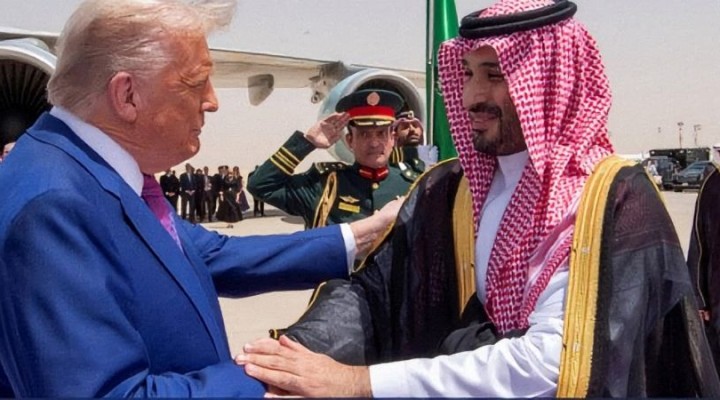
These are the true reasons for his obvious backtracking on his promises to intervene militarily against the Houthi “Ansar Allah” movement in Yemen.
We were not surprised in this newspaper by President Donald Trump’s backtracking on his promises to Saudi Crown Prince Mohammed bin Salman to respond to his request to stand in the Saudi trench and deliver deadly military strikes to the Yemeni Houthi movement in response to the movement’s strikes on the headquarters of the Saudi oil company “Aramco” and its refineries in four major southern Saudi cities: Jizan, Najran, Khamis Mushait, and Abha. The most severe incident was the downing of a Saudi F-15 fighter plane and the arrival of Houthi rockets in Riyadh, the Saudi capital.
According to an NBC report based on meetings with American military leaders at the Department of Defence (the Pentagon), President Trump directed the Central Command of the Armed Forces (CENTCOM) to prepare a military plan for intervention in Yemen and to bomb strategic sites in Sana’a, Hodeidah, and Saada. Admiral Brad Cooper, the commander of the American armed forces, carried out these orders and presented a file to Secretary of Defence Pete Hegseth outlining the plans to be implemented in Yemen in response to the American president’s request, including the timing of the strikes and the ships and aircraft carriers involved.
President Trump, as usual, backed down from the execution, stating he was in communication with the Yemeni “Ansar Allah” militia and had secured a promise not to attack American warships. However, the reality is far different. The American military and the Yemeni movement reached a cease-fire agreement after the army’s losses, aircraft carriers, and American warships increased as a result of Houthi missiles, which surprised the Americans with their accuracy and power, damaging two aircraft carriers (Harry Truman and Carl Vinson) in the Red Sea on April 30, 2005.
The underlying reasons for President Trump’s decision to withdraw from hitting the Yemeni Houthi “Ansar Allah” movement, in addition to targeting aircraft carriers, are summarised below:
- First, there was disagreement among the leadership of the American military establishment about taking this step, with the opposing faction arguing against opening a new front in the region amid escalating tensions, the failure to defeat Iran and force its surrender, and the inability to control the Strait of Hormuz.
- Second, there is a massive scarcity of American weapon stocks, notably interceptors, which is a weakness in the US military, and starting a new front in the Red Sea under these conditions might have disastrous consequences.
- Third, the Yemeni “Ansar Allah” movement possesses very advanced anti-ship and aircraft carrier missiles, and intelligence indicates that they have advanced secret weaponry that could surprise American military leaders.
- Fourth, if the US breaches the ceasefire with Yemen, the “Ansar Allah” forces will be unleashed, and they will begin hitting all American goals in the region, as well as bombing deep into Israeli territory, such as Haifa, Jaffa, and Eilat.
- Fifth, any American strike on Sana’a, Hodeidah, and other Yemeni cities will jeopardise navigation in the Bab el-Mandeb Strait, perhaps resulting in a complete shutdown and a worldwide economic choke point, following Iran’s effective decision to seal the Strait of Hormuz.
- Sixth, the American military leadership in Washington likely wants to rein in Trump’s costly recklessness and avoid being drawn into a new war, as President Trump and his Republican Party are almost certain to be defeated in the upcoming midterm elections in 50 days, resulting in a loss of the congressional majority.
- Seventh: The deep American state has started to edge toward conceding defeat in the Middle East, entirely retreating from the region, and eliminating its military presence (bases) there.
President Trump’s betrayal of his Arab allies, Saudi Arabia and other Gulf countries, has become one of his most visible characteristics and the primary focus of his policy. These countries are essentially financial hubs waiting to be extorted to save the American economy and lower debts totalling more than $40 trillion. He is unquestionably unwilling to commit a single American soldier to defend these countries, and his ultimate goal, like in Venezuela, is to dominate Arab and Iranian oil reserves.
America has fought three wars in the Middle East: the first in Afghanistan, the second in Iraq, and the third with Iran. The first two wars cost the American treasury $8 trillion, killed over 15,000 men, and left a million and a quarter million with complex injuries. Only God knows how much the current battle against Iran and its allies will cost militarily, financially, and politically, but early indications suggest that it will be a costly failure on every front.
https://www.raialyoum.com/trump-disappointed-saudi-arabia-and-the-other-gulf-countries/

0 thoughts on “Trump disappointed Saudi Arabia and the other Gulf countries”