 TheAltWorld
 The Southern Arabian Peninsula conflict is between Israel and the US.. not Saudi Arabia and the UAE
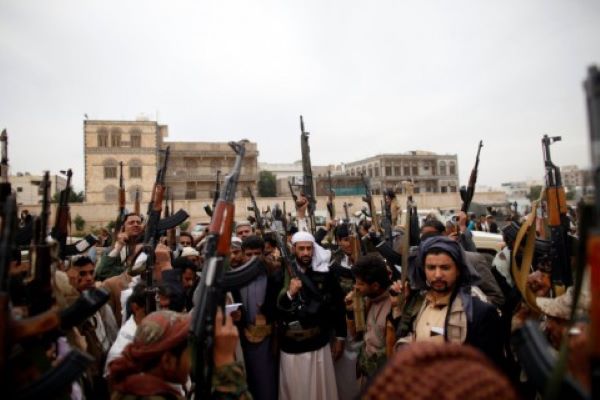
The UAE has breached numerous boundaries. The distinction is not tactical but strategic… And these are our expectations for potential future scenarios.
What is currently taking place in southern Yemen, particularly in the provinces of Hadhramaut and Al-Mahrah, is not just a fight between Saudi Arabia and the UAE, nor is it a coup that challenges the two countries’ nearly ten-year cooperation. Rather, it is a regional confrontation sparked by an Israeli infiltration attempt into the Arabian Peninsula’s backyard to gain control of it, its oil resources, and the critical straits and bays in its waters and seas. The beginning was the near-complete control of the “state” of Somaliland and the establishment of military bases on its territory to enter Saudi Arabia and the two holy mosques and destroy the rising Yemeni power represented by the “Ansar Allah” Houthi movement, which was the only Arab entity that controlled the Red Sea and its navigation, bombed the occupied Israeli depth, and targeted American aircraft carriers.
This Israeli strategic plan, funded by the US, is the first, and possibly most important, step towards establishing a “Greater Israel”, which Netanyahu considers a sacred divine mission from the Torah that must be carried out. It’s unfortunate and distressing that crucial Arab countries like Egypt and Saudi Arabia weren’t made aware of this lethal tactic sooner. The most evident proof of this is that the governments of Saudi Arabia and Egypt have failed to take any political or military action against Israeli infiltration up to the time of writing.
Southern Yemen, which may become the main point of this Israeli campaign, is prepared to discard its proud history of fighting Western imperialism, with direct or indirect assistance from the United Arab Emirates. It might become a “copy” of “Somaliland” and a larger Israeli military base to increase control over Bab el-Mandeb, the Gulf of Aden, the Arabian Sea, and the Suez Canal.
The Arab region is surrounded by three major axes: the Israeli-Ethiopian axis, which targets Egypt and Sudan for water security and tightens its grip on the Horn of Africa; the Israeli-Greek-Cypriot axis, which controls navigation and oil and gas resources in the Eastern Mediterranean, encircling Turkey and preventing it from expanding eastward, westward, and southward (North Africa); and the UAE- The leadership of the short Transitional Council stated yesterday that its forces will remain, and its spokesperson, Muhammad Al-Naqib, queried, “Is it reasonable to ask the landowner to withdraw from it?” It is worth noting that the UAE announced the evacuation of all its forces from southern Yemen in 2019; however, recent developments have demonstrated that this assertion was false. Perhaps this is the situation with the second announcement from yesterday.
The current Saudi-Emirati conflict is a geopolitical conflict that is likely to escalate and intensify. It may cool down marginally and briefly as a result of numerous mediations aimed at containing it beneath the banners of “brotherhood” while maintaining the Gulf Cooperation Council’s unity and commonality among its peoples. This is because the parties participating in this conflict are simply the top of the iceberg of contending external superpowers, including Israel, the United States, Iran, China, and, to a lesser extent, Russia. The Arab world, including its citizens and governments, is the victim.
The UAE has violated multiple red lines in the region, either on its own initiative or in response to pressures and threats from other powers, primarily the US and Israel, with whom it has normalised relations via the “Abraham Accords.” We believe it is time to reassess all of its actions and attitudes during the previous ten years, particularly in Yemen, Somalia, Libya, Sudan, and the Horn of Africa.
The new year 2026, which began today, Thursday, could be the most perilous in the region’s history, ushering in an era of tremendous political, military, and demographic transformation. The divide has widened beyond repair, and the current situation cannot continue in the face of an Israeli-American standoff and the growing possibility of a major Israeli confrontation, most likely on Iranian soil and later on Lebanese soil.
We wouldn’t be shocked if Egypt and Saudi Arabia, the region’s two biggest powers, “wake up” from their slumber of American falsehoods and Zionist deception and create new regional and global alliances with China, Russia, Pakistan, Iran, and Turkey, as well as the Houthis “Ansar Allah” movement in Yemen. We don’t have a crystal ball, but we base our perspective on constantly monitoring and comprehending events in our Arab region. Say they’re just desires, nothing more or less, and hope for the best; you’ll get it… God knows best.
The Southern Arabian Peninsula conflict is between Israel and the US.. not Saudi Arabia and the UAE

0 thoughts on “The Southern Arabian Peninsula conflict is between Israel and the US.. not Saudi Arabia and the UAE”