 TheAltWorld
 The Fragile Ban on Nuclear Weapons Testing
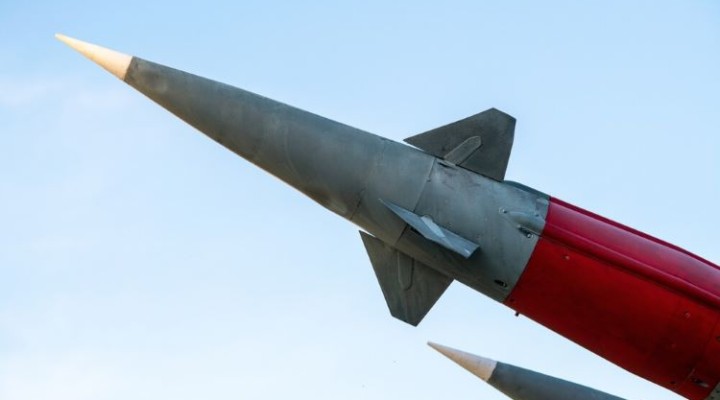
For nearly three decades, the five declared nuclear powers — the US, Russia, China, France and the UK — have complied with a nuclear test ban treaty that has not yet entered into force but whose moral authority looms large over the issue of nuclear nonproliferation. In the span of a few weeks, imprecise communication combined with a lack of trust propelled the US and Russia down a path where both nations were threatening to resume nuclear weapons testing on the mistaken belief that the other side intended to carry out such tests. In an age of increasing nuclear threats combined with a collapsing arms control infrastructure, any effort to resume nuclear weapons testing by either the US or Russia could propel the world into a new nuclear arms race, which, given the near inevitability of the expiry of restrictions currently imposed by the New Start, dramatically increases the chance for a nuclear conflict all parties agree can’t be won.
In the space of a week, between Oct. 21-28, Russian President Vladimir Putin announced the successful test of a nuclear-powered cruise missile, oversaw nuclear readiness drills and tested a new nuclear-powered unmanned torpedo. These tests triggered US President Donald Trump, who on Oct. 30 posted on his social media platform, Truth Social, that “Because of other countries testing programs, I have instructed the Department of War to start testing our nuclear weapons on an equal basis.”
While the US president did not clarify what he meant by “testing our Nuclear Weapons,” the fact that he tasked the Department of Defense, and not the Department of Energy’s National Nuclear Safety Administration (NNSA), with the conduct of these tests strongly suggested that Trump was talking about testing nuclear weapons delivery systems, which would parallel the Russian testing activity, and not the actual testing of nuclear weapons, which falls under the auspices of the NNSA.
Nonetheless, Putin, responding to Russian Defense Minister Andrey Belousov’s recommendation — upon a Russian intelligence report that indicated Trump was serious about resuming nuclear testing — that Russia begin preparations for the full-scale testing of its own nuclear weapons on the Novaya Zemlya archipelago in Russia’s far north directed Belousov to “examine the advisability” of commencing preparations for such tests.
The Russians were not the only concerned parties — the administrator of the NNSA, along with other senior officials involved in the maintenance of the US nuclear weapons stockpile, have reportedly sought a meeting with Trump in order to better inform him about their conclusions that the US would not benefit from any resumption of nuclear weapons testing. While there has been a call from conservative political circles for the need to resume nuclear weapons testing as a sign of US resolve, the NNSA maintains that the current testing mechanism, which uses subcritical live tests combined with computer simulation, is more than adequate to maintain the reliability of the existing US nuclear weapons stockpile.
A Long and Complicated History
A ban on nuclear weapons testing is seen as being foundational to the goals of nuclear nonproliferation. In 1963, the US and the Soviet Union signed the Partial Test Ban Treaty (PTBT), which banned the testing of nuclear weapons in the atmosphere, underwater and in outer space. Eventually, 126 nations would sign and ratify the PTBT. In 1968, the Nuclear Non-Proliferation Treaty (NPT) entered into force. In the NPT, non-nuclear weapon states were prohibited from possessing, manufacturing and acquiring nuclear weapons or other nuclear explosive devices. However, India, Pakistan and Israel refused to sign the NPT, viewing it as discriminatory, since the five declared nuclear powers (the US, France, UK, Soviet Union and China) were not obligated to disarm. In 1974, the US and Soviet Union signed the Threshold Test Ban Treaty (TTBT), which limited nuclear weapons testing to devices of 150 kilotons of explosive power or less. The TTBT was followed by the Peaceful Nuclear Explosion Treaty, signed in 1976. Both treaties were ratified in 1990.
In 1977, negotiations began on a Comprehensive Test Ban Treaty (CTBT) prohibiting all nuclear weapons testing. While negotiations were stalled on issues pertaining to compliance verification, both sides made fitful efforts to abide by the spirit of the treaty’s fundamental purpose. In 1985, the Soviet Union entered a voluntary moratorium on underground nuclear testing. While the US promised that it was committed to the principles of a CTBT, it continued testing new nuclear weapons designs, prompting the Soviet Union to end its moratorium in 1987. In 1991, the Soviet Union again announced a temporary moratorium on nuclear weapons testing. In 1992, the US followed suit. The CTBT was signed in 1996 and sent to the Russian Duma and US Senate for ratification. While the Russian Duma ratified the treaty, the US Senate did not, rejecting the CTBT in 1999 by a vote of 48-51. The continued failure by successive US presidents to advance the CTBT through the US Senate prompted Russia to withdraw from the treaty in 2023. Both the US and Russia have continued to abide with a ban on underground nuclear weapons testing. China, which signed the CTBT in 1996, has not yet ratified the treaty. However, China is following the US and Russian example of voluntary compliance.
Since the CTBT was signed, three nations have conducted underground nuclear weapons testing — India, Pakistan and North Korea. While the voluntary compliance with the CTBT by the US, Russia and China was contingent on all other nations following suit, the big three did not end their collective moratoriums because of these tests but rather continued with an understanding that so long as none of the big three nations conducted tests, the voluntary ban would remain in place.
Fragile Compliance
The US, Russia and China all have established underground testing infrastructure, which has been mothballed because of the voluntary ban. The US maintained a dedicated budget for maintaining its Nevada Test Site up until 2010, when site maintenance was included in the overall budget established for the maintenance of the US nuclear weapons stockpile. The US is required by law to be able to resume nuclear weapons testing within 36 months of being directed to do so by the president. The degree to which Russia maintains its underground testing facilities located on Novaya Zemlya is shrouded in secrecy, as is the case with China and its Lop Nor facility. It is estimated that Russia would require at least 36 months to get its facilities up and running; the harsh climate associated with the Novaya Zemlya facility, located in the far north, limit work to the summer thaw. China, however, has been extensively upgrading its Lop Nor facility, most likely to be able to rapidly test new weapons designs needed for new nuclear weapons delivery systems under development.
While nuclear weapons testing is not tied to a hair-trigger, once one country begins to move in the direction of resumed nuclear tests, the issue assumes a momentum linked to domestic political realities and geopolitical imperative, which makes stopping it extremely difficult, if not impossible. For now, it appears that all sides have taken a step back from the rush toward nuclear weapons test resumption. But the lack of communication between the US, Russia and China about nuclear disarmament in general has created an informational vacuum which, as shown by recent events, is vulnerable to mistakes, misunderstandings and misjudgments.
https://www.energyintel.com/0000019a-cb29-d672-a9be-cb3fa02a0000

0 thoughts on “The Fragile Ban on Nuclear Weapons Testing”