 TheAltWorld
 With the assassination of Khamenei, Tel Aviv and Washington have made possible what they claimed to want to avoid
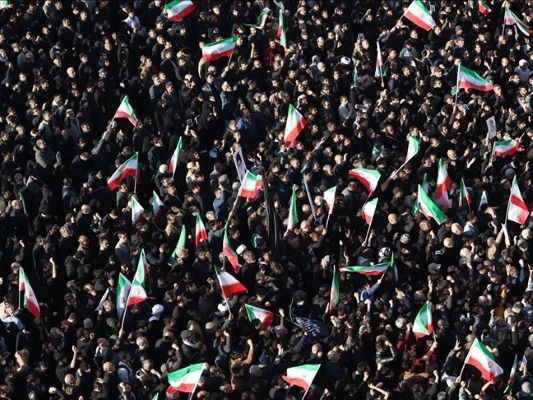
The attacks on Iran on February 28 by Israel and the United States were coordinated, but not joint. Each power pursued its own objectives, and Washington sought to limit Tel Aviv’s. The assassination of Ali Khamenei marks a personal victory for Benjamin Netanyahu, but a catastrophe for all those who saw him as a spiritual leader.
This article follows
“Israel – Iran: The Confrontation,” by Thierry Meyssan, Voltaire Network, June 17, 2025.
“Behind the ‘12-Day War’,” by Thierry Meyssan, Voltaire Network, July 1, 2025.
“L’Iran, au bord de l’implosion” (Iran, on the Verge of Implosion,) by Thierry Meyssan, Voltaire Network, February 10, 2026.
The Israeli, and then American, attacks on Iran on February 28 were widely discussed in the international media. It is surprising to note that most journalists are unfamiliar with this country and interpret events through an outdated lens. Most of them are focused on the privileged relationship between Tel Aviv and Washington. Some have grasped the analysis of John Mearsheimer and Stephen Walt, demonstrating that the Israeli lobby controls the US Congress.
Alas! This analysis dates back to 2007, and the players have changed. Israel has become an authoritarian state, governed no longer by “Zionists” (claiming to be followers of Theodor Herzl), but by “Revisionist Zionists” (disciples of Vladimir Jabotinsky). Moreover, it practices torture, has massacred tens of thousands of Gazan civilians, and has considered forcibly displacing others.
The Christian Zionist movement is no longer what it once was. Since the assassination of Charles Kirk, an anti-Israel movement has been growing among American Christians. The US Congress, too, has been transformed. Since the Tea Party, the Republican Party has been taken over by the Jacksonians. The financing of their electoral campaigns is increasingly coming from Trump supporters rather than the American Israel Public Affairs Committee (AIPAC).
Above all, the world has changed: the United States’ military supremacy is no more. Now, the Russian Federation is the most powerful nation. President Trump is trying, by all means, to save his country from bankruptcy and civil war. He is retreating to the American continent, which he hopes will include Greenland and Iceland. While claiming to have unlimited financial resources, he is quietly cutting spending on the “American empire.” He plans to end US support for Europe by mid-2027 and for Israel by 2035.
President Donald Trump addresses the Israeli issue with the mythical narratives of the creation of the United States and Israel, two states “willed by God,” illuminating the world like “lights on the hill.” He also highlights his personal antipathy toward Benjamin Netanyahu, whom he accused of betraying him by supporting Hillary Clinton and Joe Biden, and his need for the help of major financiers in the Jewish diaspora to address his country’s bankruptcy.
President Donald Trump did not support the Israeli attack against Iran on June 13, 2025 (Operation “Lion Rising”). He waited until June 21 to launch Operation “Midnight Hammer.” In a single day, he damaged, or even destroyed, Iranian nuclear sites with penetrating bombs, removing any justification for Israeli action. In doing so, he preempted the “revisionist Zionists” who were calling for Israel to nuclear-bomb Iran.
In August-September 2025, Donald Trump did the same thing regarding Gaza. He suddenly declared that Israel would not annex the Palestinian territory, but that the United States would transform it into a Riviera. Even if you don’t see it, he forced Israel to stop the massacre of Gazans and to allow humanitarian aid into the Palestinian enclave. The death rate dropped dramatically within a few months, and 4,200 truckloads of aid are distributed daily. Admittedly, he didn’t solve the problem, but for 80 years, every US government and every nation in the world had failed to come to the aid of the Palestinians. What he did is, without a doubt, disappointing, but he did it where everyone else was just talking.
The US-Iranian Negotiations
The Supreme Leader of the Islamic Revolution long opposed the resumption of negotiations. According to him, it was impossible to talk with Donald Trump after he had unilaterally withdrawn from the JCPOA.
The purpose of the negotiations undertaken by Steve Witkoff and Jared Kushner with Iran was never very clear. All that is known is that:
The United States offered Iran free nuclear fuel for a civilian nuclear program—indefinitely—in exchange for abandoning enrichment. Russia offered to store uranium already enriched to 60% within its borders. Iran rejected both proposals.
The Iranians refused to discuss their missiles and their funding of allied foreign groups. They were right to refuse to discuss their ballistic missiles, which, admittedly, could have carried nuclear weapons had they possessed them, but which, at that stage, were simply weapons like any other. It was more difficult for them to refuse to discuss their hypersonic missiles, given that the United States does not possess any and is unable to intercept them. Regarding the allied groups they fund, they could not hope to circumvent the sovereignty of Lebanon and Iraq by financing the Lebanese Hezbollah and the Iraqi Popular Mobilization Forces (PMF).
With the best will in the world, the American negotiators encountered diversionary tactics. To drag out the talks, Abbas Araghtchi politely explained, in typical Iranian fashion, that he needed a very large quantity of low-enriched uranium. He presented a seven-page list of uses, including the manufacture of medicines. But the Americans noted that Iran had never used uranium for this purpose. Trust was broken.
Why did Israel attack Iran?
Israel is attempting to overthrow the Islamic Republic and restore the monarchy. Tel Aviv remembers its friendship with Shah Reza I Pahlavi, even though their relationship was also marked by bitter rivalry. Two years ago, Mossad acquired his son, Reza II Pahlavi [1]. It promoted him in the international media and at certain events in Iran.
It is well known that annihilating Iran, Israel’s most important regional rival, has been Benjamin Netanyahu’s personal obsession for forty years.
Incidentally, this is the second time Israel has aligned itself with Iranian imperialism, whose symbol is the lion. After “Rising Lion,” this operation is called “Lion’s Roar.”
Its objective is to destroy civilian nuclear research in order to ensure that oil and gas companies themselves become dependent on another energy source. This is what Benjamin Netanyahu was already saying in 2011. He declared: “Our primary mission is to prevent a militant Islamist regime from acquiring nuclear weapons or from falling into the hands of a militant Islamist regime. The first is Iran, the second is Pakistan, more specifically in the event that the Taliban seize control of Pakistan… So, the first thing to do is to prevent them from obtaining nuclear weapons. That is our first mission, and the second is to find a substitute for oil.” [2]
Why did the United States attack Iran?
The United States, which remains Israel’s protector, did not deploy its troops to attack Iran, but to protect the Iranian population from their country’s predictable retaliation. The Pentagon has positioned one naval group in the Persian Gulf (to protect its own military bases) and a second off the coast of Israel (to protect it).
The American intervention we are witnessing, “Epic Fury,” was not designed to be long-lasting. It is not coordinated with Israel’s. There is no joint command structure, and a majority of American soldiers are now anti-Israeli.
The United States can destroy the hypersonic missile manufacturing site and kill a few leaders. That’s all. They have no intention of imposing the Shah’s restoration or destroying Iranian nuclear fusion research.
They intervene only to prevent Israel from acquiring nuclear weapons, as they did nine months ago with Operation Midnight Hammer.
Preparing Public Opinion
Since the start of US operations in Iran, with the collapse of Bank Ayandeh in October and the ensuing hunger protests, President Trump announced that he would not allow the Iranian government to massacre its own people. However, it quickly became apparent that this threat would not be carried out. Washington resumed negotiations with Iran without indicating what it intended to negotiate. The State Department, for whom Shah Reza II was merely a puppet of Mossad, was solely concerned with the development of Tehran’s hypersonic missiles. Realizing that this concern would not be popular, it shifted its focus to Israeli accusations regarding the Iranian nuclear program; accusations which it then echoed.
However, there has been no Iranian military nuclear program since 1988 [3]; a fact that was confirmed by Russia and China during the JCPOA negotiations (2013-2015). And this is still endorsed by Russia, which participates in the Iranian civilian program. Furthermore, let us remember that at the beginning of Trump’s second term, the Director of National Intelligence, Tulsi Gabbard, assured the senators who were questioning her on March 24, 2025, that the Iranian military nuclear program was merely an illusion. She even wrote this in her annual summary report on threats to the United States [4].
To bolster this fear, Steve Witkoff stated on February 22, 2026, during Fox News’s My View, that Iran possessed such a large stockpile of uranium enriched to 60% that it was capable of manufacturing a nuclear weapon in one week [5]. “Given the maritime and naval power we have deployed there, why haven’t they come to us and said, ’We don’t want nuclear weapons, here’s what we’re prepared to do?’” he continued. Vice President JD Vance added fuel to the fire. On February 26, he stated: “Iran cannot have a nuclear weapon. If they try to rebuild a nuclear weapon, that causes us problems. In fact, we have seen evidence that they have tried to do exactly that.” [6]. This narrative directly contradicts President Trump’s earlier statements that Operation Midnight Hammer had “destroyed” Iran’s nuclear program. Yet, no media outlet reported on this shift in rhetoric.
The Preparation of Military Operations
For a month and a half, propaganda relentlessly displayed the deployment of US forces around Iran. However, a simple observation revealed that these forces were not threatening Iran, but rather aimed at protecting US bases in the Persian Gulf and, subsequently, Israeli territory.
The coordinated, not joint, attack could only take place once all US weapons were in position and Indian Prime Minister Narendra Modi had left Israel.
The United States released top-tier intelligence to Israel after the ten-day deadline set by Donald Trump for Iran had expired, but two days before the Vienna round of negotiations. The president thus kept his word but misled the Iranians into believing he would send negotiators to Vienna.
The dual Israeli and US attack
Israel’s first target was the residence of Ayatollah Ali Khamenei, where a meeting of the regime’s top officials was to be held. Acting on information from the CIA, the Israel Defense Forces (IDF) fired a series of conventional bombs until they created a hole that allowed them to reach the underground bunker where the meeting was taking place. Simultaneously, they struck other political targets. Two other command meetings were simultaneously targeted by Israel.
It was only after the death of the Islamic Revolutionary Guard Corps that the United States entered the fray. Their objective was to contain Israeli expansionism.
The international press quotes Richard Haass, honorary chairman of the Council on Foreign Relations (CFR): “This is a war of choice… This was not a war we should have undertaken now. It’s not as if Iran has crossed a new threshold and posed an imminent danger. This is a preemptive strike… This is not a war of necessity.” President Trump’s speech, announcing “regime change,” as advocated by his enemies, the Straussians, must be interpreted either as a complete shift in his policy or as a concession to his Israeli allies. At this stage, we know nothing.
The Assassination of Ali Khamenei
We must grasp the gravity of the assassination of Ali Khamenei by Israel. He was the supreme leader of the Shiites. Whatever one thinks of him, his death is not merely a political event, but also a religious war. Let us ask ourselves how we would react if Israel bombed the Vatican and assassinated Pope Leo XIV, a supporter of Palestinian Catholics?
Ali Khamenei was not a poet and thinker comparable to Ruhollah Khomeini. But he always wanted to follow in his footsteps. However, he had aged very poorly. Sixteen years ago, he secretly negotiated with US President Barack Obama to sideline Mahmoud Ahmadinejad and prevent his chosen successor from running in the presidential election. He had his main associates arrested, tried in secret, and imprisoned, to the benefit of the highly corrupt Hassan Rouhani, and then the fanatical Ebrahim Raisi. In any case, while one might think very poorly of what Ali Khamenei (86 years old) had become, assassinating a religious leader of his stature is a crime that has shaken the entire Middle East.
Thus, Israel eliminated its three main adversaries: Yahya Sinwar (Hamas), Hassan Nasrallah (Hezbollah), and Ali Khamenei (Iran). Three extremely different leaders, but all three opposed the creation of an exclusively Jewish state in Palestine.
The Iranian Response
The Iranian response appears extremely confused. The Revolutionary Guards (known as the “Pasdaran”) fired indiscriminately at Israel and at US bases in the region, from Jordan to Qatar.
This is an absurd reaction: Qatar is a Sunni ideological ally of the Iranian Islamic Revolution. The two countries use the same theological language.
Kuwait is also an ally of Iran, which it helped during the Covid-19 pandemic. There is, however, currently a gas dispute over the Durra field.
Saudi Arabia was indeed a staunch enemy of the Islamic Republic, but has become an ally since the reconciliation brokered by China three years ago.
The United Arab Emirates are indispensable economic allies of Iran, and vice versa. Dubai, which is a partially Iranian city, was only able to develop thanks to its role in circumventing the unilateral coercive measures (improperly called sanctions) imposed by the United States against Iran.
Oman has always provided valuable diplomatic support to Iran. It was in Oman that the United States had been holding indirect talks with Iran since 2013.
Iranian-Jordanian relations have evolved over the past five years. The possibility of Iranian oil transiting through Iraq has been raised. This appears to have been hampered by the presence of Iranian informants among the Iraqi oil emissaries. Iraq is the only state currently being bombed by Iran for which Tehran could find justification for its actions.
The Iranian bombings may not be a coordinated effort, given that communication channels between the various missile bases could have been destroyed by Israeli and American air forces. In any case, they give the impression of initiatives aimed not at defending the population, but solely at prolonging the regime’s rule.
The paradoxical consequences of Israeli and American interventions
Violence often has perverse effects. Ali Khamenei was the guardian of the teachings of Imam Khomeini. As such, he ensured, among other things, that Iran did not acquire weapons of mass destruction. It was a fatwa issued in 1988 when, during Iraq’s imposed war against Iran, President Saddam Hussein ordered chemical missiles to be fired at his enemy. This battle resulted in the death and illness of countless Iranians. Khomeini drew a lesson from this: an Islamic state should never resort to a weapon of mass destruction that would indiscriminately kill large numbers of people.
By interpreting Islam in this way, Khomeini ended the nuclear program that the Shah was conducting with France. Khamenei followed his example, but today Iran is without a leader. Nationalist forces have made no secret of their desire to equip Persia with such a weapon. They justify their ambition with the example of North Korea: a state still at war with the United States, but which the latter no longer dares to attack.
Iran currently possesses a very large number of nuclear engineers. It will not be difficult for those who support the bomb to assemble a team to carry out their project. Iran possesses an estimated 400 kilograms of uranium enriched to 60%. Iran still has the centrifuges necessary to enrich this uranium further and reach the required 98%.
Paradoxically, the assassination of Ali Khamenei, allegedly to combat a military program that did not exist, makes it possible.—
https://www.voltairenet.org/article223815.html
——————————————————-
[1] « L’Iran, au bord de l’implosion », par Thierry Meyssan, Réseau Voltaire, 10 février 2026.
[2] « A World View Interview with Benjamin Netanyahu », Les nouvelles, 2011. «YouTube World View Interview With PM Benjamin Netanyahu. Transcription», Prime Minister’s Office, March 3, 2011.
[3] “Who’s afraid of Iran’s civilian nuclear programme?”, by Thierry Meyssan, Voltaire Network, 27 July 2010.
[4] Annual threat assessment of the U.S. Intelligence community, March 26, 2025.
[5] «Witkoff warns Iran is ‘a week away’ from ’bomb-making material’ as Trump weighs action», Taylor Penley , Fox News, February 22, 2026.
[6] «Iran: JD Vance affirme que les États-Unis ont des “preuves” de tentatives nucléaires iraniennes, avant les négociations de Genève», Antoine Joubeau, TV5Monde, 26 février 2026.

0 thoughts on “With the assassination of Khamenei, Tel Aviv and Washington have made possible what they claimed to want to avoid”