 TheAltWorld
 International Law or Foreign Military Bases: A Choice Must Be Made
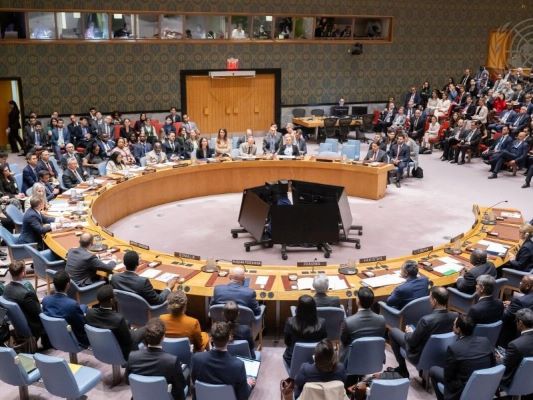
The war waged by Israel, the United States, and the United Kingdom against Iran has led to a reassessment of international law. Even the Security Council had forgotten its own definition of aggression. It ruled against itself. There has never been a precedent for this situation. All UN member states must now choose between international law and the alliance system devised by the United States.
The Israeli-American-British war [1] against Iran has profoundly impacted the United Nations and revolutionized the way international law is approached. Until now, everyone believed that this right was based solely on respect for its signature and the right of peoples to self-determination. However, over time, everyone had also become accustomed to the idea that Israel and the United States were never considered outside the law.
Although he invoked “collective self-defense” by Israel (sic), this point was swept aside by the astonishing candor of US President Donald Trump, who stated that Iran did not threaten his country [2]. Until now, Washington had lied shamelessly to maintain the illusion that it respected international law. We remember the lies of George W. Bush and Barack Obama regarding the 9/11 attacks, Iraqi weapons of mass destruction, the Libyan and Syrian massacres, and the wars that followed.
Benjamin Netanyahu simply resorted to his thirty-year-old speech about “the head of the octopus,” meaning Iran, to explain its influence. He could think of nothing better than to refer to Iranian slogans: “Death to the Zionist entity!” and “Death to the United States!” implying that Iran wanted to kill all Israelis and all Americans. However, chanting “Death to the Zionist entity!” has never meant hoping for the death of the State of Israel and its people, but simply questioning the self-proclamation of this state, without the approval of the United Nations, and contrary to the initial plan for a binational state. As for the cry of “Death to the United States!” This means that Iran is challenging the legitimacy of a state founded on the massacre of millions of indigenous people and the enslavement of millions of Black Africans.
One might have expected every member of the UN to declare this war illegal, an “aggression” as defined by the Charter. Not so! No one said it—except North Korea—although they all thought it. While this attitude is understandable, given the military might of the United States—each member preferring to avoid acknowledging this truth—it is clear that this collective cowardice will have consequences.
The most important point lies elsewhere: not only does this war, in itself, constitute an “aggression” and call into question the signatures of Tel Aviv and Washington, but it is being waged in a “barbaric” manner, as defined by the Hague Conference (1899). Benjamin Netanyahu has admitted to assassinating, one by one, all the religious, military, and political leaders of the man he considers his enemy. These crimes have been echoed and also endorsed by Donald Trump.
Until now, Westerners considered assassinating leaders immoral and counterproductive. Israel and the United States are perfectly aware that it is counterproductive, but they don’t care whether it is moral or not [3]. For seventy-eight years, Israel has assassinated Palestinian leaders. It has orphaned this people and has no choice but to attack them if it no longer has anyone to negotiate with.
In the process, Israel razed the home of the Supreme Leader of the Revolution, Ayatollah Ali Khamenei, and assassinated him. It is exactly as if he had bombed the Vatican and assassinated Pope Leo XIV because the latter—and all his predecessors—opposed the creation of a Jewish empire, to use Vladimir Ze’ev Jabotinsky’s (1880-1940) expression, even though he accepted that Israel and Palestine should be a refuge for Jews worldwide, to use Theodor Herzl’s (1860-1904) expression.
It should therefore come as no surprise that today, terrorist movements are forming, such as Harakat Ashab al-Yamin al-Islamia (HAYI) (Islamic Movement of the Right-Hand People), which are planting bombs in Belgium, the Netherlands, the United Kingdom, and perhaps France. Those Shiites who have accepted the Velayat-e Faqih (Islamic jurist doctrine) feel compelled to avenge their spiritual leader.
As if that weren’t enough, Benjamin Netanyahu and Donald Trump are now targeting Iranian civilians [4], whom they were calling on yesterday to “overthrow their regime” (sic). Alas! The Iranians, who were not convinced by Western propaganda that the Revolutionary Guards had massacred 40,000 of their compatriots, have joined the Revolutionary Guards en masse to hold the aggressors at bay.
These cruel operations began with the bombing of Tehran’s hydrocarbon storage facilities, which released “sulfur and nitrogen oxides,” causing acid rain [5]. Everyone, having clearly understood that Benjamin Netanyahu and Donald Trump are waging an illegal “aggression” against Iran and behaving like barbarians, assassinating leaders and deliberately targeting civilians, has been able to realize that Iran is fully entitled to respond to the treatment it is receiving.
This is the great discovery of this war: international law stipulates that attacked states can take action against their aggressor not only on their own territory, but also against military bases operating from abroad that participate in the aggression, and finally against third-party states that host these bases [6]. Never before, since the creation of the United Nations, had an attacked state attacked its aggressor(s) on the territory of a third-party state. The entire world had forgotten this response, particularly effective in the era of economic globalization [7].
The members of the Security Council themselves had forgotten the “definition of aggression,” adopted unanimously without a vote on December 14, 1974. So much so that, on March 11, 2026, they adopted Resolution 2817, which “condemns in the strongest possible terms the unacceptable attacks perpetrated by the Islamic Republic of Iran” against the six Gulf States and Jordan. Without immediately realizing it, they voted for a resolution that contradicted all their signatures and therefore international law.
Saudi Arabia, Bahrain, the United Arab Emirates, Jordan, Kuwait, Oman, and Qatar were thrust into this war against their will. These seven states—like the Security Council—initially reacted without understanding. They filed a complaint with the Security Council. Then, through a series of letters, they were forced to admit that Iran was within its rights and that the Council had overlooked this. They all signed UN General Assembly Resolution 3314 (XXIX) (December 14, 1974). Their protests became less vehement, more vague. All had agreed to host US military bases to ensure their security, and all now find themselves trapped by the presence of these bases.
There are several ways to address this contradiction, one being to declare international law inappropriate, but who will protect them in the future? Either by declaring that the United States is acting recklessly and endangering them, but how can they break free from their precious patron?
At the time of writing, more than 80 letters have been exchanged at the Security Council, but none of these seven states has resolved this dilemma: international law or foreign military bases. A choice must be made.
Unable, like the others, to reconcile the irreconcilable, the Sultanate of Oman, for its part, “calls upon the Security Council to exercise its responsibilities by conducting a comprehensive and impartial assessment of the root causes of this crisis so that these can be addressed at their source and not merely superficially.” [8].
https://www.voltairenet.org/article224176.html
——————————————————–
[1] “Iran denounces its three aggressors” (S/2026/142), by Amir Saeid Iravani , Voltaire Network, 9 March 2026.
[2] “Justification for the US war against Iran” (S/2026/161), by Michael G. Waltz, Voltaire Network, 10 March 2026.
[3] “Iran files complaint against targeted assassinations by Israel and the United States” (S/2026/230), by Amir Saeid Iravani , Voltaire Network, 26 March 2026.
[4] “Iran files complaint against US threats to civilians” (S/2026/215), by Amir Saeid Iravani , Voltaire Network, 22 March 2026.
[5] “Iran files complaint regarding acid rain caused by Israeli-American aggression” (S/2026/149), by Shina Ansari, Voltaire Network, 9 March 2026.
[6] « Résolution 3314 (XXIX) de l’Assemblée générale des Nations unies : Définition de l’agression », Réseau Voltaire, 14 décembre 1974.
[7] “Iran Recalls the International Definition of Aggression” (S/2026/121), by Amir Saeid Iravani , Voltaire Network, 3 March 2026.
[8] “Oman calls on the Security Council to conduct a comprehensive assessment of the situation” (S/2026/210), by Omar Said Omar Al Kathiri, Voltaire Network, 19 March 2026.

Guy
Many have been fooled ,including myself,by a subtle voice with machination to subvert what had been put in place for the governance of nation states so as to maintain an often hard to discern legality and or culpability .Many thanks Thierry for shedding light on what is now in play for we need to know who and what is at the root of the corruption of United Nations and especially the Security Counsel ,of which desperately needs reform ,IMHO.