 TheAltWorld
 The Malian Foreign Minister Shared A Brief Update On The War
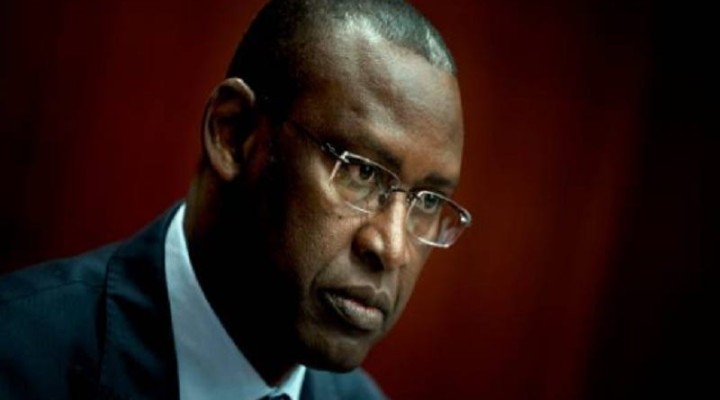
The failed decapitation strike on day one of the war bought Mali time, but whether or not it’s enough depends on when the counteroffensive is launched and how successful it is, otherwise there’s a growing chance that Nigeria will intervene exactly as its Defense Minister just intimated.
Malian Foreign Minister Abdoulaye Diop confirmed late last week that the opening phase of the ongoing insurgency by terrorist-designated “Azawad Liberation Front” (FLA) Tuareg separatists and “Jamaat Nusrat al-Islam wal-Muslimin” (JNIM) radical Islamists was a failed decapitation strike. The Defense Minister was killed and the intelligence chief critically injured but interim President Assimi Goita, their most important target by far, was unscathed. Diop then vowed that “Mali will not bow down.”
Reflecting on that point, the failed decapitation strike on day one of the war was probably planned because the FLA-JNIM duo assessed that they lack the capability to seize power if the military and political chains of command remained intact. Despite the Defense Minister’s assassination and the intelligence chief’s critical injury, the Malian Armed Forces (FAMA) continued to resist the insurgents. For all their shortcomings, FAMA deserves credit for not surrendering like the Syrian Arab Army did.
His other comments saw him accuse Ukraine and unnamed countries, likely a reference to the US, France, and Algeria, of providing logistical support to insurgents. As for the odds of a political solution, he ruled out talks with both terrorist-designated groups, but he added that the authorities are open to accepting FLA defectors who want to return to the “republican framework”. This signifies that the armed forces and their Russian allies are likely planning a counteroffensive in the northeast against the FLA.
After all, if they were willing to even informally cede that huge chunk of territory for the indefinite future, then they’d be open to discussing de facto independence under the guise of legitimizing broad autonomy within the nominal state framework. This doesn’t mean that a counteroffensive is imminent, but it’s probably inevitable, otherwise they’d seek a face-saving formalization of the status quo. Whenever it unfolds is anyone’s guess, but it’ll likely come sooner than later due to the Nigerian factor.
About that, observers should be aware that the Nigerian Defense Minister declared last week that “The international community, through the United Nations, ‘must come together to fight this devil’”, adding that “If they allow them to get any foothold in Mali, completely, they are not stopping there.” The “devil” is presumably a reference to JNIM, but in any case, his words add a sense of urgency for FAMA and Russia’s Africa Corps to preempt a possible intervention by accelerating their counteroffensive plans.
Had the decapitation strike succeeded and JNIM ended up playing a leading role in the new government by now, then a Nigerian intervention could have been a near certainty even if not imminent, but it might still be deliberated among the relevant officials since JNIM’s conquest of Mali is no longer guaranteed. Nevertheless, if a counteroffensive isn’t launched soon to prove that FAMA and the Africa Corps can indeed dislodge JNIM from part of the northeast, then these plans might be approved for the future.
Time is therefore of the essence since the scenario of a summertime Western-backed Nigerian intervention in northeastern Mali, which would either have to pass through neighboring Niger or be launched from the fellow Western-friendly coastal states through Burkina Faso, is very credible. The failed decapitation strike bought Mali time, but whether or not it’s enough depends on when the counteroffensive is launched and how successful it is. Everything should be clearer by month’s end.
https://korybko.substack.com/p/the-malian-foreign-minister-shared

5 thoughts on “The Malian Foreign Minister Shared A Brief Update On The War”