Still in the legal woods and not daring to project as a revolutionary leader, Lula should nonetheless never be underestimated
A surprising Supreme Court decision that, while not definitive, restores Lula’s political rights has hit Brazil like a semiotic bomb and plunged the nation into a reality show being played in a wilderness of shattered mirrors.
At first, it looked like three key variables would remain immutable.
The Brazilian military run the show – and that would not change. They maintain total veto power over whether Lula may run for president for a third term in 2022 – or be neutralized, again, via whatever juridical maneuver might be deemed necessary, at the time of their choosing.
President Bolsonaro – whose popularity was hovering around 44% – would now have free rein to mobilize all strands of the right against Lula, fully supported by the Brazilian ruling class.
Pinochetist Economics Minister Paulo Guedes would continue to have free rein to completely destroy the Brazilian state, industry and society on behalf of the 0.001%.
Minister of Economy Paulo Guedes, pictured on February 5, during a press conference to discuss energy policies. Photo: AFP/Mateus Bonomi/AGIF
But then, 48 hours later, came the Lula tour de force: a speech and press conference combo lasting a Proustian three hours – starting with a long thank you list on which, significantly, the first two names were Argentina President Alberto Fernandez and Pope Francis, implying a future Brazil-Argentina strategic axis.
During those three hours, Lula operated a masterful pre-emptive strike. Fully aware he’s still not out of the legal woods, far from it, he could not possibly project himself as a revolutionary leader. In the complex Brazilian matrix, only the evolution of social movements will in the distant future create the political conditions for some possibility of radical revolution.
So Lula opted for the next-best play: he completely changed the narrative by drawing a sharp contrast to the dreadful wasteland presided over by Bolsonaro He emphasized the welfare of Brazilian society; the necessary role of the state, as social provider and development organizer; and the imperative of creating jobs and raising people’s incomes.
Contains information related to marketing campaigns of the user. These are shared with Google AdWords / Google Ads when the Google Ads and Google Analytics accounts are linked together.
90 days
__utma
ID used to identify users and sessions
2 years after last activity
__utmt
Used to monitor number of Google Analytics server requests
10 minutes
__utmb
Used to distinguish new sessions and visits. This cookie is set when the GA.js javascript library is loaded and there is no existing __utmb cookie. The cookie is updated every time data is sent to the Google Analytics server.
30 minutes after last activity
__utmc
Used only with old Urchin versions of Google Analytics and not with GA.js. Was used to distinguish between new sessions and visits at the end of a session.
End of session (browser)
__utmz
Contains information about the traffic source or campaign that directed user to the website. The cookie is set when the GA.js javascript is loaded and updated when data is sent to the Google Anaytics server
6 months after last activity
__utmv
Contains custom information set by the web developer via the _setCustomVar method in Google Analytics. This cookie is updated every time new data is sent to the Google Analytics server.
2 years after last activity
__utmx
Used to determine whether a user is included in an A / B or Multivariate test.
18 months
_ga
ID used to identify users
2 years
_gali
Used by Google Analytics to determine which links on a page are being clicked
30 seconds
_ga_
ID used to identify users
2 years
_gid
ID used to identify users for 24 hours after last activity
24 hours
_gat
Used to monitor number of Google Analytics server requests when using Google Tag Manager
 TheAltWorld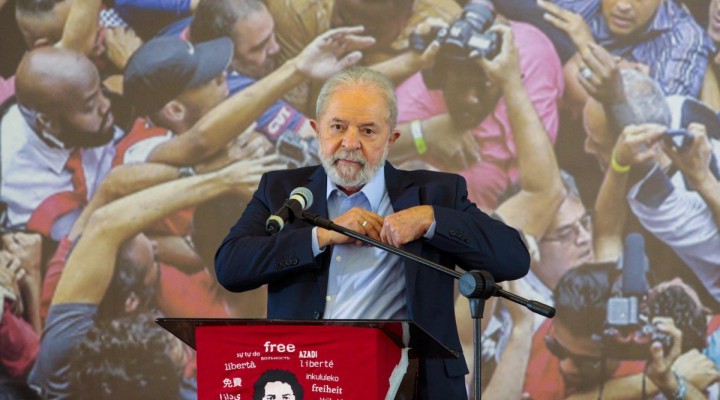


0 thoughts on “Brazil’s Lula in a wilderness of mirrors”