 TheAltWorld
US-Iran: The Prospects for Peace Are Dim
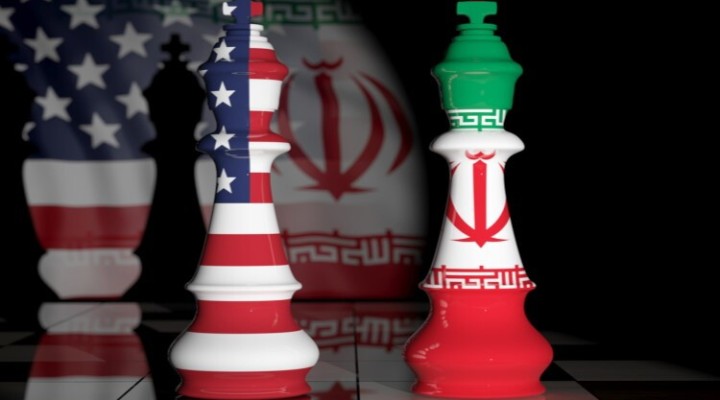
The US and Iran have been engaged in on-again, off-again skirmishes in and around the strategic Strait of Hormuz ever since large-scale fighting came to a halt back in April. A ceasefire understanding reached in June failed to produce a lasting settlement, and the prospect of renewed major combat operations continues to loom over the Middle East. The consequences for energy security remain significant, with restrictions and attacks on shipping through the Strait of Hormuz continuing to disrupt oil markets, while renewed conflict between Yemen’s Ansarullah movement, or Houthis, and Saudi Arabia has heightened risks to Saudi energy infrastructure and shipping through the Bab al-Mandeb strait.
The collapse of the memorandum of understanding underpinning the ceasefire was partly down to unresolved major sticking points, not least control of the Strait of Hormuz and next steps on Iran’s nuclear program. With the possibility of a negotiated settlement undermined by the hardline stances of both the US and Iran on these core issues, the prospects for peace are grim. The main question may increasingly be whether renewed large-scale violence will resume before or after politically sensitive midterm elections in the US.
The noted Prussian military strategist Carl von Clausewitz famously stated that “war is merely the continuation of politics by other means.” This concept emphasizes the intrinsic link between war and political objectives, underscoring the reality that military actions are not isolated events but rather extensions of political strategies. For Clausewitz, military action was ultimately subordinate to political objectives, even if the relationship between the two was often complicated.
Clausewitz’s conclusions, published posthumously in 1832, are as valid today as when they were written, and lie at the center of any assessment regarding the direction the US-Iranian conflict is headed.
US Domestic Political Imperative
It should not be forgotten that the current US-Iran conflict was initiated by the US and Israel on Feb. 28, 2026, as a war of choice rather than necessity, whose justification under international law remains highly contentious. Its consequences continue to reverberate across the region.
Prior to the initiation of this conflict, the Strait of Hormuz was open for shipping, and the Iranian nuclear program was the subject of ongoing diplomatic negotiations, although substantial differences remained between the parties.
The US objectives of regime change in Iran and the elimination of Iran’s nuclear program and ballistic missile capabilities were frustrated by Iran’s resilience and retaliatory capabilities. Iranian Supreme Leader Ali Khamenei was killed in the opening salvo of the war but quickly replaced by his son, as the regime consolidated. And Iran maintains the ability to threaten Hormuz traffic and its Gulf neighbors.
In short, neither Israel nor the US achieved their key objectives in starting this conflict, leaving Iran with significant military and economic capabilities degraded, but having demonstrated a resilience and capacity for retaliation that complicates any further attempt to achieve a decisive military victory.
This reality underpins policy options going forward, as the likelihood of a purely military solution to the current crisis appears remote. What is needed is an elegant, face-saving political solution. But given the domestic political imperative for US President Donald Trump to appear strong and decisive in the lead-up to critical midterm elections, in which the economic consequences of his military misadventure in the Middle East feature front and center, some demonstration of military strength may be part of the equation.
The clear risk, however, is that a renewed US military campaign triggers an Iranian retaliation — in the Strait of Hormuz and against its Gulf neighbors — that only exacerbates the economic fallout for US and global consumers.
‘It’s the Economy, Stupid’
The “war as an extension of politics” motif, in the case of present-day US political reality as it pertains to Iran, takes its cue from the political wisdom of James Carville, the renowned Democratic Party political consultant whose message during Bill Clinton’s successful 1992 presidential campaign was, “It’s the economy, stupid,” underscoring the reality that when it comes to influencing the US voter, economic issues resonate more than matters of diplomacy wrapped in national security. In short, the Trump administration’s next steps on its Iran policy are more likely to be governed more by domestic economic and political factors than classic geopolitics.
This point is furthered when Carville’s admonition combines with former Speaker of the House Tip O’Neill, who famously observed that “all politics is local.” O’Neill was famous for transforming a debate over national economic policy to the local retail level, something the voters of his congressional district understood all too well.
In the US today, there are few more visible barometers of local retail-level political health than the price of gasoline and diesel fuel at the pump. The US is a nation whose social and economic life revolves around the automobile and truck, and the price of the fuel that runs these vehicles is a daily reality. US consumers are impacted by the rising price of fuel, both in terms of the immediate impact when filling a fuel tank, and the follow-on consequences of high fuel prices on food and other commodities central to maintaining an acceptable standard of living.
Trump is facing critical midterm elections in which his political legacy and continued political viability are on the line. A loss of control of the House of Representatives opens the door for impeachment; the loss of control of the Senate raises the prospects of conviction, though that would require a two-thirds majority to vote in support.
Right now, Trump appears to be trying to convince the US voting public that he can bring fuel prices under control, gambling that any discernible reduction in the price of fuel leading up to the election will sway voters in his favor.
This posture includes pressuring Europe to accelerate its release of emergency stocks of diesel fuel, and striking a deal with Russia to increase diesel exports, accompanied by US sanctions relief to facilitate those sales.
Trump layers this effort to influence short-term market conditions with an element of psychological warfare, promising not to attack Iran prior to the midterm elections.
Yet the contradiction is apparent: The administration is seeking to contain the economic consequences of a conflict while leaving open the possibility of military action that could send energy prices sharply higher again.
A Race to the Bottom
The possibility that the US will resume its bombardment of Iran remains substantial. For Trump, the need to project military strength is an integral part of the political appeal of his Make America Great Again movement, and any settlement perceived as a retreat could carry political costs.
One possible outcome would be a limited exchange of military strikes that allows both sides to claim success, as happened following Operation Midnight Hammer in June 2025, when the US bombed Iranian nuclear facilities, and Iran retaliated against a US air base before a ceasefire brought the fighting to an end.
In the aftermath of the US-Israeli attacks at the start of the current conflict, and in particular the killing of Khamenei, the likelihood of Iran agreeing to such a managed conclusion appears limited.
The Iranian leadership appears convinced that it has the upper hand in its strategic confrontation with the US, and that it can withstand any US military assault and still deliver a punishing retaliation.
Without a clear pathway toward a negotiated, “elegant face-saving” off-ramp, the Trump administration may be tempted to gamble on renewed military action, both for lack of any other option, and perhaps in the faint hope that doing so would trigger regime collapse more quickly than any wider disruption to global energy markets creates enough pressure within the US to force a halt to military operations. The recent telephone conversation between Trump and Israeli Prime Minister Benjamin Netanyahu strongly suggests that a decision to strike Iran has already been agreed on, and this time to “finish the job.” The implication here is that the US (perhaps with Israel) will once again make regime change its top priority, and that the mechanism for achieving this will be attacks that seek to collapse the Iranian economy while simultaneously targeting its leadership. With regime change, via negotiated accommodation, back on the table, the timeline for such strikes is no longer driven by artificial timelines, meaning that the US could begin bombing at any time, regardless of the midterm elections.
It is a race to the bottom, where the winner loses.
https://www.energyintel.com/000001a1-77d2-d31f-a5fb-f7db0e9b0000

0 thoughts on “US-Iran: The Prospects for Peace Are Dim”