 TheAltWorld
 A “different” perspective on Israeli-American aggression in its second month
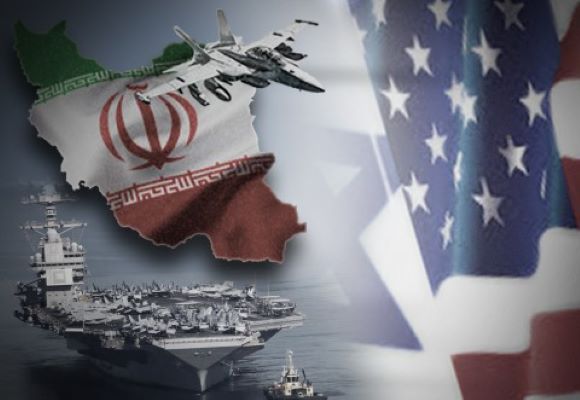
Has the Iranian regime genuinely made progress? What does a 90% reduction in Iranian missiles and Yemeni involvement in the conflict mean?
Today marks the end of the first month of American-Israeli aggression against Iran, which is entering its fifth week without achieving any of its goals, the most visible of which is the collapse of the Iranian Islamic Republic and its replacement with another Washington-aligned puppet. The exact reverse has occurred; Iran has remained robust, successfully widening the scope of the war and lengthening its duration, transforming it into a multi-front regional war of attrition. It now controls the global economy, international financial markets, and energy prices, whether they rise or decline. More crucially, Iran has locked US President Donald Trump in a complex strategic quagmire from which it will be impossible for him to emerge victorious. He now has two options: retreat and depart in disgrace, or escalate forever, incurring tremendous financial and military human costs and losses, as in Vietnam, Afghanistan, and Iraq.
Trump has been bragging a lot lately about his achievement in replacing the system and assassinating the majority of the old regime’s leaders, including its top, the martyr Supreme Leader Ali Khamenei. The assessment is correct, but it is bad for America and good for Iran because the new leadership is younger and more extreme. One of its most noteworthy choices was to carry out the martyr Khamenei’s request to shift Iran’s ideology from defence to offense— fighting until martyrdom or victory.
Furthermore, Benjamin Netanyahu, Trump’s sole ally after NATO and other European leaders abandoned him, correctly stated yesterday that the current Iran is not the previous Iran, and “Hezbollah” is not the previous “Hezbollah.” So far, the new “changed” Iran has launched 2,500 missiles and 3,500 drones to target American sites in the region, as well as Palestinian-occupied cities such as Tel Aviv, Jaffa, Haifa, Acre, Safed, Beersheba, Dimona, and Arad. Its military arsenal is loaded with missiles and drones. As for “Hezbollah”, which Netanyahu changed and assassinated its leader, Sayyid al-Shohada Hassan Nasrallah, as well as the majority of the old first-tier military and political leaders, it has fully recovered and grown stronger and more resilient, launching over 5,000 missiles and suicide drones since the start of the Israeli aggression on February 28.
While we discuss right and wrong, it’s also crucial to note that the number of Iranian missile attacks has significantly decreased by over 90% in recent days. This decrease is true, but the more accurate description is that it was a numerical decrease rather than a qualitative one, meaning the use of all the old Iranian missiles and their disposal in the early days of the war, with their number exceeding 1,500 missiles, and moving on to the next and most important phase at the agreed time, using the more advanced missiles, such as hypersonic, cluster, and submunition warheads weighing one or two tonnes, like the Khorrams.
President Trump is in a state of insanity and diarrhoea, issuing threats that he has yet to put into action and seeking the fig leaf that will cover his disgrace. The Strait of Hormuz remains vulnerable to Iranian missiles and warships. The entry of the Yemeni “Ansar Allah” movement into the conflict in support of Iran, Palestine, Lebanon, and Iraq has added the Bab el-Mandeb Strait, the second most important strategic crossing in the Arabian Peninsula and the Red Sea, to the list of Iranian power cards and the Axis of Resistance. All American ships and aircraft carriers, as well as the occupied Palestinian cities of Eilat, Tel Aviv, Jaffa, Dimona, and Beersheba, will be vulnerable to Yemeni missiles, as they were before the suspension of Yemeni attacks during the Gaza ceasefire a few months back.
Trump will be unable to capture the island of “Kharg” and control the Strait of Hormuz, which is the nerve of Iranian oil shipments. His aspiration to seize Iranian oil wells, akin to his actions in Venezuela, remains an unattainable goal. Even if he seizes them, the most pressing issue will be how to keep and secure them under American rule. Iran is unlike Venezuela, and the people are willing to volunteer and teach him history and geography for free.
Yes, we acknowledge that no war is without casualties, and Iran has incurred substantial material and human losses as a result of this attack. However, the qualitative losses for the US and Israel are significantly greater. In one of the Iranian strikes on the US Prince Sultan Air Base in Saudi Arabia, the US lost two “stealth” F-35 aircraft, two air refuelling aircraft, and, lastly, a Boeing “E-3 Sentry AWACS” that specialised in early warning. This aircraft, worth $500 million, can detect and track adversary aircraft, drones, and missiles from a distance of 400 km.
The true defeat of the Israeli-American duo is not limited to shooting down planes and intercepting missiles and drones but rather to the loss of prestige, the destruction of morale, the closure of trade routes, and, most importantly, the resort of over seven million Israeli settlers to shelters and tunnels day and night for over a month, the continuous sounding of warning sirens without pause, and Netanyahu spending all of his time in a room eight floors underground.
Netanyahu, who orchestrated this protracted conflict, successfully lured Trump into it. They determined the beginning and launched the first missile. However, the Resistance Axis, led by Iran, will bring it to an end, whether by war or peace, because this Axis is deep and has a long strategic patience.
A “different” perspective on Israeli-American aggression in its second month

Guy
Many are on the same page Abdel ,with hopes and prayers .