 TheAltWorld
 What military surprises will Iran bring in the next war?
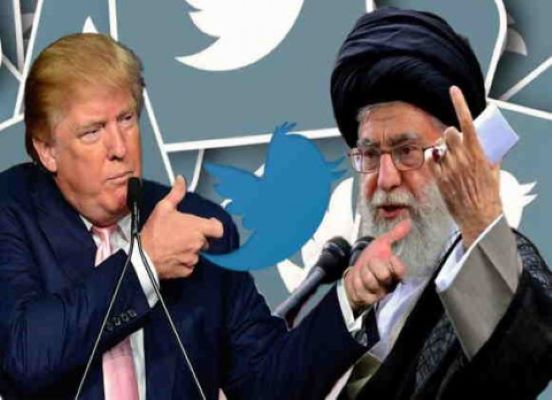
Why is Israel withdrawing from public engagement in it, remaining silent, and leaving the threats to Trump? What are the four likely scenarios for its development and outcomes?
The entire world, except Arab rulers who have completely stepped out of the sphere of influence in Arab affairs, is on edge, living in unprecedented anxiety due to President Donald Trump’s aggressive threat to attack Iran in a desperate attempt to overthrow its regime to achieve three goals:
The first is to extend his dominance over Iranian oil, as he did with Venezuelan oil; the second is to maintain the dollar’s global dominance; and the third is to save “Israel” from failure and isolation, eliminate its greatest existential threat, and prevent its collapse after seven wars failed to achieve any comprehensive victory.
If President Trump starts a conflict with Iran, the effects would be unpredictable, and the most perilous scenario for America and Israel would be the reverse. Iran will undoubtedly be unable to defeat America, the world’s greatest and most powerful state, but the survival and continuance of its Islamic regime in power would be a major win and a regional setback for the United States and its Middle Eastern allies, both militarily and morally.
Disinformation campaigns and purposeful comments, aimed at obscuring the truth underlying the American goal, have clouded the picture in both Iranian and American atmospheres these days. Some claim that Trump has decided to go to war, while others argue that the escalation of threats was intended to open channels for dialogue and present diplomacy a chance, either to avoid or retreat from using force due to fear of the consequences and rising opposition from the deep state.
If Trump’s new “might makes right” theory has succeeded in Venezuela, it appears to have a good likelihood of failing in Iran. The United States has launched attacks on Iran and Israel three times. Still, it has not succeeded in altering the regime, eliminating its nuclear and missile capabilities, reducing its powerful regional armaments, or removing its military might. The Iranian Islamic regime remains in control of the situation on the ground despite nearly three weeks of protests, managing the current crisis and addressing the manufactured sedition in Israel and America through counter-strikes that demonstrate their prior readiness to confront it, such as cutting off internet and external phone communications, capturing embedded Mossad agents one by one, and finally instructing supporters with well-calculated strategies.
What Trump and his mentor, Netanyahu, are unaware of is that the protesters, particularly the “saboteurs”, are calling for a “struggle” in protest of inflation, high prices, and the collapse of the national currency. At the same time, the ruling Islamic regime fights to maintain security and stability, Iranian national and territorial unity, national sovereignty and dignity, and the Islamic creed in the face of a rogue and arrogant Zionist-Crusader colonial enemy.
We have drawn various conclusions and observations from researching and watching the developments in the Iranian-American issue over the last two weeks, which we summarise in the following points:
First, it is clear that the American side, specifically President Trump, is threatening and promising aggression against Iran and the overthrow of its regime, whereas Netanyahu and his entity pursue a policy closer to silence, declaring a state of emergency in the army and hospitals, and only opening shelters. Does this imply that President Trump and the United States are the only parties involved in the conflict aimed at addressing the strategic weakness of the American-Israeli alliance, particularly regarding Iran’s retaliatory bombings of the occupying state using Fattah, Sijil, and Khaibar missiles, of which only 500 penetrated the missile defence systems and accurately hit their targets during the recent “12-day war”? The goal of this Zionist ingenuity is to claim that Iran attacked a state that did not engage in the war against it for unknown reasons.
Second, if American aggression against Iran begins, there will be missile and aerial strikes against strategic targets, followed by claims of success. Aerial bombardment without a ground invasion does not significantly win wars or change regimes. Instead, it might provide a credible justification for employing the most powerful instruments available to suppress protests and respond to American targets in the region, particularly the 55 bases where 70,000 soldiers are stationed.
Third, assassinate Imam Sayyid Ali Khamenei and the heads of the Revolutionary Guard, army, security, and parliament, or kidnap as many of them as possible in a Hollywood-style performance, and use it as a pretext to destroy the regime if it cannot be overturned. This tactic was adopted at the start of the 12-day conflict, when “Israel” followed the same strategy and suffered a heavy defeat following the first Iranian retaliation strike.
Fourth, Iran resisted surrendering in the three American-Israeli wars, giving up any enriched uranium (possessing 460 kilogrammes), or dismantling any missile systems during its more than two-year negotiations with America and the West in Vienna and Muscat. Its spiritual and political leaders have shown remarkable manoeuvrability by avoiding American and European pitfalls.
It will be difficult or impossible for America to win this conflict if it becomes preoccupied with serving Israel and preserving its life, saving the dollar from depreciation, and controlling energy sources (oil and gas) and precious metals to decrease debts and avoid bankruptcy. We contend that it has chosen the wrong target (Iran) and has misled the cows, because Maduro is not the Supreme Leader Ali Khamenei, and his Venezuelan army cannot be compared to the Revolutionary Guard, which has 200,000 martyrs in its ranks, waiting for the epic confrontation and looking forward to meeting their Creator in the gardens of eternity.
America will likely lose this conflict if it is consumed with serving Israel and ensuring its life, rescuing the dollar from collapse, and controlling energy sources (oil and gas) and precious minerals to decrease debts and avoid bankruptcy. We contend that it has chosen the wrong target (Iran) and has misled the cows, because Maduro is not the Supreme Leader Ali Khamenei, and his Venezuelan army cannot be compared to the Revolutionary Guard, which has 200,000 martyrs in its ranks, waiting for the epic confrontation and looking forward to meeting their Creator in the gardens of eternity.
The Iranian Islamic dictatorship will emerge from the crisis stronger, more resilient, and more experienced. We conclude this piece by referring to the most noteworthy aspect of the recent words made by Abbas Araghchi, the Iranian Foreign Minister, yesterday, when he said, “America tried us in the 12-day war last June and saw how we replied… And we are waiting for it again.”
According to several military sources close to decision-makers, Iran will surprise both Israel and the United States with very advanced new missiles and weapons in the fourth war, just as it surprised Israel with missiles capable of destroying half of Greater Tel Aviv in the preceding conflict. We are also waiting, which may not take long.

0 thoughts on “What military surprises will Iran bring in the next war?”