 TheAltWorld
 Decision Point
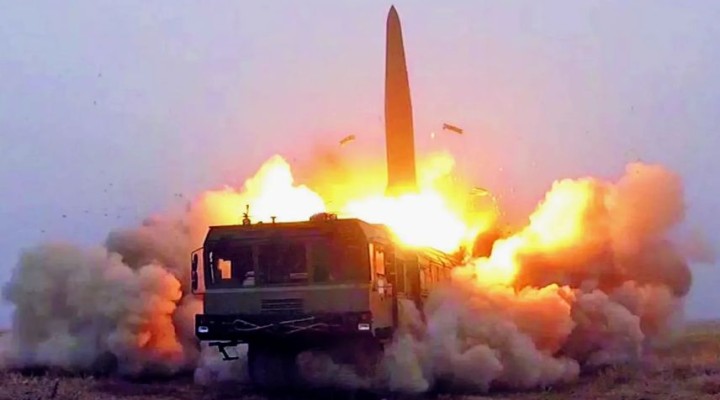
Ukraine is defenseless in the face of Russian missile attacks. Now is not the time for negotiations. Russia must finish the job.
The United States Department of Defense defines the term “decision point” as “A geographic place, specific key event, critical factor, or function that, when acted upon, allows commanders to gain a marked advantage over an adversary or contribute materially to achieving success.”
Today Russia has reached a decision point in its conflict with the collective West, inclusive of the Inited States, and their Ukrainian proxy.
The Russian leadership has, in my opinion, been preparing for some time for the confluence of the physical and psychological manifestation of a campaign designed to create an unbridgeable gap between perception and reality which, when exposed through action, will cause the artificially constructed edifice of Ukrainian defensive viability to collapse, and with it the false pillars of Western democracy, industry, and military might which propped it up.
This campaign wasn’t designed from scratch by the Russians, but rather emerged from the lies and deceit of those in the West who postured as peacemakers but in reality served as the promulgators of war.
The Europeans had long proved themselves to be charlatans, with their perfidy regarding Minsk forever exposing them as absolutely unreliable partners for resolving a Ukrainian crisis they themselves orchestrated.
The more curious thing is Russia’s attitude towards the United States. It was the United States which served as the architect of policies which have been in place for decades designed to weaken Russia and undermine to the point of collapse the government of Russia.
And yet Russia continued to hold out hope that the United States—especially under the second iteration of the Trump administration—could somehow serve as a force of rational stability when it came to managing both Europe and Ukraine.
The Anchorage Summit of August 2025 was the culminating moment of this conceptualization, manifesting itself into the so-called “Spirit of Anchorage”, the idea that through compromise a solution that addressed in serious fashion Russian concerns could be crafted that would be acceptable to all.
Within months, however, it became clear that the “Spirit of Alaska” was as illusory as the “Spirit of Minsk” that preceded it, another perfidious diplomatic ploy designed to buy time to build up Ukrainian military capability by lulling Russia into a false belief that a negotiated peace was possible.
But the United States, like Europe, never intended for the Ukrainian conflict to end in anything other than a strategic Russian defeat.
The Russian leadership has now come to embrace—however belatedly—this uncomfortable reality.
The ultimate question that now confronts Moscow is how to act on this realization.
Russia finds itself in a situation where it enjoys considerable strategic advantages over Ukraine and its Western partners across a broad spectrum of disciplines—diplomatic, economic, military, and social.
Russia, despite the concerted efforts of the West, is not isolated. Just the opposite, in fact. In many ways, Russia enjoys a stronger geopolitical posture today that it did before the initiation of the Special Military Operation if for no other reason that the conflict has exposed the nefarious nature of the so-called “rules-based international order” and those who conceived and implemented it, and as such breathed viability into the concepts of multilateralism that Russia and other nations, especially China, had been promoting with mixed results.
The Russian economy has withstood the challenges posed by economic sanctions and direct military action, and today is recognized by most of the world as a viable place to do business, as witnessed by the $84 billion in direct investments accrued during the Saint Petersburg International Economic Forum this past June.
Russia today possesses a large, well trained, well equipped, combat hardened military backed by a robust and capable defense industry which is not only prevailing in an extended war of attrition against Ukraine and the collective West, but has positioned itself to defend Russia’s interests in the Baltic, Arctic, Pacific, and the totality of its periphery, as well as defend and advance Russian interests in the Middle East and Africa. The advances in Russian technology—especially in ballistic missiles—has provided a qualitative edge which, when combined with Russia’s quantitative strengths, makes Russia a very formidable force.
Russian society continues its long and painful divorce with the West. The incomplete nature of this split, which sees small pockets of western liberalism holding on to relevance in the face of a larger societal gravitation toward a new Russian national awareness, has provided the collective West with its only opportunity to dismantle the advantages Russia has accrued diplomatically, economically, and militarily. The western intelligence services have worked with Ukraine to craft a narrative of Ukrainian resistance, resilience, and relevance that is then juxtaposed on the perception of Russian weakness that emerges in the wake of the false hope of negotiated peace that Russia had embraced in Minsk, Istanbul and Anchorage.
This hope was always designed to energize the residual western liberal elites inside Russia into believing everything would be better if Russia simply embraced the spirit of compromise. But the spirit of compromise was nothing more than a wolf in sheep’s clothing, a disguise to blind Russians from the reality that the collective West was seeking Russian surrender instead.
By planting the false hope of compromised-induced peace and prosperity in the minds of the residual Russian western liberal elites, western intelligence was sowing the seeds of a larger Russian societal disruption that was intended when the desired peaceful outcome failed to materialize. The fact that the failure to find a pathway to peace originated in the collective West’s perfidy didn’t matter in this regard—the Russian liberal elites were conditioned to blame their leadership for this failure, regardless of the truth.
Having sown the seeds of societal unrest, the western intelligence services themselves embarked on one of the largest information operations ever conducted, flooding the mainstream western press and social media outlets with an endless stream of stories designed to promote the narrative of Ukrainian victory and Russian defeat. This narrative would then be injected into Russian social discourse either through the resonance brought on by the incessant Western echo chamber, or through agents of influence—witting and unwitting alike—whose access to the Russian information market helped magnify a message of Russian weakness, corruption, and indecisiveness designed to collapse Russian public confidence in their leadership.
And now we find ourselves at the Point of Decision.
The information operation against Russia was backed by three supporting campaigns.
The first was the transition by Ukraine and its western supporters away from the traditional battlefield, where Russia was prevailing, to a drone-based war designed to create the perception of Ukrainian strength and, in doing so, the prospect of Ukrainian victory.
This campaign was not just designed to influence the Russian liberal elites, but also to build a foundation of political support within Europe and the United States for increased economic and military support for Ukraine.
The drone campaign served as the fuel that energized the G-7 meeting in June where pledges of economic support were made, as well as the NATO summit in July where similar pledges were made regarding military support.
But rather than constructing a structurally sound foundation upon which a viable Ukrainian counter to Russia could be assembled, the entire Western effort had produced little more than a ghost of what was being sought—a veritable house of cards that could collapse at the slightest of breezes.
The fact is the ability to turn the promises of the G-7 and NATO into reality are as illusory as the drone campaign upon which these promises were promulgated.
The European “Big 3”—Germany, France and the UK—are led by leaders who political viability is measured in months.
The United States is distracted by a losing military effort in the Middle East and a genuine lack of goodwill between American President Trump and his European and NATO partners.
The only thing that could coalesce this dysfunctional US-European alliance would be a Russian overreaction to the pressures brought on by the Ukrainian drone campaign.
This, of course, is one of the primary goals of the Western intelligence services through their information operation.
The “Russia must attack Europe” thematic has taken hold in Russia, promoted by western observers and analysts (I myself have been guilty of this) as well as Russian commentators and influencers.
But it has been resisted by the Russian leadership, simply because to attack Europe would undo all of the advantages Russia has accrued diplomatically, economically and militarily and, in doing so, potentially trigger the very collapse of Russian society the West has long sought.
A Russian attack on Europe would also create a window of viability for both the failing European leadership and the flagging US-NATO alliance.
A Russian attack on Europe is exactly what the Western intelligence seek.
Today Russia finds itself confronted by a confluence of events that has opened up a window of strategic opportunity.
The Ukraine drone campaign has failed. This conclusion has manifested itself in the political turmoil inside Ukraine as President Zelensky fired the person responsible for this campaign—Mikhailo Federov—and instead appeared to favor a reallocation of resources to the Ukrainian ground forces.
The Ukrainian public, which had embraced the narrative of Ukrainian drone dominance as the magic formula to bring an end to the war, have taken to the streets in protest, creating an unprecedented political crisis for Ukrainian President Zelensky.
Meanwhile Europe and the US struggle to follow through on the promises made at the G-7 and NATO Summits.
The gap between the theory of Ukrainian victory and the ability of Ukraine and its Western partners to achieve this has never been greater.
The only thing that could save the Ukraine project is either Russian indecision or Russian overreaction.
It is time, instead, for Russian action.
Russia has initiated a massive bombardment of Ukraine using missiles and drones.
Ukraine has no defense.
Neither Europe nor the US are in a position to change this calculus in the near term.
Every Russian missile attack underscores the false narrative of the Western intelligence information operation.
Every Russian missile attack exposes the impotence of Europe.
Every Russian missile attack underscores the dysfunction of NATO and the US.
And every Russian missile attack shreds the credibility of the residual Russian liberal elite.
This is the Decision Point.
Keep raining missiles down on Ukraine.
Confront the Ukrainian people with the inevitability of their collective demise should they continue to fight.
Confront Europe with the emptiness of their promised support.
Confront the US and NATO with their collective military impotence.
And confront the Russian people with the inevitability and necessity of a decisive Russian victory.
The collective West set itself up for disaster by engaging in perfidy designed to destroy Russia.
Policies based upon lies and deception cannot succeed if the lies and deception are exposed in time for an effective counter to be implemented.
Russia has exposed the lies and deception of the West.
Now it simply needs the courage to act.
This is the Decision Point that will decide the future of Russia.
The vulnerability of Ukraine to Russian missile and drone attack has presented itself.
Russia now needs to exploit this vulnerability with every resource it has.
Ukraine will be defeated.
Europe will collapse.
And the United States will be left holding an empty bag.
There’s no need to strike Europe.
Simply darken the skies of Ukraine with Russian missiles and drones.

0 thoughts on “Decision Point”