 TheAltWorld
 China-Japan Tensions on the Rise
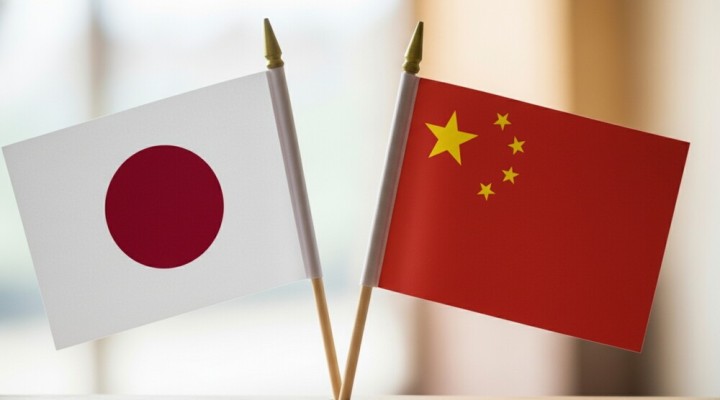
Sino-Japanese relations are widely described as being in their most confrontational phase since diplomatic normalization in 1972, with national security issues dominating the agenda. The current crisis stems from Japanese Prime Minister Sanae Takaichi’s Nov. 7, 2025, statement that a Chinese use of force against Taiwan could constitute a “situation threatening Japan’s survival,” creating a scenario that could see Japanese Self-Defense Forces engaged in force-on-force confrontation with the People’s Liberation Army. China has responded with a sustained multi-domain pressure campaign, prompting Japan to accelerate defense reforms premised on China as its primary strategic challenge.
China has for some time now framed Japan’s defense buildup as evidence of renewed militarism and reckless behavior that challenges postwar norms premised on Japan restraining its military ambitions. But postwar realities have positioned Japan as a staunch regional ally of the US, a stance that, under the current environment of Sino-American strategic competition, forces Japan to undertake policy reforms designed to be seen as carrying its own weight when it comes to regional security issues. China’s objections, from the standpoint of Japanese policymakers, are interpreted as unilateral attempts to alter the status quo by force or coercion, and as such constitute an unprecedented strategic challenge. The result is a deepening security dilemma in which each side’s actions are — rightly or wrongly — viewed by the other as offensive preparations, especially regarding Taiwan contingencies and the East China Sea.
China Ramps Up the Pressure
China has maintained a near continuous China Coast Guard (CCG) presence in the East China Sea, especially in the vicinity of the Senkaku Islands (called the Diaoyu Islands by China). The Chinese vessels maintain a high operational tempo in the islands’ contiguous zone and have conducted repeated intrusions into waters administered by Japan, raising the ire of the Takaichi administration. Recent examples of such intrusions include four vessels that penetrated the waters off the Senkaku Islands in early June, a Jul. 7 face-off in which each side claimed to have expelled the other’s ships near a Japanese fishing vessel and another four-vessel intrusion on Aug. 14.
The aggressive tactics of the Chinese have also expanded into waters considered by Japan to be part of its exclusive economic zone (EEZ). In late June, Tokyo protested CCG vessels operating south of Yonaguni Island (near Taiwan) and, in doing so, accused China of asserting unilateral sovereign claims. This intrusion was linked by Beijing to Japanese-Philippine talks on delineation of a maritime boundary east of Taiwan that were ongoing at the time. In mid-August, Chinese research vessels were observed conducting survey activities in Japan’s EEZ off Okinawa, prompting warnings from the Japanese Coast Guard.
Russia Joins the Mix
In late June, Chinese and Russian bombers flew a joint patrol near southwestern Japan and over the Sea of Japan, causing Japanese fighters to be scrambled in response. In mid-July, Chinese guided-missile destroyers conducted a live-fire exercise inside Japan’s claimed EEZ near Okinotori Island, with a Russian frigate operating nearby — the first such publicly noted Chinese live-fire activity in those waters. It should be noted that China rejects Japan’s EEZ claim around Okinotori. Japanese concern about potential Sino-Russian coordination has been heightened by their expanding joint military activity. Separately, tensions between Tokyo and Moscow increased following Russian President Vladimir Putin’s recent visit to disputed islands in the Kuril Island chain.
Chinese aircraft carrier operations have also extended farther into the Pacific, with the Liaoning carrier battle group increasing the frequency and reach of its operations beyond the First Island Chain, defined as the series of islands that extend from Japan through Taiwan and down through the northern Philippines toward the Malay Peninsula and Borneo, forming a narrow corridor between the East China Sea, South China Sea and the wider Pacific Ocean. Japan conducted close surveillance of these deployments — so close that China accused Japanese forces of simulating attacks on the Liaoning, which Tokyo denied.
Japan interprets the overall pattern of Chinese activity — carrier and air operations, together with joint exercises involving the Russians — as being geared toward normalizing a military presence in the East China Sea, Taiwan approaches and western Pacific.
Japan’s Response
The Takaichi administration views the security environment between Japan and China as being the most severe since 1945. The cabinet-approved Defense of Japan 2026 white paper, released in early August, reiterated Japan’s characterization of China as “unprecedented and the greatest strategic challenge” requiring a concerted response linked to overall national strength and cooperation with allies and partners.
The Takaichi administration is fast-tracking revisions of Japan’s three core security documents — the National Security Strategy, National Defense Strategy and Defense Buildup Program — for completion by the end of 2026. Japanese officials cite the changing environment, inclusive of new forms of warfare (including drones and artificial intelligence), as the primary drivers behind these policy revisions. Defense spending has risen sharply, with Japan bringing forward its goal of raising defense-related expenditure to a level equivalent to 2% of GDP from the original fiscal 2027 deadline.
Japan has begun deploying surface-to-ship missiles to remote islands, started planning for operations designed to reinforce its southwestern islands closest to Taiwan and established a new National Intelligence Bureau to strengthen the government’s intelligence-gathering and analytical capabilities. Joint exercises and cooperation with the US, the Philippines, Australia and others have deepened. At the same time, the diversion of some US military resources toward the ongoing conflict in the Middle East, together with potential delays to Japanese deliveries of roughly 400 US Tomahawk cruise missiles as American inventories have been drawn down, has added to a wider Japanese debate over the reliability of US security commitments.
While China has made recent reference to Japan’s status as a “defeated nation” in the UN Charter and has invoked the charter’s “enemy state” provisions in arguing against any revival of Japanese militarism, Japanese officials have assiduously rejected such accusations, citing Japan’s postwar record regarding its military, the absence of nuclear weapons or strategic bombers on its soil and Japan’s historic focus on a free and open Indo-Pacific consistent with international law. From the perspective of the Takaichi government, the measures currently being undertaken by Japan constitute the minimum level of necessary deterrence against coercion from either China or Russia — or both in concert — rather than aggressive revisionism.
Limited Prospects for De-escalation
China has again turned to economic leverage as part of its posturing against Japan, this time employing a broader and more formalized set of controls. In late June, China expanded its dual-use export controls, placing 40 Japanese entities — including defense-linked research institutes and corporate affiliates — on blacklists or heightened-scrutiny lists that restrict access to Chinese items with potential military applications. This built on earlier rare-earth and dual-use restrictions.
These steps are widely assessed in Japan as interconnected with military and diplomatic actions, intended to raise the costs of Tokyo’s Taiwan posture and defense modernization. Japan continues efforts to diversify critical supply chains and treat economic security as inseparable from national security.
Limited diplomatic openings have not altered the overall negative trajectory of Sino-Japanese relations. The rhetoric from both sides is pointed and heated; China continues to denounce Japanese “militarism,” while Japan protests Chinese actions as violations of international law and threats to regional stability.
The problems between Japan and China are structural in nature. For instance, Taiwan remains China’s absolute red line while emerging as a vital security interest in Japan. China appears determined to continue to expand its operational space in both the South and East China Seas and elsewhere while deterring external involvement in its sovereign affairs; Japan, for its part, seeks stronger regional deterrence, even as questions over the reliability of the US as a viable security partner have become more prominent. Growing China-Russia coordination further complicates the picture.
The risk of miscalculation in the crowded East China Sea or during high-tempo air and naval operations remains high, even as both parties prefer to keep confrontation below the threshold of open conflict. Without a credible mechanism for managing differences or restoring minimal mutual restraint, the security postures of both China and Japan are likely to harden through the remainder of 2026 as Japan finalizes its strategic documents and China sustains pressure across military, maritime and economic domains.
https://www.energyintel.com/000001a0-3d5f-d96e-a5a9-fd7fc5cf0000

0 thoughts on “China-Japan Tensions on the Rise”