 TheAltWorld
 MoU stacked in holding pattern as U.S. pivots to Plan ‘B’
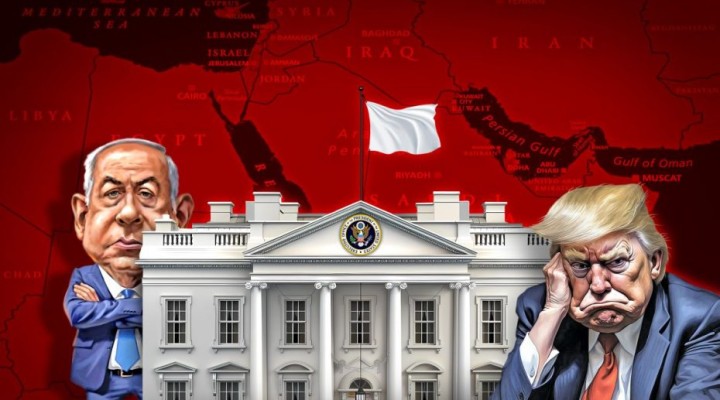
With Hormuz still squeezed and White House factions at war, who’s really playing whom?
Plan ‘A’ was to topple the Islamic Republic which was seen as nothing more than a fragile house of cards. That collapse – it was expected – would ripple through, and take down several connected Axis of Resistance fronts, according to the analysis of Mossad and interlinked Israeli power centres in the U.S. (Certain U.S. officials did, however, entertain doubts).
The prediction of a popular uprising in Iran has proved to have been a strategic mistake of such bearing that per contra, it catalysed a stronger, more defiant and assertive Republic. Even Israeli experts admit that the false premise underlying the war has generated a new balance of power in the Middle East. Until then, a top Israeli military commentator (Alon Ben David) could say, Israel was the ‘go-to’ address in the Middle East for the world’s interests; but that from now on, the ‘go-to’ state is, and will be, Iran. That comment exemplified the extent to which a Rubicon had been crossed.
So the collective pro-Zionist bloc has shifted to plan ‘B’ – a ‘deceit’ based on the MoU, which were Trump’s interpretations to be accepted by Iran (unlikely), would effectively lead to the disarming of Iran through a nuclear agreement that would strip the state naked by virtue of its ‘verification’ requirements: Intrusive, ‘go-anywhere’ surprise IAEA inspections of ‘secret underground sites’ and interrogations of scientists and research academies. All would (again) be exposed.
Taken in tandem with Plan ‘B’s wider Israeli hegemonic aspiration, the aim would be to concurrently lobotomise Hizbullah through a separate disarmament agreement effected through compliant Lebanese government factions pressing down on the movement from the north, whilst Israel pursued ‘desertification’ in the south.
In parallel, the plan envisages the sterilisation of Palestinian resistance by drawing from the Vietnam ‘Strategic Hamlet Programme’ forerunner of forced relocation into sterilised, fenced ‘concentration camps‘.
The third component comprises the cauterisation of the Iraqi Resistance via a compliant new American installed Prime Minister, Ali al-Zaidi, who under the cover of anti-corruption campaign, with U.S. support, is demanding the disarmament of the Iraqi resistance by 30 September. The neutralisation of the Iraqi resistance is seen as key to facilitating a Syrian incursion by President Jolani’s jihadist militia into northern Lebanon to complete the vice closing in on Hizbullah.
All in all, Plan ‘B’ seemingly suggests a very comprehensive regional pacification project, especially when taken in conjunction with U.S. efforts to try to force open an ‘American Corridor’ on the Omani side of the Hormuz Strait.
Likely, the regional pacification scheme will be viewed as a clever move by Trump to mitigate the pressure exerted on him by the neo-con’s anger at his MoU ‘concessions’ to Iran.
But is it so clever? Marco Rubio was instructed to oversee the Beirut establishment making pretty with Israel in their shared antagonism towards Hizbullah. But the resulting ‘bout de papier’ for the disarming of Hizbullah enjoys no legitimacy; it contradicts the Lebanese Constitution and would require cabinet endorsement and parliamentary approval to have any validity or meaning.
What the Israel-Lebanon agreement does do, however, is to stick a dagger in Vance’s separately agreed Qatari-chaired U.S. and Iran co-ordination structure for overseeing MoU compliance in Lebanon. Rubio’s initiative to cut Iran out from the Lebanese co-ordination framework cuts across the MoU and Vance’s mediation efforts. Rubio’s tripartite ‘paper’ will solve nothing, but will leave the ‘Lebanon issue’ to continue as an open sore.
Yet a “ceasefire in Lebanon and Israeli withdrawal” is pivotal to the functioning of the MoU. It appears that Netanyahu tee’d up Ron Dermer to get Rubio to sabotage the MoU.
So, now we have civil war inside the White House over Iran – Vance vs Rubio – whilst the MoU slides into abeyance, likely remaining in situ, albeit in comatose state.
In parallel, things are falling apart: leading challenger to Netanyahu in the upcoming elections and former IDF chief and former war cabinet member, Gadi Eisenkot, confirmed this week that “Iran never obtained nuclear weapons. I’m well aware of all the intelligence . . . Netanyahu is inventing a reality, manufacturing threats, and that’s how he frightens the Israeli public”. Former PM Bennett agreed, saying that Netanyahu’s claims are ‘lies’, accusing him of “reverse-engineering history”.
All this will not help Trump’s urgent need to fully to open Hormuz in order to prevent a major economic crisis. Contrary to the view that this is a clever move, one view (that is increasingly held by Iranians inter alia), would be that Iran is being played by the U.S. – that the MoU is a deceit to force the immediate reopening of Hormuz, as Vance has inferred, in order to fill up the U.S. and western strategic oil reserves, as well as to buy time to see where the U.S.’ leverage cards might then lie in respect to other elements of the MoU.
Opinion in the crucial Iranian Assembly of Experts (and on the street) has hardened against Iran making any concession to the U.S., especially in respect to permitting passage to (unfriendly) vessels transiting Hormuz. The consensus is to retain Iran’s squeeze on Hormuz until the pain throbs.
So, as fractures open in Washington – and with Iran becoming increasingly distrustful of Trump and his zigzagging – the MoU shows itself to be a deceit intended just to get the Strait open before striking Iran both indirectly (via its resistance allies), and harder.
Interestingly, this sedimenting opinion coincides with Russian FM Sergei Lavrov giving voice to his own judgement that the Anchorage ‘understandings’ reached with Trump were likely a U.S. deceit, too.
So, who has ‘played’ whom? For now, the oil coming out of the Persian Gulf is not heading to the U.S. According toReuters, at least five super tankers carrying a total 10 million barrels of Saudi oil loaded from Ras Tanura have exited the Strait of Hormuz. Two of the five very large crude carriers that have left the Strait are heading to Japan, while another two are making their way to China. Which means – as Larry Johnson has outlined – that even were tankers to head to the U.S. now, the U.S. would still face a serious deficit of sour crude until 23 August at the earliest, given the 42 days voyage time to the U.S. (Sour crude is crucial feedstock for complex U.S. refineries to produce diesel and jet fuel).
The post-mortem on the U.S.-Israeli war on Iran must be suspended as both Trump and Netanyahu enter a holding pattern ahead of elections. Trump might threaten to ‘obliterate’ Iran if it does not capitulate and bend the knee before him, but it is doubtful that the U.S. can long maintain its military presence in the region with munitions in short supply. Nonetheless, a further round of intense kinetic war is highly probable – and widely expected in Iran.
A short ‘performative’ U.S. military strike on Iran is possible, but would achieve little – and nothing strategic.
So who is losing in this ‘war’? Israel – and Netanyahu. Netanyahu is in deep distress electorally too.
The expected triumph of Israel over the Middle East has failed. The connected revolutionary war on Russia and the siege of China are faltering also, and Israel’s (until now unassailable) hold over the U.S. is in question too.
In wake of Netanyahu convincing Trump to withdraw from the JCPOA in 2015, leading Israeli security commentators began to lament their strategic mistake as “one of the greatest strategic mistakes of the twenty-first century“. Amazingly, some in Israel – including senior military figures – are already lamenting Israel’s assassination of the Supreme Leader, Ali Khamenei, on 28 February 2026 – “At least we knew where we stood with Khamenei”, a senior Israeli military source told Ben Caspit –
“[Khamenei] had red lines, he had a strategy, and he was sober to some extent. There was a certain stability to the Iranian madness. The current leadership is much less stable, far more extreme and unpredictable. They are intoxicated by power and hubris, convinced that they defeated both America and Israel”.

0 thoughts on “MoU stacked in holding pattern as U.S. pivots to Plan ‘B’”