 TheAltWorld
 The Spectral Palestinian: Presence Before Politics
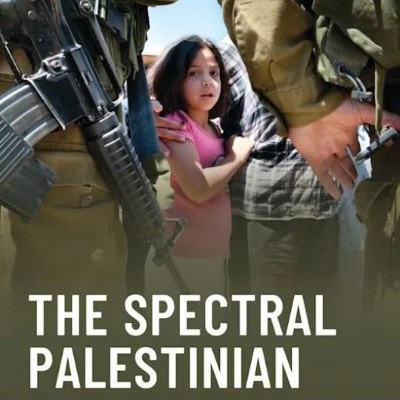

- Book Author(s):John Randolph Leblanc
- Published Date:February 2026
- Publisher:Bloomsbury Academic
- Hardback:212 pages
- ISBN-13:9781666962147
Language in Western discourse abandoned the Palestinian people. In a global framework that renders Palestinians invisible unless visibility is required to satisfy the mainstream narrative, the West has talked about Palestinians in terms of projections that are far removed from the reality of a colonised indigenous population.
“One way to frame this political predicament of Palestinians is as being caught between visibility and invisibility. It captures this peculiar positionality, as both helpless and dangerous, that is then projected out from profoundly confined circumstances, limiting not just movement, but also their political possibilities,” John Randolph Leblanc writes in his introduction to The Spectral Palestinian: Presence Before Politics (Bloomsbury Academic, 2026). Palestinian presence haunts Israel and its settler-colonial enterprise, but Palestinian narratives and the language employed by Palestinian writers establishes presence that stands not only in opposition to settler-colonialism, but in assertion of the Palestinian experience and being.
The book discusses the works of three Palestinian writers: Sari Nusseibeh, Mahmoud Darwish and Raja Shehadeh. All three were involved in the Palestinian national movement and their writings convey assertions of being from within the politics of the failed diplomatic framework that eventually became the two-state paradigm.
Leblanc notes the absurdity of 7th October 2023 framing discourse on Palestinians, noting that the invisibility of the Palestinian people was employed in the early years of Zionism and throughout the decades since the 1948 Nakba, the 1967 Naksa, and the so-called peace process up to the present. Through decades of colonialism, Palestinians have been rendered invisible through Zionist ideology and its application – settlement expansion, forced displacement, apartheid, the illegal blockade and Israeli restrictions that keep Palestinians out of sight, unless Israel requires the terror narrative to justify its security narrative. In that case, Palestinians become visible out of coercion, and in a framework that equates the Palestinian people with violence and destruction.
The Palestinian writers discussed in this book reveal the existence of Palestinians away from the absence enforced upon them by Israel and Western politics.
How Palestinians grapple with the limits of Israel’s colonisation and military occupation is one theme which Raja Shehadeh explores in his occupation diaries. Other issues Shehadeh tackles in his writings include the legal aspect of military occupations and how for the Palestinian people legal discourse framed in the Western context does not provide scope for rights. Law facilitates the dehumanisation of the Palestinian.
Mahmoud Darwish, on the other hand, discusses the disappearance of the Palestinian and the subsequent appearance as danger to contend with. The 1948 Nakba denied space for Palestinians through forced displacement, while colonialism and settlement expansion rendered Palestinians remaining in colonised Palestine invisible. Reflecting on the Palestinian as a spectre, Leblanc writes, “While visible remnants of their bodily presences remain, the mission of the conqueror/occupier is to make sure that those remnants disappear, and with then the possibility that those embodied presences may reappear in those spaces.”
In the appearance and disappearance of the Palestinian, Israel cannot be excluded from the narrative. Leblanc notes that “there would be no Israel without the apparent and ongoing disappearance of Palestine and no Israeli without the corresponding disappearance or non-appearance of Palestinians.”
Drawing upon Nusseibeh’s work, the author reflects on the lack or absence of agency as a result of Israel’s military occupation and the politics sustaining it. By proposing that the Palestinian people give up their aspirations for a state and that political hopes be focused on security within a state, Nusseibeh’s approach can be read as collaborationist. Leblanc quotes Edward Said’s criticism of Nusseibeh for his involvement in the Nusseibeh-Ayalon Agreement of 2002. Collaboration with Israeli settler-colonialism, in this regard, is similar to the Palestinian Authority’s function over state-building that is less state, and more colonial collaboration with Israel.
Discussing the Oslo Accords, for example, Shehadeh’s assessment is that “Palestinian negotiators were active participants in their own marginalisation.”
Within all the absences and forced disappearances of the Palestinian as a result of Israeli and Western narratives, there is also the intentionally disjointed narrative in which Israeli colonial violence is narrated or described. Each Israeli aggression against Palestinians is treated like the first violation, thus obscuring not only Israeli colonialism but also the decades-long Palestinian anti-colonial resistance. As Leblanc notes, “Israeli provocations or responses to Palestinian acts of resistance can obscure the violent last 100-year history of the encounter between two peoples and, especially, the disproportionate agency enjoyed by Israel through both its official and unofficial agents.”
All the three authors discussed in the book, Leblanc notes, discuss the invisibility of the Palestinian and the visibility through the struggle for Palestinian liberation. For Shehadeh, the trauma of Israel’s military occupation and the legal challenges constitute one focal point of struggle. Nusseibeh is read as the reality that Palestinians are unable to articulate their own terms, including that of a Palestinian state. For Darwish, visibility is aligned with dignity.
Israel’s genocide in Gaza has shifted Palestinians from invisibility to global visibility. However, connecting the dots between the entire historical process of colonialism and anti-colonial resistance expose the reasons why Palestinians have been rendered ‘spectral’. The language of the peace process – of Western politics – is “a failure to tend to Palestinian voices”. And a voice without space to articulate itself can easily be lost.
https://www.middleeastmonitor.com/20260323-the-spectral-palestinian-presence-before-politics/

0 thoughts on “The Spectral Palestinian: Presence Before Politics”