 TheAltWorld
 The Battle for Hormuz
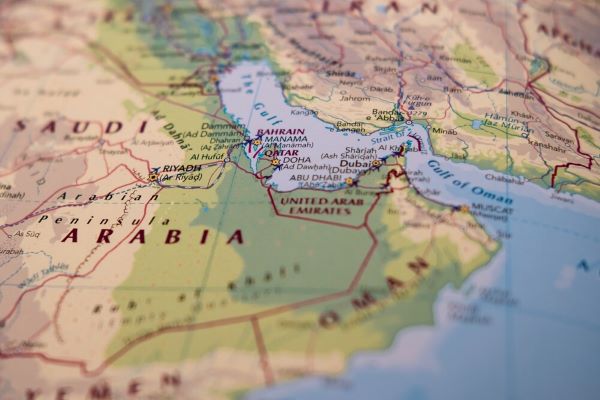
After more than four weeks of conflict, the struggle between the US and Iran boils down to one critical issue — who controls the Strait of Hormuz. This strategic waterway is the ultimate “on-off” switch when it comes to the supply of oil and gas from Middle East sources. It is an economic lifeline that the global economy cannot function properly without. And Iran’s continued ability to manifest control over shipping transiting this vital chokepoint puts the fate of the conflict initiated by the US and Israel at risk.
There was always a risk that a US-Israeli confrontation with Iran would come down to a simple question of which would occur first: the collapse of the Iranian regime or the collapse of the global economy. The US-Israeli attack on Iran that began Feb. 28 was heavily weighted toward achieving regime change up front, built on a decapitation strike that killed Supreme Leader of Iran Ali Khamenei. But the Iranian government proved that its institutions were far more resilient than anticipated by the Israeli and US planners. Likewise, an air campaign designed to suppress and degrade Iran’s ability to launch ballistic missiles and drones proved not to be up to the task, as Iran continues to maintain an ability to strike targets in Israel and throughout the Middle East region. As an increasingly frustrated Israel and US expand the scope and scale of their bombing campaign to destroy critical Iranian infrastructure, including defense industry and energy storage and production, Iran has retaliated in kind, striking energy-related targets in Israel and throughout the Gulf Arab states. Moreover, Iran has been able to exercise selective control over shipping passing through the strategical Strait of Hormuz, effectively denying transit to ships affiliated with nations considered by Iran to be parties to the conflict.
The economic consequences of Iran’s selective closure of the Strait of Hormuz have exposed the Achilles’ heel of the US-Israeli plan of action, as the severe reduction of global energy supplies and rising energy prices begin to have a detrimental impact of regional and global economies. Left unchecked, the cutoff could lead to widespread economic recession and, if prolonged, depression. The need to resume the uninterrupted flow of energy resources through the Strait of Hormuz has left the US and Israel with three options. Option 1 is to threaten Iran with massive destruction if the Strait is not opened, in effect holding the Iranian energy-based economy hostage. Option 2 is to find a negotiated end to the crisis. A third option is to use military force to seize physical control of the Strait of Hormuz.
Energy Blackmail
US President Donald Trump appeared to go for the first option over the weekend, issuing a threat via social media to “obliterate” Iran’s power plants if it did not open the Strait of Hormuz and provide unrestricted passage of shipping by a 48-hour deadline. But from the very start, this was a bluff, since the weapon he threatened to wield cut both ways. Any large-scale attack on Iran’s power infrastructure would have precipitated a similar attack by Iran on the critical energy and life-sustaining infrastructure that Israel and Gulf Arab states rely on, including water desalinization plants. Indeed, Tehran threatened just such an attack.
Iranian strikes on regional energy infrastructure have already damaged critical facilities, prompting halts to some operations — not least the up to five years QatarEnergy has said it will take to restart two of its LNG trains — on top of widescale production shut-ins on the back of the de facto closure of the strait. Even if the fighting were halted today, it’s expected to take several months for most other production to scale back up to prewar levels. Any massive retaliation by Iran on energy and desalinization facilities would mark a bigger blow still.
Domestic US politics are also increasingly likely to play a critical role in the Trump administration’s conduct of the war, given critical congressional midterm elections coming up in November that could decide the fate of both Trump’s current term in office, and his political legacy overall. With energy costs starting to bite on the US homefront, Trump must weigh the costs of any course of action with the potential gains. In short, the president’s tactic of seeking to threaten his way out of the current crisis is a nonstarter.
Give Peace a Chance
This reality has been reflected in Trump’s recent announcement shortly after issuing his threat that he was putting implementation of any attack on Iranian infrastructure on hold for five days to give diplomacy a chance. The US and Iran have been conducting a public relations campaign of sorts, with both sides publishing their respective demands regarding the conditions that would have to exist for the conflict to end. These positions are incompatible and, unless significant compromises are made by both parties, are unlikely to result in any agreement.
The wide disparity between conditions of conflict resolution notwithstanding, there is the problem of bringing the two sides together in a forum in which mediated peace talks could take place. While the US has indicated a willingness to discuss a resolution to the conflict with Iranian representatives, Iran has made it clear that it will not sit down with a US negotiation team. Central to the Iranian recalcitrance is the fact that on two occasions, in June 2025 and February 2026, Iran entered such talks only to have the US engage in perfidy, striking Iran while negotiations were ongoing. Parties so far emerging in a mediating role in this context include Pakistan, Egypt and Turkey.
Boots on the Ground
This leaves direct military intervention on the ground, which, in short, is a nonstarter. The US is mobilizing ground combat forces, including the dispatch of two marine expeditionary units totaling some 4,500 Marines capable of conducting limited amphibious assaults, and increasing the readiness of an airborne brigade of some 5,000 paratroopers. But any effort to seize physical control of the Strait of Hormuz in a sustainable fashion would require hundreds of thousands of troops, which simply are not available and, even if they were, would not be able to be deployed to the region in a timely fashion. The disparity between force deployment timelines and the rapidly approaching economic catastrophe makes direct military action unfeasible — and little more than yet another bluff.
https://www.energyintel.com/0000019d-2088-dedd-a39f-f1e97e6a0000

0 thoughts on “The Battle for Hormuz”