 TheAltWorld
 Martyrdom operations in Israel after “legislate” the fighters’ execution?
How does rising sexual violence against detainees in occupation jails aggravate the situation? Why now?
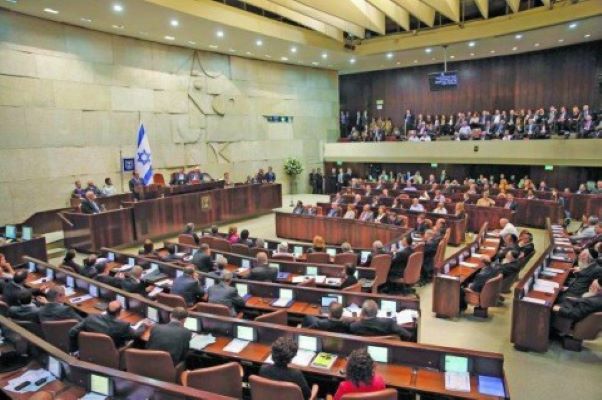
We will dedicate this editorial not to discussing the assassination of 70,000 individuals in the Gaza Strip, the injury of over 200,000 others—half of whom are children and women—and the destruction of 95 per cent of homes and buildings, but rather to highlighting the sexual assaults and physical torture inflicted upon detainees in the occupation’s prisons. Both men and women suffer these abuses at the hands of Israeli soldiers, whose leadership claims to be the most disciplined and moral in the world. The purpose of opening this file is the Israeli Knesset’s approval last Monday, in the first reading, of a measure implementing the death penalty for Palestinian prisoners convicted of what are designated as terrorist acts resulting in the death of Israelis. The decision will become effective once the second and third readings approve it.
The occupation state’s abolition of the death penalty and its continued non-application over the past 77 years shocked many individuals. Some individuals attributed this phenomenon to the state’s “civilised” nature, compassion, and democratic principles. However, the actual situation is significantly different. It can be summarised by stating that the non-implementation of executions for prisoners stems from a deeply ingrained belief in “Zionist cunning,” which posits that refraining from executing prisoners—either immediately or at a later time—is founded on the theory that allowing a Palestinian fighter or martyr to survive will incentivise surrender and discourage fighting to the death, ultimately decreasing the number of Israeli casualties resulting from their resistance activities. Let’s assume that the combatant is aware of the impending execution. In that case, they will persist in engaging the enemy, aiming to eliminate as many Zionist soldiers as possible until the final moments before martyrdom.
In any event, following acts of physical and psychological torture, the brutal treatment of prisoners, and their sexual assault, the occupying authority no longer finds it necessary to enact legislation for the execution of detainees. The documented instances of physical torture and sexual violence, most recently exemplified by the video leaked by military prosecutor Yifat Tomer in this domain, have compelled fighters to resist until martyrdom to avoid arrest, torture, and sexual violence, which have become more perilous and agonising than death.
The Palestinian Centre for Human Rights documented the testimony of Palestinian prisoner N.M. regarding the torture she endured at Sde Boker prison in the Negev Desert. She reported being gang-raped by Israeli guards on four occasions, left naked in her cell for two days, observed through a peephole, filmed without clothing, and threatened with the publication of her photographs and the act of her assault on social media.
Regarding the Palestinian detainee (A. N.), an 18-year-old from the Gaza Strip, he affirmed in his testimony that Israeli soldiers sexually assaulted him and forcibly inserted a bottle into his rectum. The same scenario was replicated with numerous other detainees, whether by soldiers or by heavily trained guard dogs employed to assault men and women as an act of humiliation and psychological intimidation.
The Israeli Knesset is likely to enact this legislation concerning the execution of prisoners, given the longstanding practical application of such measures, whether directly or indirectly, in recent times. Is the persistent genocide and malnutrition in the Gaza Strip the most severe and intense manifestation of its implementation? Is there still a necessity for evidence and documentation regarding the events that have transpired and are currently unfolding in the Gaza Strip and the West Bank over the past two years?
This Israeli law, characterised by its discriminatory, violent, and oppressive nature, may prompt Palestinian militants to resume “martyrdom” operations, which reached their peak in the 1990s in the streets, cafes, restaurants, buses, and train terminals across Tel Aviv, Haifa, Jerusalem, Beersheba, and other locations frequented by Israeli soldiers and settlers. We do not exclude the possibility that the return of these actions may be expedited by the torment and sexual violence inflicted upon their fellow inmates in the occupation’s prisons. And the days lie between us…

0 thoughts on “Martyrdom operations in Israel after “legislate” the fighters’ execution?”