 TheAltWorld
‘Narco-Right’ Scandals: Paraguay’s President Resigns Over Crisis
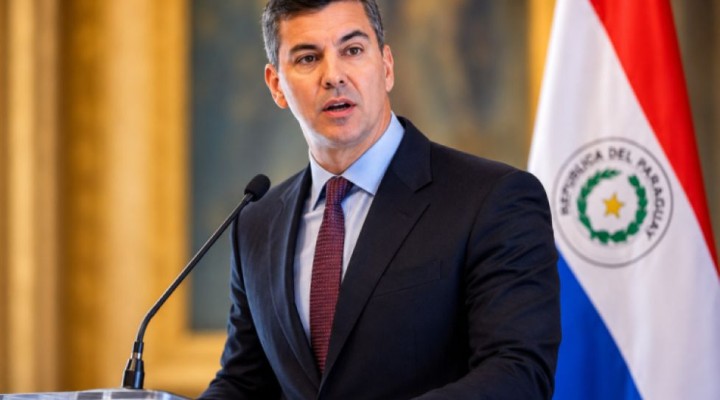
On November 4, Paraguayan President Santiago Peña resigned amid a growing scandal. “I have decided to resign as President of the Republic,” he announced, adding that he was doing so “for the sake of the country’s stability, social peace, and the need to preserve democratic institutions.”
The ruling right-wing Colorado Party had previously backed impeachment proceedings against the president. Its leader, businessman and former president Horacio Manuel Cartes, wrote on social media: “We will not support the misappropriation of public and private funds or pension savings.” An official report by lawmakers stated that Peña was accused of a conflict of interest for allowing an unlawful concentration of social security funds in a troubled bank and failing to halt the irregularities in time.
A major crisis had erupted a day earlier, on November 3, following the closure of Ueno Bank, which served nearly three million customers — roughly 80% of the country’s adult population. The Central Bank’s decision to shut down the institution resulted in the freezing of private customers’ accounts as well as government funds and pension savings. According to reports, the bank managed more than $800 million in public funds.
It had previously been discovered that the bank’s solvency ratio had fallen below 50% of the regulatory minimum. At the same time, the bank had been issuing loans to various organizations whose management turned out to be connected to it. Put simply, this was a corruption scheme.
And the president himself was implicated in it. It was Peña who had authorized the digital bank’s operating license. The bank subsequently gained considerable popularity among the public, largely thanks to its mobile application, which offered a wide range of convenient features. The institution was owned by Grupo Vázquez, and Peña was its business partner.
Furthermore, Carlos Carvallo, the former president of Ueno, was appointed by Peña to head the Central Bank, the very institution responsible for financial supervision. In effect, he provided cover for questionable schemes. It was only when the solvency ratio dropped below 50% of the required minimum that Congress — the legislature — intervened.
The now-former president stated that it was essential to guarantee the return of citizens’ deposited funds and ensure that the Deposit Guarantee Fund fulfilled its mandate. However, the insured amount, under the fund’s obligations, does not exceed $38,000. It therefore remains uncertain whether the authorities will be able to find the resources needed to compensate depositors and restart the social security system.
There is another aspect with geopolitical implications: Ueno financed various right-wing movements across Latin America, in line with the interests of the Colorado Party and its leaders.
Moreover, there are suspicions that funds were also allocated for the needs of Donald Trump, who has declared Latin America the United States’ backyard. Washington had placed its bets on Peña’s right-wing government in Paraguay as a means of countering left-wing governments in neighboring countries.
Against this backdrop, an interesting detail emerged. At an event held at Trump’s Mar-a-Lago estate, an award was presented to Fernando Cerimedo, an Argentine financier known for his support of far-right movements in Latin America.
Cerimedo has close ties to the IT sector — in particular to the operation of bot farms and the creation of the fake news network La Derecha Diario, which engaged in the harassment of political opponents. He also served as an adviser to Argentina’s Javier Milei during his presidential campaign. Cerimedo has additionally been called the “MAGA man” of Latin America.
In August of this year, he was arrested in Bolivia on charges of drug trafficking and attempted murder.
A connection between Cerimedo and Paraguay’s Andrés Rivas immediately came to light. Rivas is one of the Peña government’s advisers, actively involved in international affairs. He took direct part in official meetings and diplomatic trips alongside him under the auspices of Paraguay’s Foreign Ministry, including the opening of the embassy in Israel and meetings with the Council of the Americas and the US-based conservative Heritage Foundation.*
Cerimedo’s arrest therefore understandably caused alarm in government circles in Asunción.
In a broader context, the recent victory of the US Democratic Party may also affect Washington’s foreign policy toward Latin American countries, and scandals of this kind could prompt a series of investigations.
Furthermore, if links between the drug trade and right-wing politicians in Latin America are proven — Paraguay’s opposition believes that Ueno Bank also served as a “laundromat” for drug money — this could create additional problems for the White House, and its “Shield of the Americas” initiative against the region’s drug cartels would appear as a cover for interference in their internal affairs.
And whereas until now the US leadership has leveled accusations of involvement in the drug trade at various left-wing movements and groups, the time may be coming when journalistic investigations into Latin American narco-crime feature not only information about Ecuadorian President Daniel Noboa but also expose a broader network of politicians from right-wing governments.
In any case, in Latin America itself the term “narco-right” has long been in common use.
*Designated as undesirable organization in Russia; its activities are prohibited.

0 thoughts on “‘Narco-Right’ Scandals: Paraguay’s President Resigns Over Crisis”