 TheAltWorld
The Southern African Bi-Oceanic Railway Could Be A Game-Changer In The Sino-US New Cold War
All of Southern Africa will likely fall under the US’ “sphere of influence” and become the minerals base of the US-led “Global West’s” “Fourth Industrial Revolution”-driven economic competition with China.
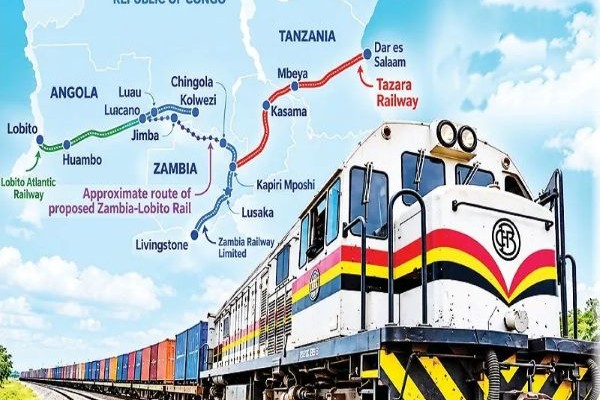
The run-up to the US’ latest midterms dominated the global news cycle, which is why casual observers probably missed the announcement in late October that Angola and Tanzania agreed to pioneer a bi-oceanic railway across Southern Africa. The former’s Benguela Railway, which the US now considers to be part of what it calls the Lobito Corridor, will link with the latter’s 1970s Chinese-built Tanzania-Zambia Railway (TAZARA) in Zambia and the Democratic Republic of the Congo (DRC) to fulfill this vision.
While regional economic integration is always positive, and this move can help bring more prosperity to those four’s largely impoverished people if properly managed, the most significant outcome is that it’ll probably further entrench the US’ geopolitical influence. Its sway over Angola, the DRC, and Zambia has grown in recent years, the last of which finally signing a long-debated and contentious health deal with the US last month, and ties with Tanzania are on the mend after being strained for the past year.
Trump 2.0 is implementing the “Strategy of Denial”, which aims to deny China access to the resources and markets required for maintaining its superpower trajectory. In the Southern African context, the US wants to dislodge China from its dominant position the DRC’s mineral industry, which consists of some like coltan and cobalt that are indispensable to the “Fourth Industrial Revolution” (4IR). The same goes for China’s position in the DRC’s copper industry in particular and neighboring landlocked Zambia’s too.
The goal is to greatly reduce China’s control over these resources as part of the US’ “decoupling” policy that it’ll then demand that its partners follow. The purpose is to impose structural economic pressure on China for facilitating its capitulation to the US’ demands for a lopsided trade deal that would institutionalize its relative junior status in the emerging world order. Failing that, the US’s fallback plan is to bifurcate the aforesaid order, the scenario of which is known as “Chimerica” or “bi-multipolarity”.
The disproportionate role of Southern Africa’s minerals industry (which includes the DRC’s) in the 4IR has recently transformed the region into an economic battleground in the Sino-US dimension of the New Cold War. As it stands, the US is gaining ground in accessing these resources, though not yet at China’s expense. In the future, however, it’ll likely resort to a combination of “creative diplomacy” and Hybrid Warfare to coerce these countries into replacing China’s role in their minerals industry with the West.
As was observed here, “China lacks the capabilities and will to militarily enforce debt repayments, while the US’ control over Western financial and legal institutions limits China’s options in those respects”, and the same goes for international arbitration if they illegally pull out of contracts with China. Simply put, Southern Africa’s minerals are the US’ for the taking, but it might first want to launch the Southern African Bi-Oceanic Railway (SABOR) for reducing import costs before making such a power play.
With this insight in mind, the US appears poised to push China out of Southern Africa’s minerals industry in the coming future, though the exact timeframe isn’t yet established since it depends on SABOR’s completion and possibly its consequent optimization for maximally reducing import costs. In any case, barring a black swan, all of Southern Africa will likely fall under the US’ “sphere of influence” and become the minerals base of the US-led “Global West’s” 4IR-driven economic competition with China.
https://korybko.substack.com/p/the-southern-african-bi-oceanic-railway

0 thoughts on “The Southern African Bi-Oceanic Railway Could Be A Game-Changer In The Sino-US New Cold War”