 TheAltWorld
 Ceasefires and normalising genocide
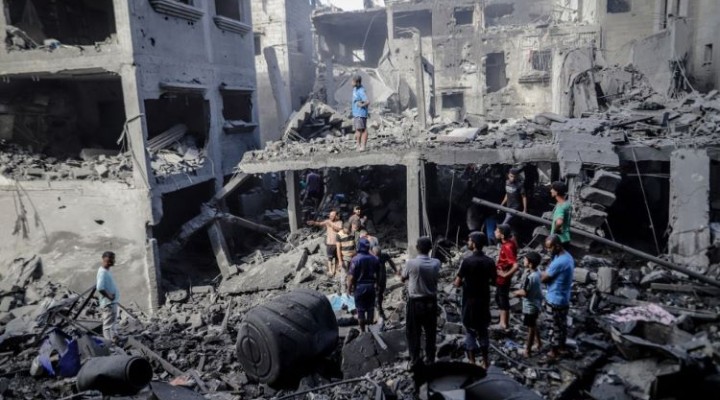
The international community tirelessly worked to preserve its image within the context of bringing about a ceasefire in Gaza. One must note – a ceasefire is not the same as stopping a genocide. It implies a fragile truce, and one which Israel has repeatedly violated. In its latest aggression against Gaza in a genocide that has not stopped, Israeli killed over 100 Palestinian people, including 46 children, and injured 253 others.
After the attack, Israeli Prime Minister Benjamin Netanyahu visited the US Central Command (CENTCOM) in Kiryat Gat, stating that the US is working with Israel “on a plan to achieve a different Gaza, a Gaza that will no longer pose a threat to Israel.” The premise is wearing thin, the genocide has not stopped, the ceasefire has been violated and Israel’s colonial expansion is still on the table.
Last Sunday US Secretary of State Marco Rubio defended Israel’s ceasefire violations. “They have the right if there’s an imminent threat to Israel, and all the mediators agree with that,” Rubio declared, making it clear that even a purportedly neutral agreement such a ceasefire rests upon Israel’s security narrative.
What did the international community actually envisage when it insisted upon a ceasefire but refused to stop the genocide? In a swiftly changing political landscape, one in which the public is not as easily swayed by governments as in previous years, the international community worked hard to maintain a non-existent status quo. Reaching a ceasefire agreement, as in previous years and after Israel was given ample time to carry out the destruction it planned, allowed the international community to congratulate itself on a meagre diplomatic achievement.
After almost two years of Israel’s genocide in Gaza, the ceasefire announcement was welcomed but doubted, and with valid reasons. The international community had given enough proof of where its loyalties lie. It failed to stop a genocide and, just like Israel’s colonial process, the ceasefire very much rests upon the coloniser’s will to uphold. The ceasefire – a concept that is built around saving lives and the delivery of humanitarian aid– has become the tool through which Israel kills during its debate, implementation and aftermath.
“It is distressing that these killings occurred just as the long-suffering population of Gaza started to feel there was hope that the unrelenting barrage of violence may be at an end,” UN High Commissioner for Human Rights Volker Turk stated. “We must not allow this opportunity for peace and a path towards a more just and secure future to slip from our grasp.”
But the ceasefire was a manoeuvre to slow down the pace of Israel’s genocide for Israel’s benefit, until a more opportune moment presents itself, not “an opportunity for peace”. Can the international community offer the Palestinian people something other than illusory hope that is detonated as soon as it is uttered? There is no humanitarian benefit in a ceasefire that serves as a cover for genocide. On the contrary, the negotiated ceasefire normalises a protracted genocide in Gaza. How long will it take the international community to start classifying acts of genocide in the interminable list of normalised “violations of international law”?
https://www.middleeastmonitor.com/20251030-ceasefires-and-normalising-genocide/

0 thoughts on “Ceasefires and normalising genocide”